
New exhibition explores the profound influence of Egyptian culture on cinema
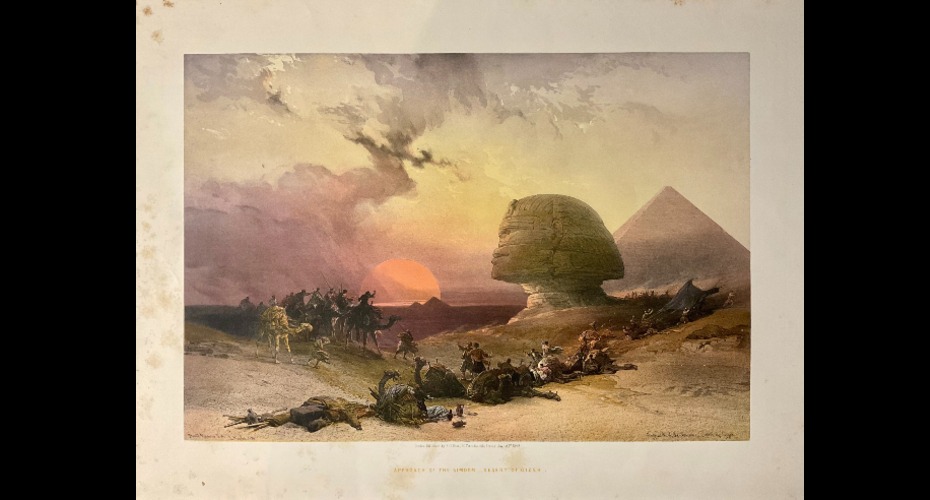
One of David Roberts' influential lithographs
A pair of 19th-century lithographs depicting iconic Egyptian landscapes, by renowned painter David Roberts, are among a treasure trove of film and moving image artefacts that will go on display in a new exhibition opening this month.
Land of the Pharaohs – Egypt on Screen explores the profound influence that the Middle Eastern country has had upon the iconography and infrastructure of film and cinema, and how it has captured the imagination of generations.
Opening to the public at the Bill Douglas Cinema Museum, on the University of Exeter’s Streatham campus this week, the exhibition showcases the significant collection of materials held in the museum’s archives, spanning nearly 200 years of history.
They include Roberts’ lithographs of the Sphinx and Cairo, which were produced in the 1840s after he had toured the region and captured still half-buried sites of historic interest via illustration and watercolour sketches. These pictures, which pre-date the popularity of photography, proved hugely influential in fixing Egyptian landscapes in the mind’s eye of the Western world.
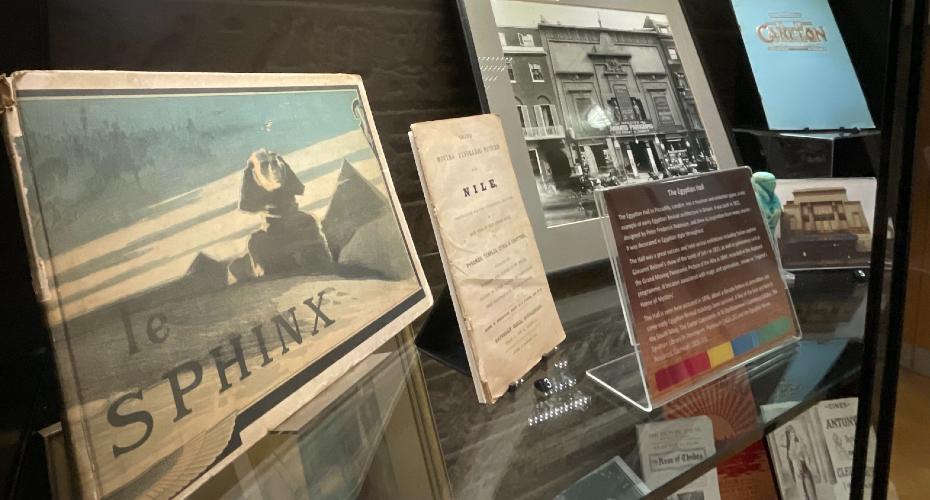
The exhibition will also showcase lavish programmes detailing the design and features of famous cinemas such as the Carlton in Islington and the Streatham Astoria, whose architecture drew from Art Deco and Egyptian motifs, particularly in the wake of the discovery of Tutankhamun’s tomb.
“Egypt has had a truly profound impact upon cinema,” says curator Barry Chandler. “Its rich history and archaeological wonders have led film directors to return to it time and again, whether as a setting for epic historical drama, fantasy and horror, or woven through more contemporary science fiction and supernatural creations.
“But it has also shaped the design of hundreds of cinemas, particularly in Britain and the United States of America, such as Grauman’s Hollywood Egyptian Theatre.”
The inspiration for the exhibition was the opening of the Grand Egyptian Museum in Giza last year. This led the curators at the BDCM to assess the sheer number of exhibits held in their archives – many of which had been donated by the museum’s founders, Bill Douglas and Peter Jewell. Renowned filmmaker Douglas and Jewell met in Egypt while on National Service in the early 1950s, and among the items on display will be an ornate photo album containing several snaps of Douglas’s time serving in the country.
The exhibition promises a chronological tour through Egypt’s cinematic influence, beginning with some of the earliest forms of still and moving imagery from the 19th century. They include a French book – Le Sphinx – which depicts how pre-cinema audiences would have been wowed by lantern slide projection, with shadows used to portray historical scenes. The book, published in 1896, even contains the piano score that would have accompanied each scene.
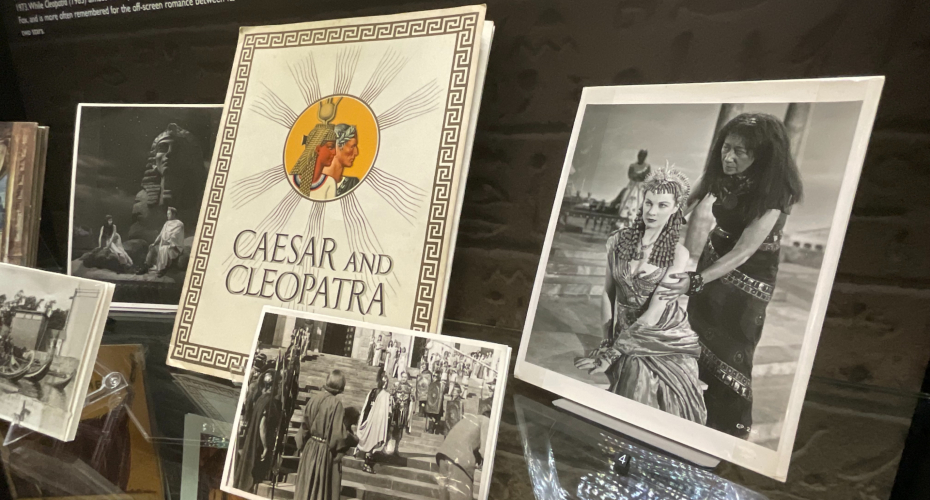
Artwork, press books, and film stills from some of Hollywood’s most famous productions, such as The Ten Commandments, will be on display, as well as a special programme printed for a Royal showing of Caesar and Cleopatra (1945) for Queen Mary. There is even a commemorative matchbook featuring Elizabeth Taylor as Cleopatra in the eponymous 1963 film – an era when it was socially acceptable to smoke in the cinema.
There will also be memorabilia from more recent and contemporary movies, such as Raiders of the Lost Ark (a film that inspired Chandler to study archaeology at the University of Exeter), Stargate, The Mummy (1999), and The Prince of Egypt. The exhibition will also confront the issue of representation and the exclusion of many Egyptian actors from international productions, despite Egypt boasting the fourth-largest film industry in the world.
Land of the Pharaohs – Egypt on Screen opens on 30 January and will run until May. For those unable to attend but keen to see the exhibits, many are now available to view online thanks to work undertaken for the exhibition by Freya Hobbs, an archaeology student at the University.
“We were almost surprised to discover the wealth of fabulous materials we had here in the collection,” says Dr Phil Wickham, BDCM’s Curator. “From those early magic lantern slides and stereoscopes to memorabilia promoting modern blockbusters, this collection shows the influence of Egyptian civilisations on the moving image and its development through the 19th century to today.”