
Political writing retains an important and complex role in the national conversation, new book shows
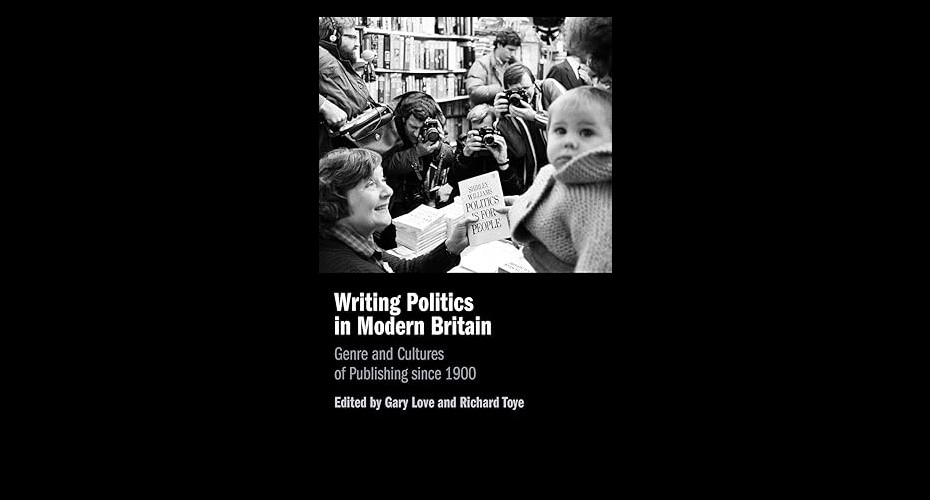
Writing Politics in Modern Britain: Genre and Cultures of Publishing since 1900, is edited by Professor Gary Love, from the Norwegian University of Science and Technology, and Professor Richard Toye, from the University of Exeter
Political published writing retains an “important and complex role” in the national conversation – despite huge social and technological changes this century, a new book shows.
Books and magazines have been so fundamental and intrinsic to the political process, and, hidden in plain sight, they are in danger of being overlooked, experts demonstrate.
The persistence of long-form political writing, through the advent of TV and radio, and then through the internet age, is a phenomenon that cannot be taken for granted.
Writing Politics in Modern Britain: Genre and Cultures of Publishing since 1900, is edited by Professor Gary Love, from the Norwegian University of Science and Technology, and Professor Richard Toye, from the University of Exeter.
The book shows the context of political writing and publishing and its importance to political movements and activists. Different forms of political writing were vital for documenting the variety of lived experience and shaping of political identities.
It traces the history of political writing in the context of the rise of the mass press, and the widespread dissemination pamphlets and posters, alongside mass politics in the Victorian era. Often bold and brash, and sometimes unscrupulous in its claims, this type of material prompted fears in some quarters that voters were vulnerable to psychological manipulation.
The 1930s was the ‘age of the weeklies’, such as The New Statesman while World War Two provided fertile ground for radical publishing, building on the marketing innovations of the interwar years. Print remained a vital medium for debate at a time when radio (and then early television) was monopolised by the BBC and largely eschewed political controversy.
Although the decline of the public meeting, the triumph of TV politics, and the rise of neoliberalism went hand in hand, the onset of the Thatcher revolution did not have any obvious immediate negative impact on the UK’s thriving political print culture.
At the same time countercultural alternatives boomed, through the growth of community publishing, relying on mimeograph machines, the photocopier and the word-processor. The 1980s witnessed a ‘zine explosion’ with many titles connected to the growth of the Green movement.
One chapter traces the ‘obituarial turn’, starting in the 1970s, in which political obituaries became simultaneously more prominent, regular, and frank. These brief lives, delivered with the impress of ‘papers of record’, increasingly privileged anecdote, peccadillo, and scandal.
The book also traces changes to the Conservative party’s view of writing and publishing. There was a move from the Conservative Political Centre (CPC), established in the 1940s, which acted as the party’s in-house publisher, to a reliance by the 1980s on external think-tanks, which narrowed the scope of the party’s literary ambition.
A further chapter describes the impact of the self-made, self-published, and self-distributed punk fanzines of the 1970s and 1980s such as Sniffin’ Glue and London’s Outrage. Authors not only reviewed records and gigs but wrestled with ideas, on themes ranging from race and gender to commodification and anarchy and gender relations. They provided a zone for teenagers and youth to experiment with ideology.
The book also shows the impact of coalfield women’s writing during and immediately after the 1984–85 miners’ strike. Many books and pamphlets describing women’s strike activism appeared, part of the contemporary boom in community publishing.
The book also illuminates how the dense network of magazines, campaign groups and SNP and Labour Party factions served as the training-grounds for devolved Scotland’s future elite. Much of the contemporary Scottish political landscape can be linked to the writing, editing, and publishing endeavours of the decades leading up to the establishment of Holyrood.