
Cross-sector campaign launched to promote nature-positive products in the beauty industry
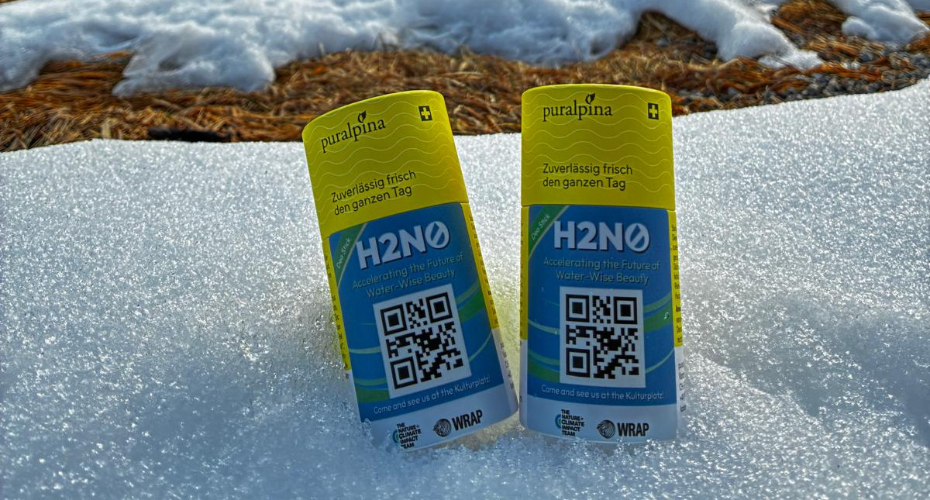
A cross-sector campaign that is seeking to reduce the environmental impact of beauty products has been publicly unveiled at the World Economic Forum.
H2NO brings together researchers, global beauty brands, creative agencies and NGOs in a bid to encourage the uptake of solid, concentrated and water-wise products.
The campaign is being led by global environmental action NGO, WRAP and the University of Exeter’s Nature & Climate Impact Team, with creative and strategic support from M+C Saatchi.
Currently, most beauty products found online and in stores have been shown to contribute high levels of waste and water use from their production through to their eventual disposal.
Through citizen behaviour change campaigns tackling norms, habits and consumer confidence and offering technical support to brands and retailers to clearly demonstrate impact reductions, H2NO will seek to make it normal for people to use and enjoy these environmentally conscious beauty and personal care products.
“Waterless and solid beauty isn’t a fringe idea – it’s already part of everyday life, and in many cases our original beauty formats,” says Cora Taylor, Research Impact Fellow at Exeter. “The real challenge is scaling adoption. That’s what H2NO is about: bringing together WRAP, M+C Saatchi, major beauty brands and researchers, and using communications to turn proven formats into the new default.’’
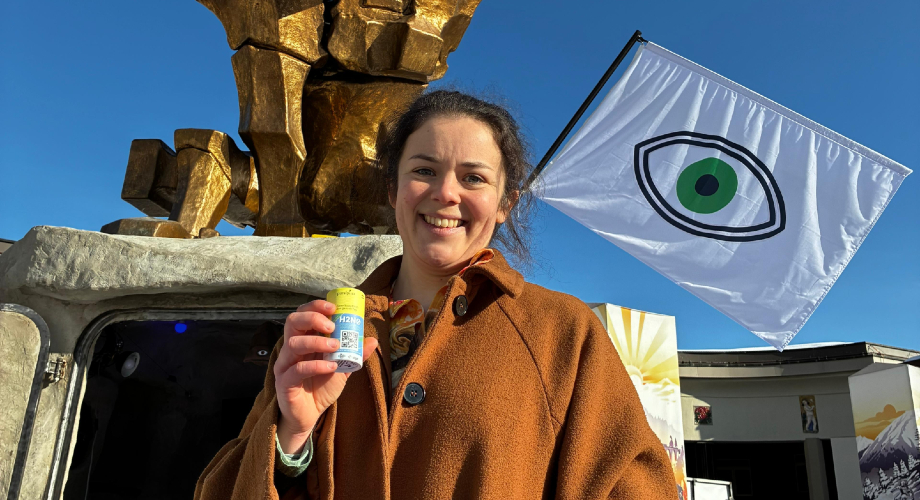
Ahead of its public launch in Davos, H2NO held a series of industry workshops, bringing together major beauty brands, sustainability experts, behavioural scientists and creative strategists. These enabled the project partners to identify key issues, including where water-wise formats deliver real impact, what factors prevent such brands from expanding these product ranges, and the barriers that prevent citizens from switching to these products.
Research into the lifecycle of beauty products has also been conducted, and the project team will be expanding this work to new markets and categories during 2026. They will also develop consumer-facing communication campaigns and will offer support to brands and retailers who want to extol the benefits of sustainable products.
Helen Bird, Director Material System Change WRAP, said: “The UN predict that by 2030, demand for water could exceed supply by 40%. Beauty products that use less water when transported, to save CO2 as well as products that use less water in use isn’t just an exciting prospect for the planet, it presents multiple business opportunities, including reduced costs and market growth, as well as consumer benefits. We’re looking forward to working with leading businesses to explore these possibilities with us.”
At the World Economic Forum, this week, senior leaders from Elemis, Lush, M+C Saatchi and Quantis held a public panel at MonkeyRock to discuss the issue and introduce the campaign. There was also a live demonstration of several lower-impact beauty products currently on the market.

Kim Fenn, Director of Environmental & Social Purpose, Elemis, said: “Collaboration is key to solving the most material environmental impacts of our industry. H2NO brings together academic knowledge and real-world business experience to co-create solutions that work for our planet while remaining commercially viable.’
More information can be found on the H2NO website.