
Ketamine high NOT related to treatment success for people with alcohol problems, study finds
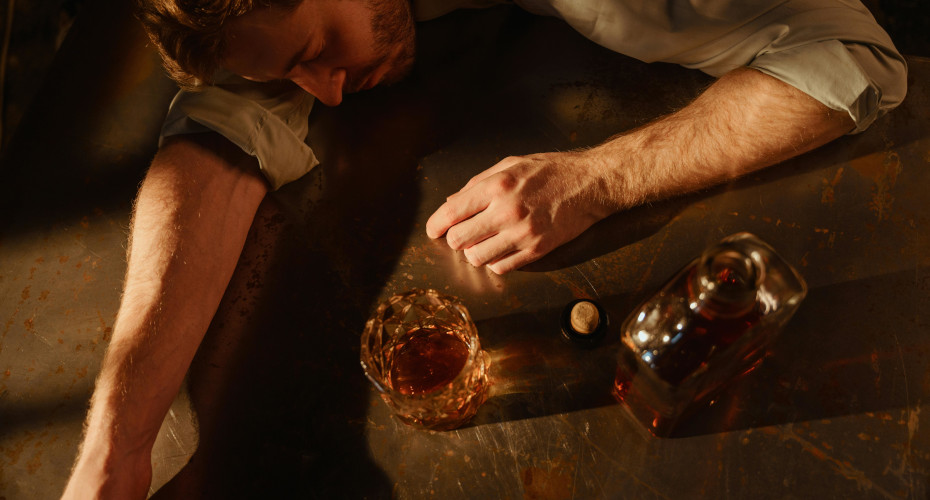
Photo by TREEDEO.ST : https://www.pexels.com/photo/man-in-shirt-sleeping-after-drinking-whiskey-16926054/
The psychedelic effects recreational users often seek from taking ketamine do not predict the therapeutic benefits for people being treated for alcohol use disorder.
The popular theory, which says that ketamine may have its therapeutic benefits because it produces strong psychedelic effects, has been called into question by a new study from King’s College London and the University of Exeter, published in Addiction. The study suggests the treatment response may be down to other effects of the drug.
The research provides new insights into the use of intravenous ketamine-assisted psychotherapy for individuals with moderate to severe alcohol use disorder. It used data from the Ketamine for reduction of Alcoholic Relapse (KARE) clinical trial at the University of Exeter and University College London, supported by the Medical Research Council.
Dr Will Lawn, lead of the new published study and Senior Lecturer at the Institute of Psychiatry, Psychology & Neuroscience at King’s, said: “We previously showed that ketamine has promise for helping people with alcohol use disorder remain sober and these new findings demonstrate those receiving intravenous ketamine experience the expected subjective effects from the drug, including feelings of altered reality, bodily dissociation and warped time perception.
“However, our results challenge the popular theory that the therapeutic benefits of ketamine are driven by its acute psychoactive or mystical-like effects. Instead, our findings suggest other possible reasons why ketamine prevents relapse, such as its ability to alter networks in the brain related to addiction or stimulate new neural connections to form. More research is needed to directly test these hypotheses.”
Professor Celia Morgan from the University of Exeter and KARE study lead said: “Alcohol use disorder remains a significant public health concern, with over 85,000 people in England receiving treatment annually – but many more still requiring treatment. While several effective treatments exist, there is a pressing need to diversify options and improve long-term outcomes.
“Our research underscores that ketamine induces profound psychedelic effects in people with alcohol use disorder, but we still don’t know the clinical reason why these experiences promote abstinence. Now we need to explore the roles of brain connection and function changes in ketamine’s therapeutic action, as well as refining dosing to make it as effective as possible. We are now running a larger version of this study across the UK, currently recruiting people with alcohol problems, to try and provide those answers.”
The secondary analysis of the KARE clinical trial, conducted at two clinical research facilities in England and involving 96 adult participants, sought to clarify the role of ketamine’s psychoactive effects in supporting abstinence from alcohol. The study is the largest to date examining the psychological mechanisms of ketamine in substance use disorder treatment, with a robust randomised, placebo-controlled design and a six-month follow-up period.
Participants receiving three weekly infusions of intravenous ketamine reported marked psychoactive experiences, including altered reality, out-of-body sensations, and perceptual distortions, compared to those receiving placebo. These effects were consistently strong across all three dosing sessions. This suggests little to no development of tolerance to ketamine’s subjective effects over the short dosing schedule.
But despite the pronounced psychoactive effects, the study found no significant evidence that these experiences mediated ketamine’s therapeutic benefit in reducing alcohol consumption. The percentage of days abstinent from alcohol over six months was not predicted by the intensity of subjective drug effects.
Professor Morgan is now leading a larger clinical trial called MORE-KARE, which is currently recruiting people with alcohol problems from across the UK. This clinical trial is co-funded by the National Institute for Health Research (NIHR) Efficacy and Mechanism Evaluation Programme (NIHR150193) and Solvonis Therapeutics.
More information on MORE-KARE can be found here – https://sites.exeter.ac.uk/morekare/
The paper titled ‘The psychoactive effects of repeated ketamine infusions and their mechanistic role in the treatment of alcohol use disorder: secondary analysis of a randomised controlled trial’ is published in Addiction.