Brazil election – what lies ahead for the Lula government?
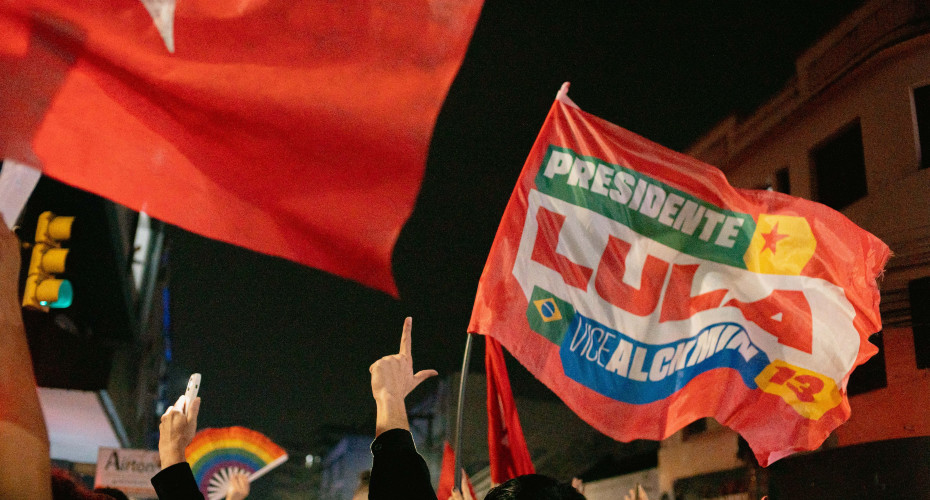
Lula has been elected for a fourth term
Commenting on the Brazil election, Dr Pedro Perfeito da Silva, from the University of Exeter, said:
“Flávio Bolsonaro’s challenge to the election result relates to the two-hour extension of voting ordered by Supreme Court justice Cristiano Zanin. Both campaigns had asked for it: Lula’s after reports of reduced bus services in cities such as São Paulo and Salvador, which his campaign presents as an attempt to suppress turnout, and Flávio’s because of heavy rain in the south. The electoral court’s president, a Bolsonaro appointee, said it did not affect the outcome. The challenge is unlikely to succeed but will harden the opposition.
“Lula’s comeback combined three elements: measures aimed at core and undecided voters, such as a 15% increase in the Bolsa Família cash transfer and a ban on online betting; a drive to reduce abstention among poorer and older voters; and the mobilisation of supporters, especially young people, against what his campaign presented as a Milei-style adjustment threatening social protection. This can be read as a countermovement, in the sense used by Karl Polanyi: a defensive social mobilisation against the expansion of market logic into social protection.
“That mobilisation is now the government’s main political resource. Congress is dominated by the right and centre-right: Bolsonaro’s party is the largest in both houses, though short of a majority, and Congress has already overturned Lula’s vetoes in the current mandate. The government will have to negotiate with the clientelistic centre-right, while facing a Supreme Court whose legitimacy is contested. Brazil’s financial subordination also narrows its room for manoeuvre: the dollar rose about 12% against the real in early trading on Monday, a reminder of the economy’s exposure to capital flows, now channelled increasingly through crypto-assets and digital dollar accounts.
“The way forward, I would argue, is to keep the countermovement alive: to use the social energy that won the election to pressure parliament and build support for progressive policies, instead of relying only on deals with business, Congress and the judiciary. Many analysts argue that Dilma Rousseff’s experience, which ended in impeachment after her government turned away from its base, shows the risk of the alternative.”