Archaeological expertise at Exeter featured in new series of Digging for Britain
Archaeological and historical expertise at the University of Exeter will be showcased on national television this month.
The BBC’s popular series Digging for Britain will feature two research projects led by academics at the University, which are creating new insights into past cultures and practices.
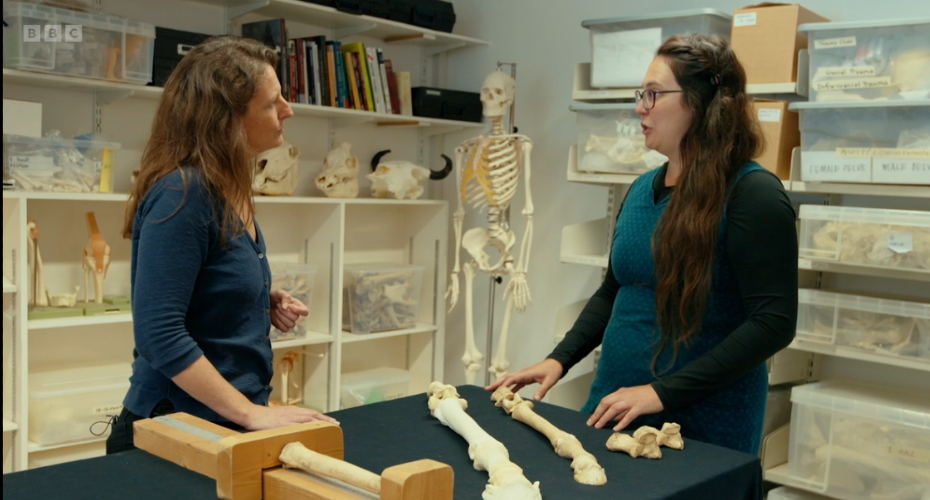
The Warhorse project, which has delivered groundbreaking research into how horses became a key military resource from the 11th century onwards, is the first to be covered in this week’s episode, Medieval Murder and Roman Pets.
The second story, in which an expert in ancient medicine used the University’s cutting-edge SHArD 3D laboratory to analyse Roman-era surgical instruments, will be told in the concluding episode, A Cornish Legend and an Ancient Wishing Well, to be screened on Friday 13 February.
The 13th series of Digging for Britain, fronted by Professor Alice Roberts, also features Professor Naomi Sykes, Head of the Department of Archaeology and History, who was asked to be one of their expert presenters. This included the slightly surreal experience of interviewing her own colleagues, when she fronted the segment on Warhorse.
During the episode, project lead Professor Oliver Creighton talks through the impact that horses had in the Norman Conquest and how they provided a key battlefield advantage for the Normans over the Saxons. Colleague Dr Carly Ameen then explains how, from a single bone, archaeologists can intuit significant details about the animals, such as how they moved and were employed. A wider and shorter ankle bone, Dr Ameen tells viewers, made Norman warhorses better adapted to powerful, fast and dynamic movement.
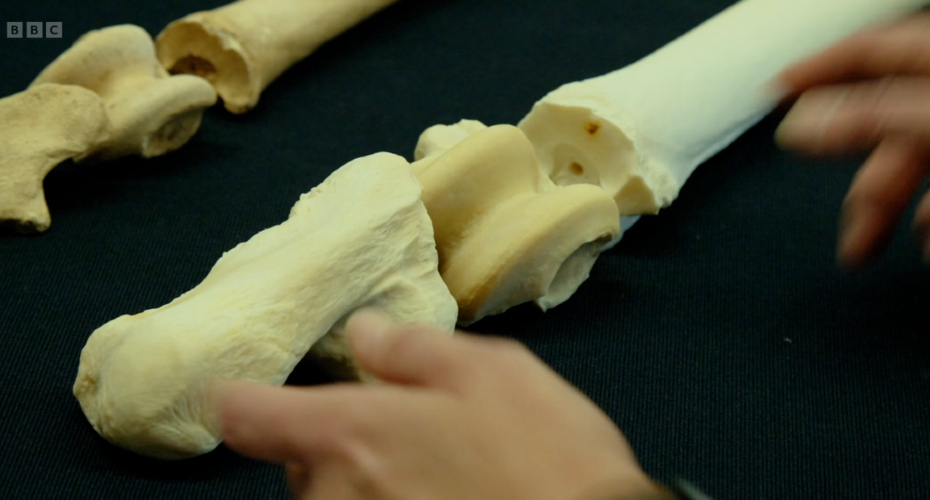
“When you hear about archaeology in the news, it tends to be either stories of freshly-unearthed finds, or the publication of research in journals that comes from years of refinement,” she said. “What is so refreshing about this coverage is that you get to see some of the workings in the middle – what it takes to be an archaeologist.”
“The Warhorse project was a really complex collaborative research endeavour involving a big team of University researchers working alongside our project partners and students,” adds Professor Creighton. “A major priority for the work was to publish high-quality scientific papers and a book to make sure that the work has a suitably high academic profile, but through BBC’s Digging for Britain programme, it is exciting to be able to showcase some of our headline results to a much larger public audience.”
The second story, set in the University’s SHArD 3D Lab and its Fab Lab, features the investigative work of Professor Rebecca Flemming, Leventis Professor of Ancient Greek Scientific and Technological Thought in the Department of Classics, Ancient History, Religion and Theology.
Using a specialist CT scanner, Professor Flemming analysed six implements – a bronze scalpel handle that would have been used in surgery, two probes, two needles and a spoon – peering beneath the corroded exteriors to learn of the intricate detail beneath.
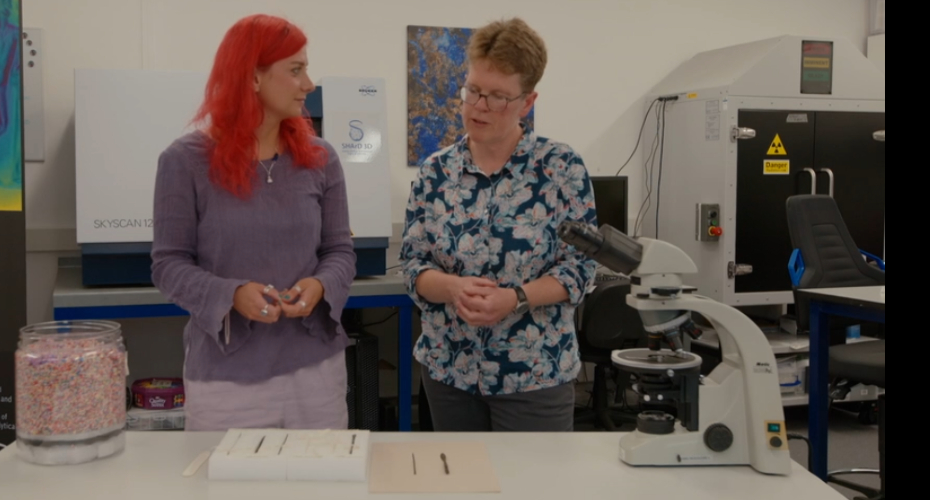
The instruments, held by the Devon and Exeter Medical Heritage Trust, were originally unearthed 125 years ago at a site in Walbrook River, London, which is rich in well-preserved tools and objects from the Roman era. From the results, 3D models of them were able to be printed.
“We are always keen to reach the widest possible audience with the results of our research, and appearing on programmes such as Digging for Britain definitely helps towards that aim,” said Professor Flemming. “Roman surgical instruments are amazing objects, and the more people know about them, and the more people can interact with them through replicas and modelling, the better. It is also important that people are aware of how collaborative much current research is, involving museums and universities, and a whole set of different technologies.”
In addition to playing the role of interviewer on the Warhorse feature in September, Professor Sykes filmed another segment for the show at the University of Cardiff. Researchers there are conducting post-excavation analysis on human skeletons recovered from a medieval priory cemetery at Haverfordwest. This story can also be found in episode six.
“It’s so fun to meet with colleagues at other universities and find out about their research,” reflected Professor Sykes. “By working with the producers of Digging for Britain, we are representing UK archaeology, and that’s a great thing for public interest in the field, and ultimately, in the world-class work we are doing here at Exeter.”
All of the episodes are on iPlayer, and will be broadcast at 9pm on BBC2 on their respective days.