New app creates interactive experience for climate adaptation project
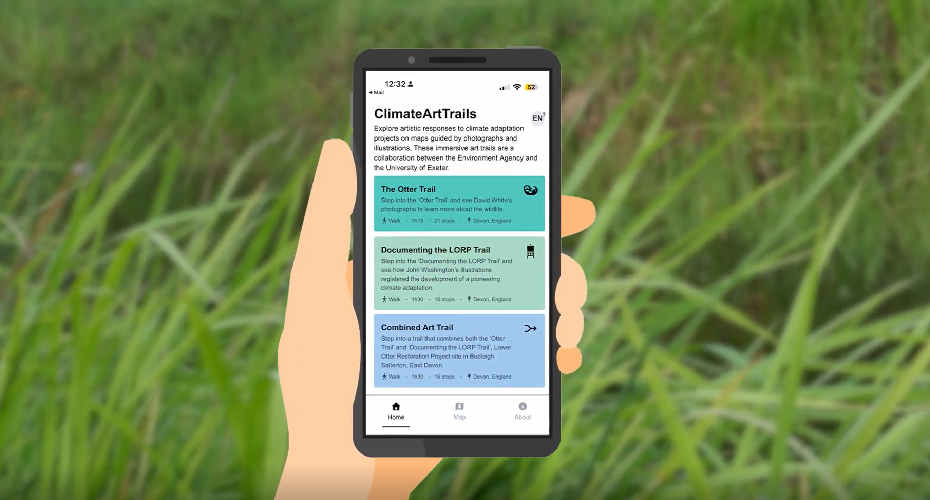
Visitors to a picturesque Devon estuary at the centre of a pioneering climate adaptation project will be able to follow an interactive arts and nature digital trail thanks to a new mobile-first web app.
ClimateArtTrails is a pilot project developed by a modern culture expert at the University of Exeter to connect people to some of the stories behind The Lower Otter Restoration Project (LORP), in Budleigh Salterton.
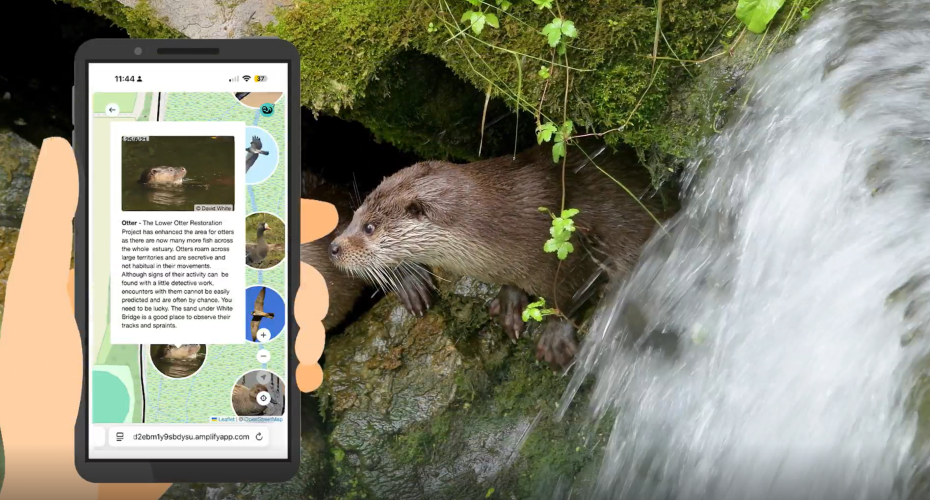
The prototype app uses Google Maps to offer walking, hiking, and cycling trails in the area and provides information about wildlife that might be observed. It explains how the land was engineered and displays photographs and artwork produced by residents and visitors in response to those changes.
The Environment Agency has partnered in the development of the app, and it follows an art exhibition in 2024, which the University hosted.
“The LORP is a significant and highly technical engineering project, and that can present challenges when it comes to communicating with the public,” says Dr Natália Pinazza, project lead and Senior Lecturer in Latin American and Lusophone Studies, in the Department of Languages, Cultures and Visual Studies at Exeter. “Through art and nature, however, we have been able to develop a deeper understanding of the change and its impact on wildlife, such as returning species.
“ClimateArtTrails is a logical next step, one that creates a legacy for LORP but also enables visitors to the estuary to better appreciate the work that has taken place and the creativity it has inspired.”
The £27m Lower Otter Valley Restoration Project was launched in 2014 to improve the area’s resilience to climate change. It has resulted in significant alterations to the landscape around the estuary of the Otter River, including the return of 55 hectares of farmland to intertidal habitat, the removal of embankments and the creation of 6km of creeks to connect the floodplain to the estuary. Raised walkways and nature observation stations have been installed, two hectares of woodland and grassland planted, and the town’s cricket club relocated off the floodplain.
In 2024, Dr Pinazza secured funding to develop an exhibition of artwork produced during the decade of the LORP. Working with the Environment Agency, they sourced wildlife pictures from photographer David White, including photos of returning bird species and other animals such as beavers; illustrations from John Washington, who chronicled the changes to the landscape and the work that went into it; and textiles from Brenda Thomas, who was inspired by new viewpoints created as a result of the improvements.
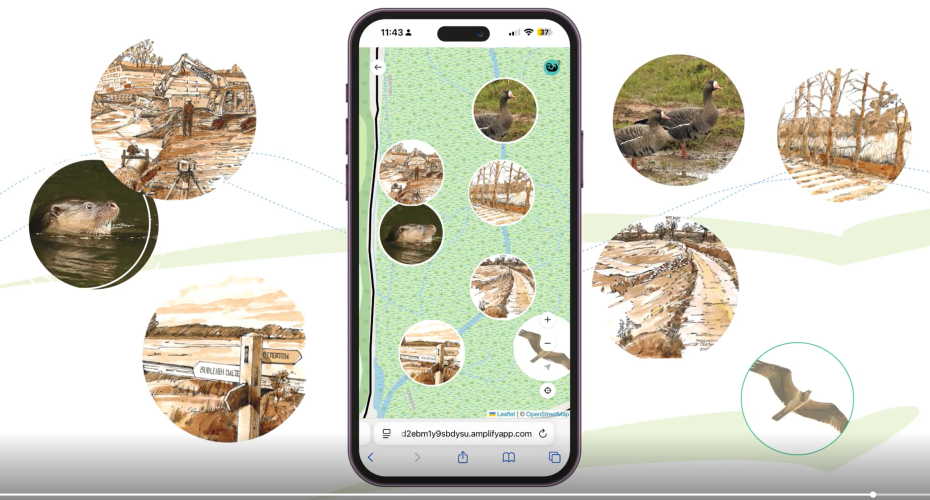
This new project – also funded by a UKRI impact acceleration account – not only preserves these works in a digital format within the trail but also provides a smartphone guide to enhance the visitor experience to the LORP.
Daniel Boswell, a project manager with the Environment Agency, said: “ClimateArtTrails connects the real world with the digital, providing a deeper understanding and connection to climate adaptation projects such as LORP. The interactive mobile experience aims to bring together technical knowledge and community engagement.”
Dr Pinazza says new art or environmental information could be added to the trail later, and the prototype app could be scaled up to include other sites, including those overseas, as well as additional language options beyond the current English and Portuguese.
“While the app is still in its pilot phase, we would like to refine and expand it, adding similar nature-based solutions projects from around the world,” she said. “Some of the themes that have emerged from communicating LORP are universal ones, and it would be great to house a family of trails together in the future.”