
Global boost for scheme that pairs politicians with threatened species
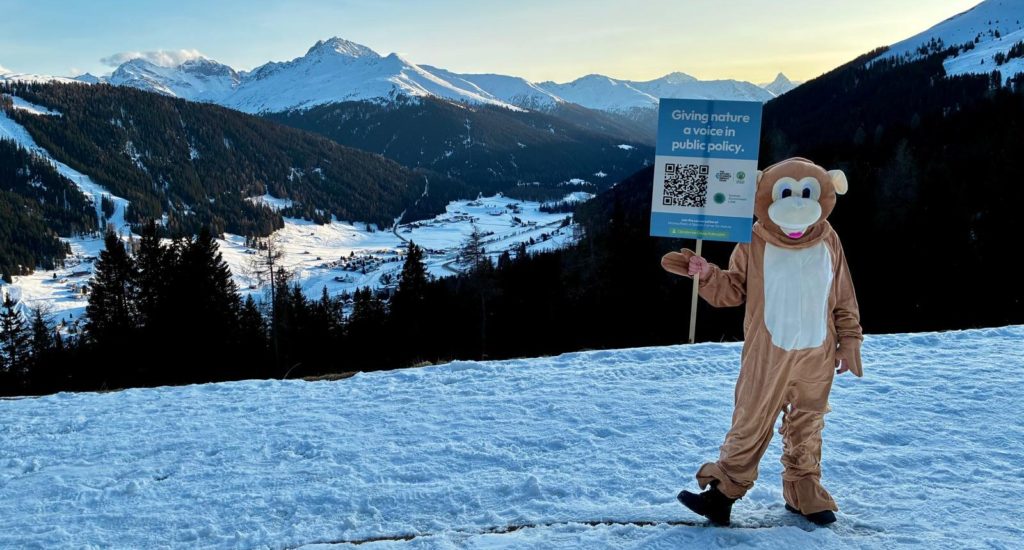
Nature Champions Worldwide is being unveiled in Davos
A scheme that pairs politicians with threatened or iconic species or habitats will receive global attention at the World Economic Forum in Davos today (Thursday).
For over a decade, Nature Champions – pioneered in Scotland by environmental charity Scottish Environment LINK – has been encouraging parliamentarians to become a visible, accountable “champion” for their chosen species or habitat.
In this role, politicians work alongside conservation experts to understand real threats, policy barriers and practical solutions.
The award-winning initiative has been a huge success since its launch in 2013, with 80% of Members of the Scottish Parliament becoming Nature Champions for Scotland’s native wildlife – representing everything from the blue whale and bilberry bumblebee to the ash tree and ancient woodlands. It has also inspired similar programmes in the Welsh Parliament (Senedd Cymru) and the UK Parliament.
Today in Davos, Scottish Environment LINK and the University of Exeter’s Nature & Climate Impact Team (NCIT) are unveiling Nature Champions Worldwide – a project that will share this successful model with governments and civic institutions around the world.
Dr Deborah Long, Chief Officer at Scottish Environment LINK said: “The Nature Champions initiative has seen parliamentarians climb mountains in search of bees, wade across rivers for endangered mussels, attend night-time bat surveys and even abseil from trees in support of our extraordinary species and habitats. However, being a Nature Champion isn’t just about experiencing the treasures of our natural environment, it’s also about helping to raise awareness and promote action in Parliament. For more than a decade, Nature Champions have been helping to give nature a voice in Parliament – a voice that is so greatly needed in the context of both the nature and climate emergencies.”
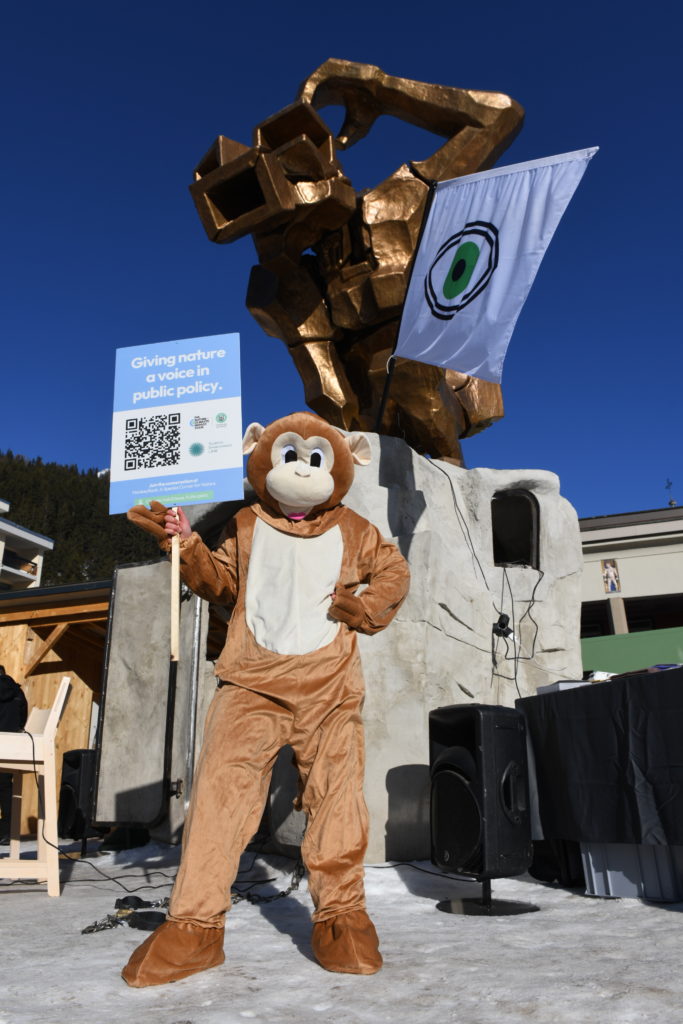
The project will be showcased at a high-profile temporary venue in Davos called MonkeyRock: A Species Corner for Nature – which features an eight-metre-high sculpture of a great ape standing on a rock-like pavilion, conceived by artist Joep van Lieshout and Professor Gail Whiteman, who leads NCIT.
Today’s event at MonkeyRock will feature Cora Taylor, Research Impact Fellow at NCIT, and James Byrne, Head of Business Development at Plantlife International.
Taylor said: “I’ve seen how easily nature gets lost in policy debates when it’s treated as an abstract issue. Nature Champions works because it changes that – it asks leaders to take responsibility for something real and living. When that happens, decisions change. The task now is taking this approach to scale, quickly.”
Byrne said: “I worked on Nature Champions for ten years in Wales. I’ve seen how linking a politician to a species can transform the conversation – the politician gets to know that species, its habitats, and why it is at risk. When a leader becomes the champion for a particular creature, they inevitably become the champion for the entire habitat it depends on. This model creates powerful, personal advocacy that drives action for our most vulnerable species and ecosystems. Scaling this through Nature Champions is a game-changer for global conservation.”
Scottish Environment LINK and NCIT are currently seeking funding to support the development of Nature Champions Worldwide. To find out more, please email NCITeam@exeter.ac.uk