Theatre outreach programme passes milestone of reaching 5,000 pupils

Professor Tollerton created an online audiobook which allowed people to record their memories of the pandemic
A long-running university outreach programme that creates theatre, drama and dance opportunities for schools in Devon has now touched the lives of more than 5,000 pupils.
Devising Discovery was launched in 2010, and has run every year since, bringing together staff and students at Exeter with more than 30 schools around the county.
During that time, it has delivered upwards of 400 creative workshops, hosted celebratory showcase events on campus, and inspired pupils and students in their degree and career choices.
This year saw the final staging of Devising Discovery, with organisers in the University’s Department of Communications, Drama and Film now planning something new for 2027 and beyond.
“Since its inception, Devising Discovery has supported theatre creation in our regional secondary schools and colleges through accessible outreach, while also strengthening the University’s connections with them,” says its founder and lead, Dr Erin Walcon, Senior Lecturer in Applied & Educational Theatre. “Despite significant changes to the funding and provision landscape in those schools, we’ve been able to grow and evolve a fantastically supportive network and develop clear pathways for young people to follow their dreams – whether that is studying drama at university, or our students pursuing careers in the sector.”
The programme began life as a collaboration between Daisi (Devon Arts in Schools Initiative) and the Devon Youth Theatre, where Dr Walcon was then Artistic Director. In 2014, it was taken on jointly by Doorstep Arts and the Applied Drama team in CDF, with match funding from Arts Council England, the Widening Participation programme at the University, and vital support annually from venue partner the Exeter Northcott Theatre.
Dr Walcon says its “hyper-local approach” to theatre has created a strong regional identity, and over the life of the programme, there have been more than 33 schools involved, spanning North Devon to Ivybridge and Brixham.
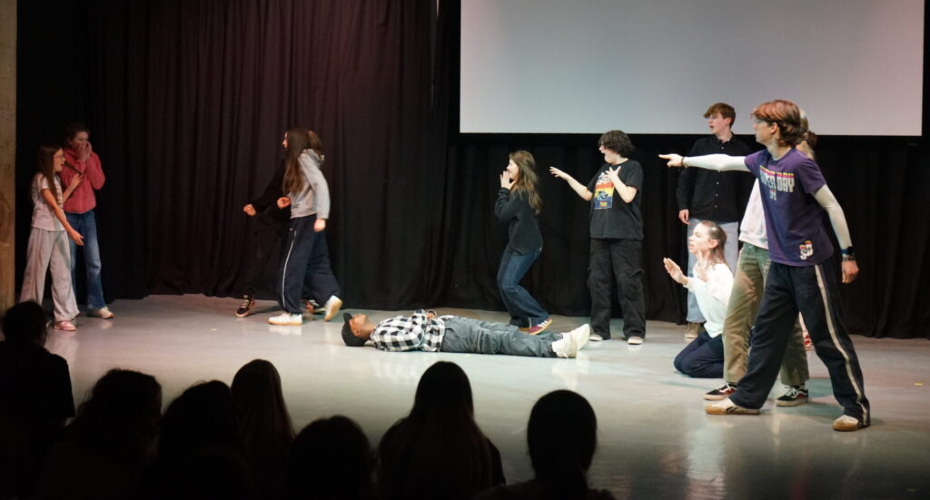
Devising Discovery takes place over three weeks in January and February, and opens with the lead artist delivering a workshop on how to make original theatre, supported by second-year Applied Drama students. The undergraduates then deliver follow-up workshops in the schools, working directly with the pupils. The programme culminates in an inter-school ‘platform day’, where the pupils perform their work on stage at either the Northcott or the University’s Roborough Studios.

Dr Walcon praised the many artists who have supported the programme, and said it has also been a great example of ‘Curriculum for Change’, particularly in its real-world impact, focus on social justice, and ‘embodied learning’.
She said: “Many of the University students who have helped to deliver this programme have gone on to careers in teaching, theatre directing, arts education, creative and cultural policy development, and other professional careers in the arts. And it has paved the way for young people to study Drama at Exeter, improving regional pathways and progression routes, and widening entitlement and access.”
This year, another 300 school children and 18 students took part, with 50 young performers attending the final platform. The final day-long showcase drew the London-based DreamArts Rep Company as special guests, and they provided a preview of their new show, What We Do When We Can’t Dance.

“It was an inspirational and energy-filled day, and a fitting finale to the programme,” said Dr Walcon. “The hard work and commitment of our students and the schools were powerfully and vividly present throughout the day of the final platform. Now is the time for us to take stock and consider how we might best support the next generation of theatre-makers.”
Professor Adrian Curtin, Head of Drama, praised the programme’s legacy, adding: “Giving over 5,000 schoolchildren the opportunity to make theatre that excites and challenges them is a remarkable accomplishment and a testament to the vision and dedication of the programme team. It shows the impact a civic university such as Exeter can have upon its local community.”