Squirrels climb higher for better snacks
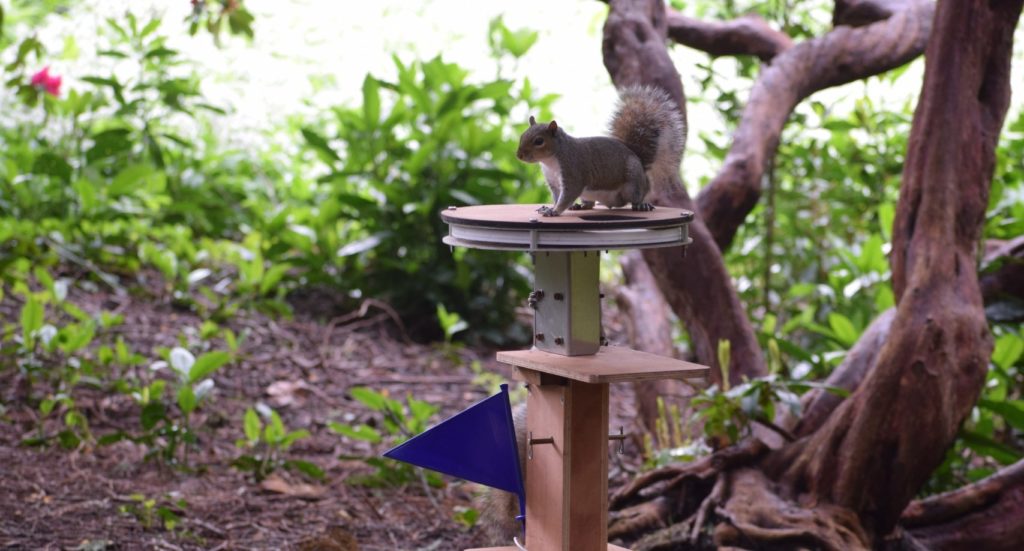
A squirrel on top of the feeder on the shorter, less slippery pole. Credit Yavanna Burnham
Squirrels are usually willing to climb higher to reach their favourite foods, new research shows.
Extensive lab studies have found that animals “devalue” rewards that cost extra time and effort – for example by choosing worse foods that are in easy reach.
But University of Exeter researchers suspected wild animals would behave differently.
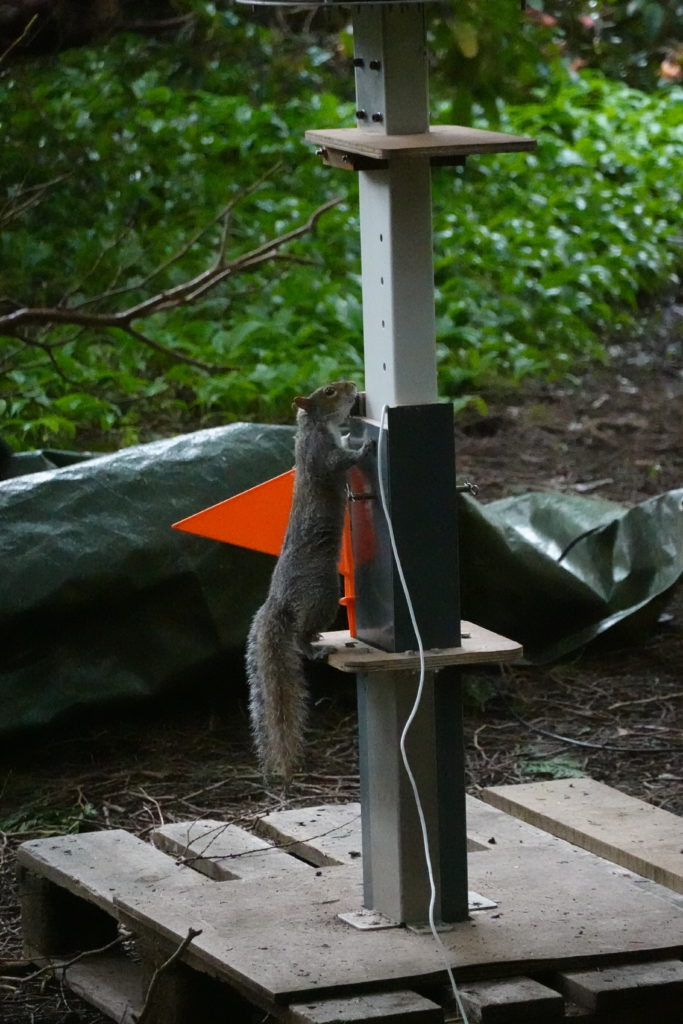
They tested this by offering wild grey squirrels a preferred food (almond pieces) and a less-preferred food (pumpkin seeds), on poles of varying heights.
Even when almonds were raised higher off the ground – meaning a longer climb – squirrels’ preference for almonds only reduced slightly.
“The squirrels in our study were willing to work harder for the better food,” said lead author Yavanna Burnham, from Exeter’s Centre for Research in Animal Behaviour.
“This suggests that – in natural decision-making scenarios – it may sometimes be beneficial for animals to wait or work harder for a better outcome.
“This is what we would expect to find, and it shows the value of doing research on wild animal populations.”
The study also found that less dominant squirrels were more likely to choose easy-to-access food, potentially because they face a higher risk of losing the hard-to-reach reward if a rival appears.
Senior author Dr Lisa Leaver said: “This study helps us understand how animals decide how much time and effort to invest.
“It shows there isn’t always an ‘optimal’ decision, and – just as with humans – an animal’s social status affects the costs and benefits of particular choices.
“It’s rational for different squirrels to assess the situation and adjust the amount of time and energy they will expend accordingly, in order to get a reward.”
The study – funded by the Natural Environment Research Council – was carried out on the University of Exeter’s Streatham Campus, with food preference tests based on 11 squirrels, making more than 4,000 choices in total.
The paper, published in the journal Animal Behaviour, is entitled: “Pole position: social influences on discounting behaviour in wild grey squirrels.”