
Mentoring scheme involving Exeter highlighted in new Wellcome report
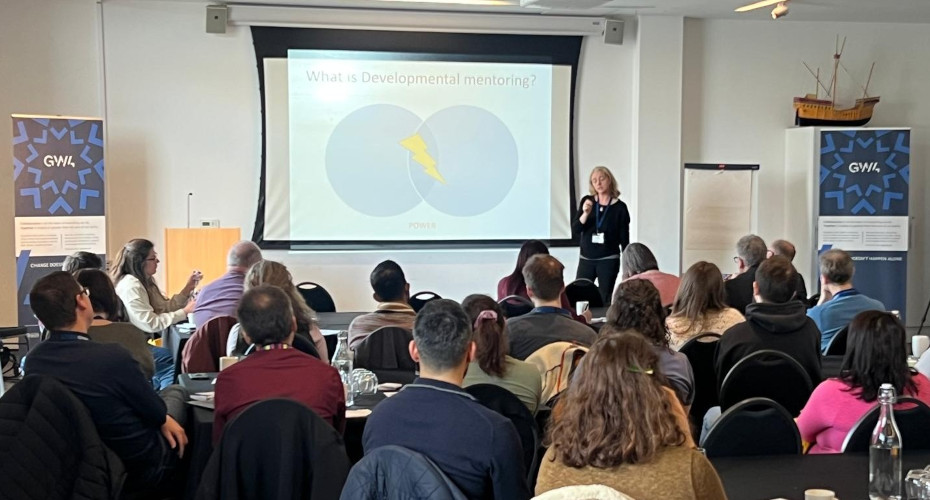
The GW4 Antimicrobial Resistance (AMR) Alliance’s innovative cross-institutional mentorship scheme across the GW4 universities of Bath, Bristol, Cardiff and Exeter, is highlighted in a new Wellcome report as an example of mentoring in practice to “meet specific regional and disciplinary need”.
The report on ‘UK Academic Mentoring: Best Practice, Principles and Behaviours’ focuses on the benefit of mentoring in research careers and was produced in collaboration between funders, researchers, practitioners, coaches and mentors.
GW4 Alliance academics, Professor Neil Gow (University of Exeter) and Professor Marcus Manufo (at the time, the University of Bristol’s Associate Pro-Vice Chancellor of Research Culture and now Deputy Vice Chancellor at the University of Bath) were participants in the Wellcome-led workshop that brought a working group together to develop the framework.
Professor Neil Gow, of the University of Exeter and chair of the GW4 AMR Alliance cross-institutional mentorship scheme’s Working Group, said: “It is good to see the GW4 AMR Alliance mentoring network mentioned as an example of good practice in this report. One of the most helpful things we can do to support research careers is to be available to provide and receive out-of-line-management advice through an accessible mentoring scheme. It is so important to make time in our very busy careers of back-to-back engagements and meetings to have quality time to talk about challenges and opportunities that affect the quality of our everyday working lives, and to help plan effectively into the future.”
The GW4 AMR Alliance’s scheme (piloted in 2025) provided out-of-line management mentoring across disciplinary and institutional boundaries, creating a confidential and neutral mentoring environment specifically designed to broaden support networks, strengthen confidence, and foster cross‑institutional collaboration in AMR research. The programme was supported by a dedicated working group, expert training in mentoring for both mentors and mentees, shared guidance materials, and a structured evaluation framework capturing both quantitative and qualitative data.
Dr Helen Brown, lecturer in Microbiology at Cardiff University and mentor on the scheme said: “Being involved as a mentor on the scheme was incredibly valuable to me personally and professionally. The training all participants received at the start of the scheme has made me approach daily conversations with colleagues and students in a very different way, listening more actively and providing support without trying to give immediate solutions. Reflecting on conversations with my mentee led me to think about my own research and challenges, and consider novel solutions which would not have occurred to me without this relationship. The scheme has made me think very differently about what is useful in a mentoring relationship and how to approach and identify my own future mentors.”
GW4 AMR Alliance brings together 300 investigators from across the four GW4 institutions and builds on the universities’ strong and diverse portfolio of AMR research, with a particular focus on tackling antimicrobial resistance through an interdisciplinary and One Health approach.
The report is a welcome addition to the wider engagement and focus on mentoring and research culture in academia which reflects GW4’s commitment to supporting the development of our early and mid-career researchers to strengthen research capacity, particularly for those working across research sectors to tackle complex challenges.
Wellcome is a global charitable foundation, which supports discovery research into life, health and wellbeing. Read the Wellcome report in full: link https://wellcome.org/research-funding/guidance/managing-grant/embedding-mentoring-in-your-research