Professor Kevin Gaston awarded honorary membership of British Ecological Society
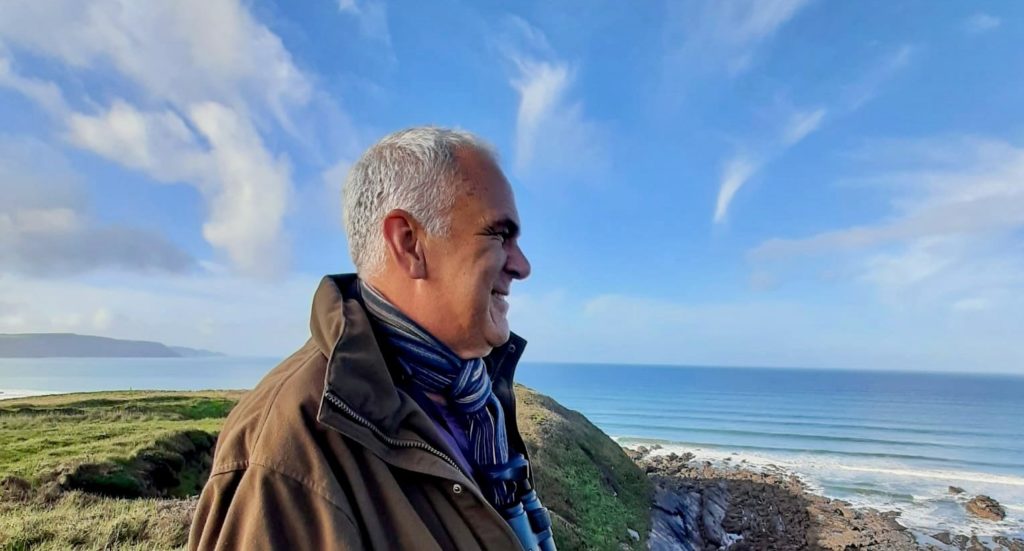
University of Exeter researcher Professor Kevin Gaston has been awarded honorary membership of the British Ecological Society (BES) – the highest honour given by the society.
Announcing the winners of its annual awards and prizes, BES described Professor Gaston and fellow honorary member Professor Mark Burgman as “eminent ecologists whose illustrious careers continue to advance our understanding of the natural world”.
Professor Gaston, whose work includes biodiversity, conservation biology and ecosystem services, was the founding Director of the Environment and Sustainability Institute.
“I am thrilled to receive this award. I first joined the BES when I was a PhD student, and it has now been a part of my ‘ecological firmament’ and my societal home for 40 years. I have learnt much from the society, its books, its journals, its meetings, and its members. It is kind and generous to be recognised by the society in this way,” Professor Gaston said.
“I came to ecology as one of those who had a fascination with nature from an early age. In some ways bringing things full circle, one of my current research interests is ‘personalised ecology’, the set of direct sensory interactions that each of us has with wild species and ecosystems, how this is shaped and its consequences. That has led to thinking about how we best facilitate those experiences, particularly amongst the young.
“Most of my research career has been concerned with the influences of people on nature and of nature on people, including such issues as rarity and commonness, biodiversity loss, and the extinction of experience. A particular theme has been the ecology of the night-time, how this is being altered by artificial lighting (from streetlights, vehicles and other sources), and how these effects can best be mitigated.”
Commenting on developments in ecology, he added: “In many ways, this is the most important time for the field of ecology. We are in the rather odd position of seeing the very object of study of our discipline fast disappearing in much of the world, with profound implications for humanity.
“I am both excited, and daunted, by the demands this places on the field, and by the need for it to become more clearly mission-oriented. Will future generations look back with admiration at how we responded and what we achieved, or will they wonder why we failed to behave as if the ecological crisis was real?”
Professor Melanie Austen, President of the British Ecological Society, said: “It is a privilege to recognise the outstanding contributions of this year’s BES Award winners, whose achievements span research, policy, conservation, public engagement and community leadership. Their work demonstrates both the extraordinary breadth of ecology and the vital role ecologists play in helping society respond to today’s environmental challenges.”
The winners of the BES awards will receive their prizes at a ceremony during the BES Annual Meeting, which takes place in Birmingham from 14 to 17 December.