Research project launched into how AI is impacting intimacy coordination in film and television
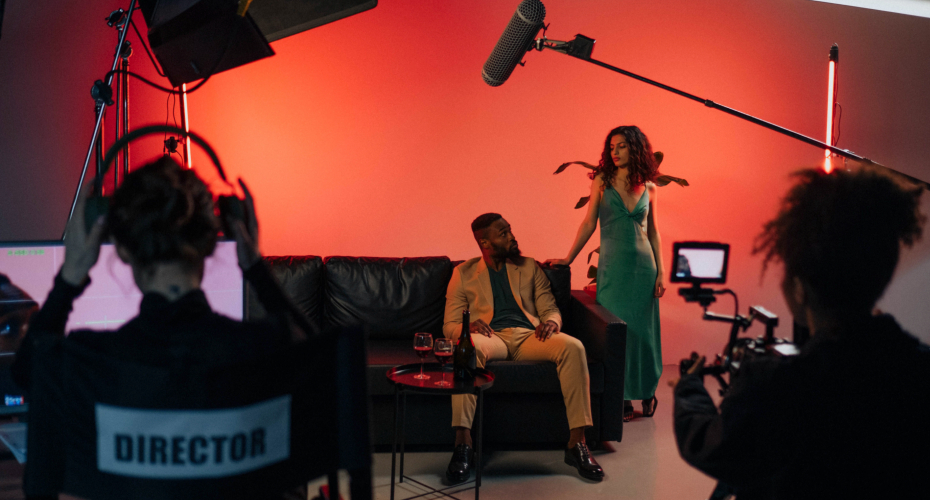
Photo by Ron Lach on Pexels
The impact that AI is having on the process of ‘intimacy coordination’ in film and television is to be the focus of a groundbreaking new research project.
Experts at the University of Exeter will work with professionals who safeguard actors engaged in intimate scenes and explore how generative AI is challenging their practices.
Funded by UKRI, the researchers will work towards delivering a report to industry professionals and policymakers that will also be shared with those trying to combat malicious sexual deepfakes.
Intimacy coordinators were formally introduced to film and television production from around 2017 onwards, following the #MeToo movement. They act as a liaison and movement choreographer for actors during scenes involving nudity, exposed physical contact or simulated sex.
“AI technologies have only recently become widely accessible, yet they are already creating significant challenges for representations of intimacy,” says Dr Akriti Rastogi, a Lecturer in Film and Television Studies, and project co-lead in the Department of Communications, Drama and Film. “While AI might enable quick and easy editing and aftereffects, it also raises fundamental concerns over image rights, creative livelihoods, and synthetic production of explicit scenes. We know, for example, that actors report agreeing to intimate scenes but experiencing non-consensual digital doubling in post-production – and this reinforces gender inequality on set.”

During the 18-month project, the team will engage with numerous international intimacy coordination communities worldwide, including RedCheeks Academy in the Netherlands, Brave Spaces in India, and Intimacy on Set in the UK. They will conduct interviews with intimacy coordinators, contrasting the different approaches across contexts, and initial findings will be presented back to them at an international conference.
At the conclusion of the project, the team will produce and share a report with professionals in the industry and policymakers, outlining strategies and guidelines for the protection of consent in the production of intimate scenes. It will also be presented to organisations fighting technology-facilitated gender-based violence, such as Ofcom, the Revenge Porn Helpline, and Chayn.
A website with resources and information will also be made available, and it’s hoped that the project will also help to establish an international network of coordinators who will assist future research and the sharing of good practice.
“This project will provide crucial insights into the impacts of new technologies on power relations and gender equity, both inside media industries and outside of them,” adds co-researcher Dr Hanne Stegeman, Lecturer in Media and Communications. “We hope to present novel guidelines on AI for intimacy coordinators and highlight which professional strategies could be used to combat deepfake abuse in private contexts too.
“In an age of AI-generated actors such as Tilly Norwood, this project is the first step in the development of a new research agenda on the intersections of technology and intimacy coordination across cultures.”