Football-style ‘Video Assistant Referee’ tackles climate misinformation

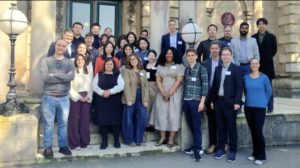
Dr Marcos de Oliveira outside the Arctic Basecamp tent in Davos
Climate misinformation will get the red card from a new AI-powered tool launched at Davos today (Wednesday).
ClimaVAR uses the concept of the Video Assistant Referee (VAR) – which helps football referees make decisions – and applies it to climate education.
Available online and as an app, ClimaVAR assesses climate information, flagging content as onside/in game (accurate), or showing it a yellow (misleading/partially incorrect) or red card/offside (false or harmful). It also provides the user with scientific references to where the information was verified.
Developed by the University of Exeter’s Nature and Climate Impact Team, ClimaVAR will be unveiled in Davos – the Swiss town that is hosting the World Economic Forum Annual Meeting.
“By combining the spirit of football with artificial intelligence, ClimaVAR brings the principle of fair play to climate communication – helping audiences everywhere recognise reliable information and call out misinformation with confidence,” said Dr Marcos de Oliveira.
“The goal is to make often-complex evidence about climate change accessible and engaging by communicating in clear, everyday language that is relatable and culturally resonant.”

ClimaVAR’s analysis comes from scientifically curated datasets rather than the opaque commercial AI training data typically used by Large Language Models.
Nature and Climate Impact Team leader Professor Gail Whiteman, from the University of Exeter Business School, praised ClimaVAR as “a creative leap in science communication”.
Professor Whiteman added: “Misinformation thrives on confusion, but culture, especially sports, can cut through that noise.
“ClimaVAR embodies our Nature and Climate Impact Team’s mission to bridge science, strategy and storytelling.
“It’s playful, yes, but also profoundly serious: helping people everywhere see truth and fair play as part of the same global goal.”
How ClimaVAR works:
- AI-assisted detection identifies trending or suspect climate claims.
- Referee-style verdicts make each claim’s accuracy instantly clear.
- Replay / explanation mode shows why a claim was flagged, and links to verified scientific sources.
- Designed for social media – decisions can be shared as cards, reels, or live commentary during climate events.
A launch event for ClimaVAR was held today (Wednesday) at Arctic Basecamp, which is located outside Berghotel Schatzalp in Davos, and another will be held tomorrow at 4pm CET at unDavos Summit.