Launch of new Exeter-Tsinghua Centre for Cellular Life
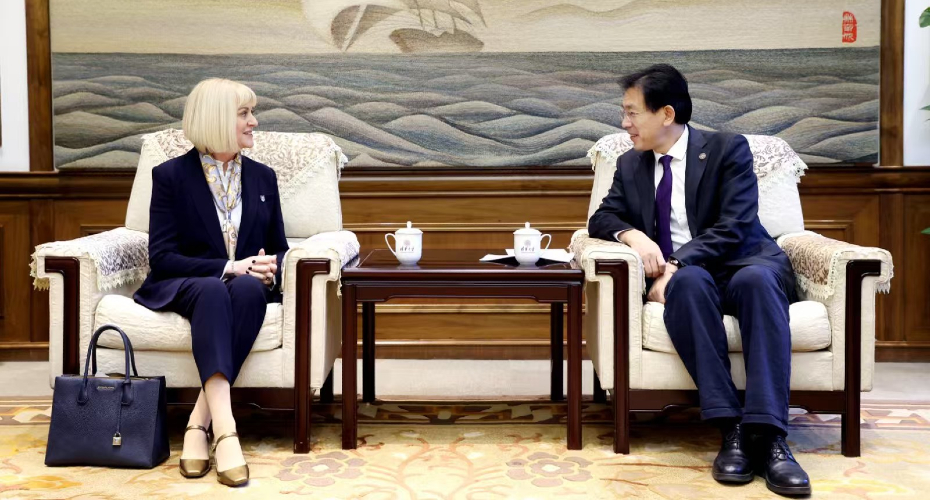
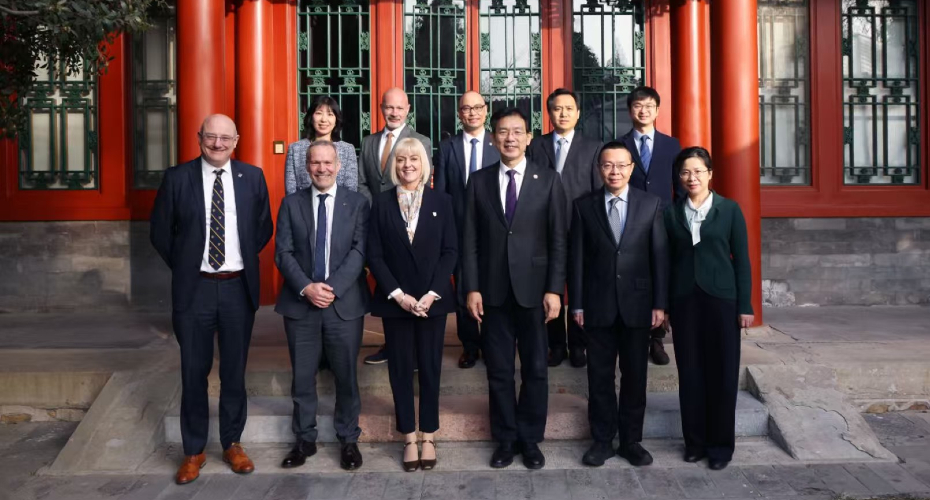
Professor Lisa Roberts and Tsinghua President Professor Li Luming
The University of Exeter and Tsinghua University have strengthened and expanded their long-standing strategic partnership with the launch of the new Centre for Cellular Life.
Led jointly by Exeter’s Living Systems Institute and Tsinghua’s State Key Laboratory of Membrane Biology, the Centre for Cellular Life brings together leading researchers in cell biology, developmental biology and genetics using an interdisciplinary approach to address fundamental questions around how cells function, develop and interact in health and disease.
The Centre establishes a structured, long-term platform for collaborative research, researcher mobility, student exchange and shared training across the life sciences.
Through joint projects, workshops and exchanges, researchers will explore cutting-edge approaches in areas including single-cell multiomics, cardiovascular biology and developmental systems to advance our understanding and generate innovations in regenerative medicine and human health.
The collaboration was signed during a visit to Tsinghua by Vice-Chancellor Professor Lisa Roberts and a senior delegation, in January.
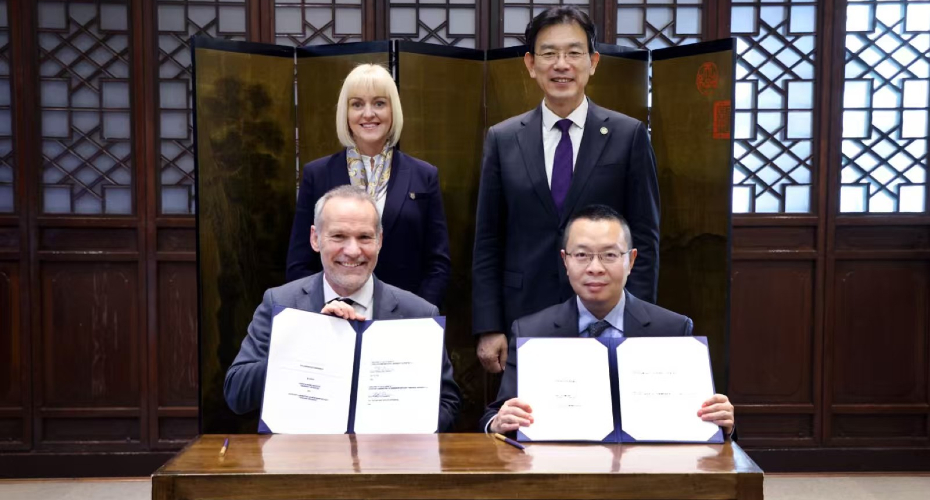
“The launch of the new Centre for Cellular Life marks a significant milestone in our longstanding strategic partnership with Tsinghua, expanding the horizons of our collaboration into this new and exciting area,” said Professor Roberts. “The new Centre will bring together our world-class research in interdisciplinary sciences to make new breakthroughs and advance the development and exchange of researchers between the UK and China.”
By fostering diverse research perspectives and cross-cultural collaboration, the Centre will enable the development of specialised skills and new methodologies, while strengthening international networks for early-career researchers and postgraduate students. The partnership is designed to encourage open scientific dialogue, knowledge sharing and the co-creation of research that addresses complex global challenges.
Professor Steffen Scholpp, LSI Director of Research and Impact, said: “I am genuinely excited about the new Centre for Cellular Life, which brings together the Living Systems Institute’s world-class interdisciplinary research with the outstanding expertise of Tsinghua’s State Key Laboratory of Membrane Biology. By combining approaches from engineering, physics, and mathematics with cutting-edge biology, we aim to explore the complexity of living systems and open new avenues to improve human health and wellbeing.
“Beyond the science, this partnership offers exceptional opportunities for our researchers to gain first-hand experience of different academic traditions and the rich cultural life of China. I see this as the beginning of a long-term, highly impactful collaboration.”
The launch of the new Centre builds on a rich and growing portfolio of collaboration between Exeter and Tsinghua. This includes academic fellowships spanning multiple disciplines, the establishment of the Institute for Global Humanities in 2024, and major joint initiatives such as the Digital Archives of the Middle East (DAME) project and Joint Chair. Together, these activities reflect the breadth and depth of the interdisciplinary partnership.
Prof Li Yu, Director of the State Key Laboratory for Membrane Biology at Tsinghua, said: “The fruitful discussions and clear collaborative entry points in both research and education that emerged from our successful joint symposium at Tsinghua last December laid a strong foundation. The signing at Tsinghua and the establishment of this Centre build squarely upon that shared understanding. By combining Tsinghua’s depth in cell and developmental biology with Exeter’s innovative interdisciplinary approach at the Living Systems Institute, we will be able to jointly explore the future of life sciences.”
The Centre also aligns with the University’s mission to use the power of education and research to create a greener, healthier and fairer future, and its ambition to deliver transformative breakthroughs in human health and wellbeing through international collaboration and excellence in research.