
Archaeologists discover unique drainage and irrigation system that enabled the “Neolithic revolution” in the Amazon
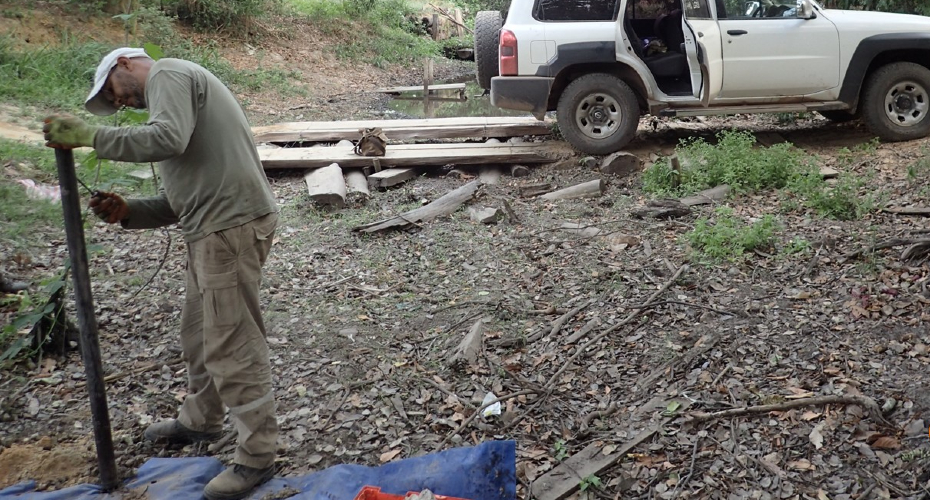
Coring an ancient canal in Bolivia Credit Umberto Lombardo
A pre-Colombian society in the Amazon developed a sophisticated agricultural engineering system that enabled them to produce maize throughout the year, new research has revealed.
The study, published in the journal Nature, describes how the pre-Hispanic Casarabe society of the Llanos de Moxos in Bolivia designed and implemented an innovative landscape engineering system, including the construction of extensive drainage canals and farm ponds.
This advancement facilitated the transformation of flooded tropical savannahs into highly productive fields, thereby driving the development of the “neolithic revolution” in the Amazon, understood as the process towards an economy based on grain production.
This finding contradicts previous theories that dismissed the possibility of intensive monoculture agriculture in the region.
The research was conducted by an international team including scholars at the Institute of Environmental Science and Technology (ICTA-UAB) and Prehistory department at the Universitat Autònoma de Barcelona (Spain); the Universities of Exeter, Nottingham, Oxford, Reading and Southampton; the University of São Paulo (Brazil) and Bolivian collaborators.
The region studied in the report was inhabited by the Casarabe people between 500 and 1400 A.D., and is a tropical lowland savannah marked by intense rainy seasons and flooding, as well as very dry seasons.
The discovery, led by Umberto Lombardo, an environmental archaeologist at the UAB, has identified a unique agricultural infrastructure, previously undocumented anywhere else in the world. This system enabled the Indigenous people to drain excess water from flooded fields during the rainy season, facilitating agricultural productivity.
In addition to the drainage canals, the Casarabe people constructed clusters of farm ponds that served as water reservoirs. These ponds enabled pot-irrigation, allowing maize cultivation to continue throughout the dry season.
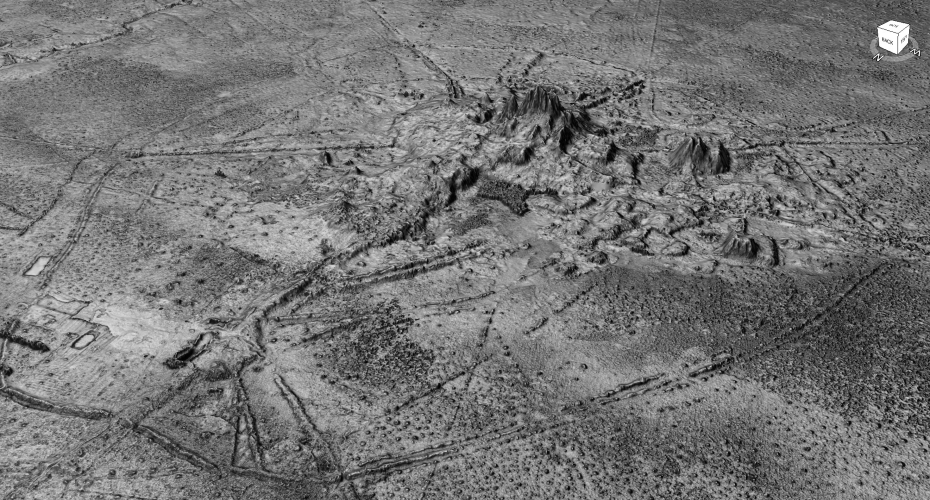
This dual water management system enabled at least two harvests of maize per year, ensuring a stable food supply year-round, which was essential for sustaining a relatively large population.
“This intensive agricultural strategy indicates that maize was not only cultivated but was likely the staple crop of the Casarabe culture,” explains Dr Lombardo. “And the data shows the absence of other types of crops, as well.”
This agricultural model did not rely on traditional slash-and-burn techniques used to create fertile fields. Instead, the Casarabe people preserved nearby forests for other purposes, such as obtaining firewood and medicinal plants, while implementing practices that maximized the efficient use of water and soil in the seasonally flooded savannas.
These conclusions were made possible through meticulous fieldwork combining techniques such as microbotanical analysis, remote sensing, and environmental archaeology. The analysis of 178 phytolith samples (plant microfossils), supervised by the University of Exeter, and pollen from a farm pond confirmed the presence of maize in the fields and the crucial role of maize monoculture in the diet of this pre-Columbian society.
Dr Lombardo said: “We can document that this is the first grain-based agrarian economy in the Amazon, where until now it was believed that agriculture was based on agroforestry polyculture and not on large-scale monocultures. Now we know that, in the Llanos de Moxos, this was not the case.”
The authors of the paper go on to conclude that this innovative piece of engineering allowed for the transformation of a challenging environment into a productive system that ensured food stability and supported the development of a growing population.
The research not only sheds light on the technological capabilities of pre-Columbian civilizations but also offers valuable lessons for modern agricultural sustainability. This discovery is a testament to the ingenuity and adaptability of the Casarabe people, who thrived due to their ability to design long-term sustainable agricultural solutions in an adverse environment.
“New discoveries in the Amazonian Llanos de Moxos continue to reshape our understanding of the deep-time human history of the largest tropical forest on earth,” adds Professor Jose Iriarte, co-author on the paper in Exeter’s Department of Archaeology and History. “The Casarabe people, known for their urban-scale societies, are now revealed to have relied on maize as a staple crop, which they cultivated through engineering this challenging seasonally flooded landscape.
“This groundbreaking study showcases the power of interdisciplinary archaeology, seamlessly integrating fieldwork, remote sensing, and cutting-edge archaeobotanical research.”