New archaeology project awarded grant by The National Lottery Heritage Fund to unearth and save a rare Roman villa in Devon
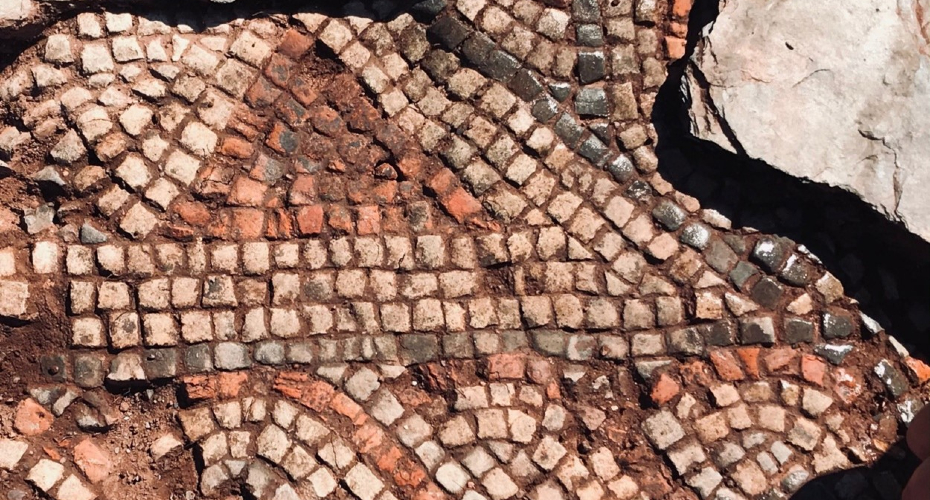
Part of the polychrome mosaic revealed during preliminary excavations in 2021. Photo by AC Archaeology Ltd.
A new research and community project, funded by a £249,000 grant from The National Lottery Heritage Fund, will excavate a rare Roman villa in Devon containing archaeologically significant mosaics.
The villa, located beneath farmland in the parish of Halberton, is understood to have polychrome mosaics – colourful and pictorial tiled floors popular during the Roman era. If so, it will be the most westerly example of the style yet found in the country.
The project, named SHARE (Saving Halberton’s Ancient Roman Environment), is being led by archaeologists at the University of Exeter, in partnership with Devon County Council, Tiverton Archaeology Group, and the Sampford Peverell Society. It will run for the next five years and promises not only to unearth the full story of this Roman villa and preserve the mosaics, but also offer a full programme of community engagement activities and volunteering opportunities.
“This Roman villa, and its surrounding working areas, is an important site for understanding the ‘Romanisation’ of Devon,” says project lead Dr Susan Greaney, of the world-renowned Department of Archaeology and History at Exeter. “Very few have been found in the county – this is just the fifth – so it’s important to record the details of the complex and recover the mosaics before they are inevitably damaged or lost as a result of the farming of the land. We are thrilled to have received this support from the National Lottery Heritage Fund which will allow us to fully investigate the villa.”
SHARE hopes to complete a two-decade quest by local archaeologists to assess the significance and condition of the Roman site.
The site was initially identified by John Hill, a metal detectorist, in 2004, before community volunteers found tiles, mosaic tiles and roofing slates through coordinated fieldwalking and small-scale excavations. A geophysical survey commissioned by Devon County Council confirmed the presence of enclosures and probably buildings, and then further excavations and surveys, including one conducted by a University PhD student, revealed the presence of the mosaics.
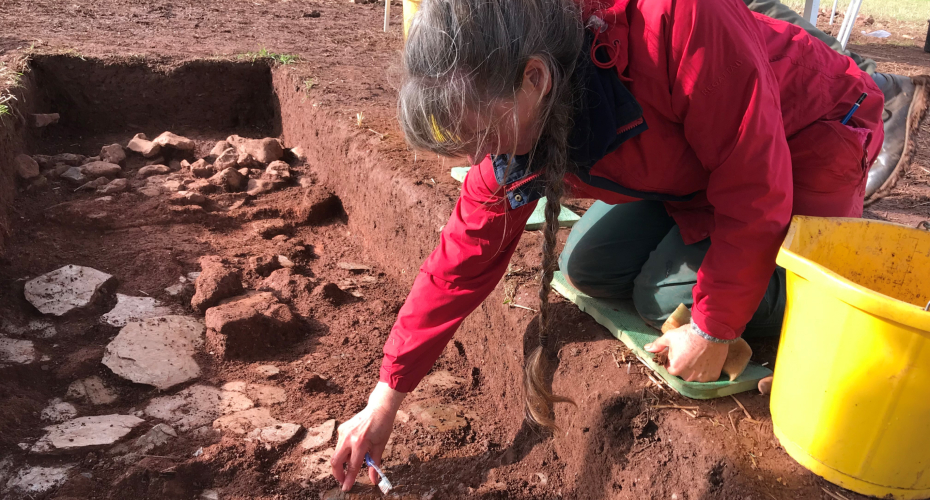
“A picture has emerged over time of a villa sitting within a wider complex, with two further possible buildings, an enclosure to the south, and possibly an earlier enclosure to the north-west,” says Bill Horner, County Archaeologist. “Charcoal dating to the 4th century AD offers evidence of iron smelting at the end of the Roman era and possibly beyond.”
The villa itself measures 35m by 10m, with a ‘winged-corridor’ layout, and is believed to have been built between the mid-2nd and 4th century AD. Parts of a mosaic floor survive, and there is evidence that the building had underfloor heating.
Dr Greaney says that the first year of excavations will focus on the villa itself. The team will conduct an eight-week dig between May and July 2026, during which they will record and lift the mosaic floors, which, along with the rest of the site finds and archives, will be preserved in Tiverton Museum of Mid-Devon Life. Over two subsequent years, attention will switch to the wider estate located on neighbouring land. All three digs will involve student archaeologists, similar to the summer fieldwork that has taken place on the Killerton estate, and the team will also create opportunities to volunteers and community groups, open days and an education programme.
“These excavations will form the core of a five-year community project that will ‘SHARE’ the archaeological process with people in the local area who are not normally engaged in heritage, as well as piecing together the longer-term evolution of their landscape,” adds Dr Greaney. “We hope that we can fully realise the potential of this archaeological site, bringing people together and creating a sense of place and belonging, enhancing connection and wellbeing, and leaving a legacy of vibrant, active local societies, who will be confident to lead similar projects in future.”
Stuart McLeod, Director of England – London & South at The National Lottery Heritage Fund said: “We’re delighted to support this exciting project to uncover and preserve such a rare piece of Roman history in Devon. Thanks to National Lottery players, SHARE will not only safeguard these remarkable mosaics and the villa’s story but also create opportunities for local people to get involved, learn new skills and connect with the heritage on their doorstep.”
Volunteers will be able to take part in the excavations, and local groups and schools will be able to participate in workshops, site visits and events. Visit the website for more information, including signing up to a mailing list.