
Insects are victims too, not just invaders, says study
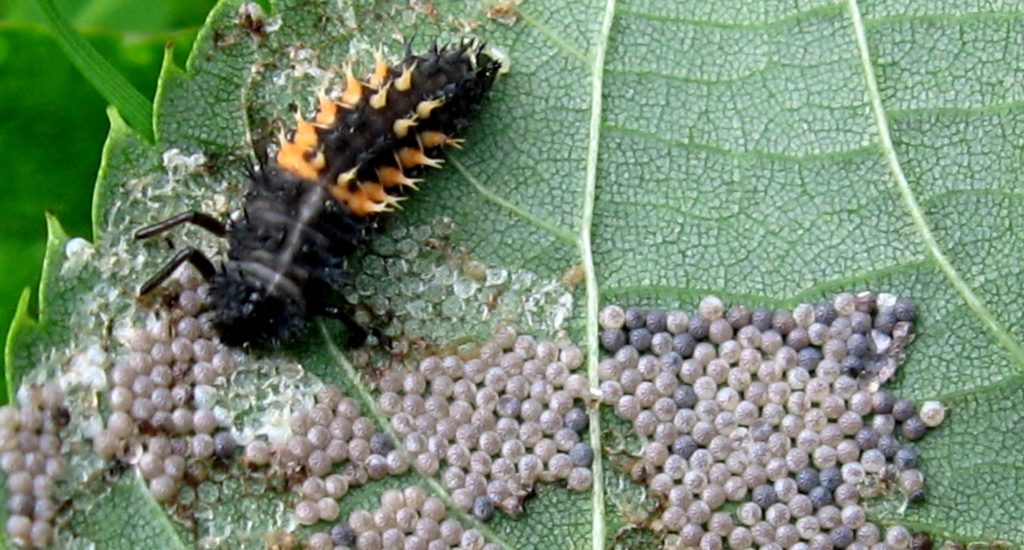
Harlequin larva and moth eggs. Credit Bill Phillips
Insects are often seen as invaders due to high-profile species like the yellow-legged (Asian) hornet, harlequin ladybird and fire ant. But new research reveals insects are also major victims of invasive alien species – exacerbating population declines and reducing their ability to provide vital services for biodiversity and people, from pollination to pest control.
The first global analysis of its kind, led by the UK Centre for Ecology & Hydrology (UKCEH), revealed that invasive alien species reduce abundance of terrestrial insects by 31% on average and reduce species richness by 26%. Invasive animals outcompete or eat insects while invasive vegetation replaces native plants that insects feed upon.
The study, which analysed data from six continents, shows certain terrestrial insect groups including bees, wasps, ants and true bugs are more negatively affected by invasive alien species than others, such as beetles. But the authors point out that the outcomes vary, depending on the dynamics of the local environment – for example, invasive plants might support insects in places where native vegetation has been lost.
Invasive alien species are already recognised by IPBES asone of the five big direct drivers of global biodiversity loss, alongside land- and sea-use change, direct exploitation, climate change and pollution. These threaten nature, economies, food security and human health.
Grace Skinner, a data scientist at UKCEH who led the new study, said: “It is crucial that we recognise insects not just as invaders but also as victims of invasion. Insects are undergoing concerning declines across the world and as this trend continues, essential ecosystem services will increasingly be at risk.
“Identifying the insects most vulnerable to biological invasions will support better prioritisation of habitat management and also action to prevent and control invasive alien species. This is particularly important when resources are limited.”
Co-author Professor Helen Roy, from UKCEH and the University of Exeter, said: “Tackling invasive alien species is achievable but urgent. Enhancing cross-border collaborations on biosecurity are critical to preventing the introduction of damaging invasive alien species. Everyone can make a difference through their actions too by, as an example, following guidance from campaigns such as ‘Be Plant Wise’.”
It is widely acknowledged that insects are struggling globally, though the magnitude of change varies among species and regions. Despite invasive alien species being a major global threat, their effects on insects have been far less studied than other pressures such as urbanisation and nutrient enrichment. This is the first study to analyse and quantify the impact of invasive alien species on insects on a global scale.
Scientists warn the challenges to insects will increase further.
“We hope our analysis encourages more research into how invasive alien species interact with other threats to insect biodiversity – for example how climate change might influence invasive alien species populations and amplify their impacts,” said study co-author Dr Joseph Millard, of the University of Cambridge.
The study, funded by the Natural Environment Research Council, has been published in the journal Nature Communications. It focused on four animal orders, representing 62% of all insect species, that experts have identified as being particularly threatened by invasive non-native species.
The analysis found the average reductions in abundance were: Hemiptera (true bugs) – 58%; Hymenoptera (ants, bees, sawflies and wasps) – 37%; Orthoptera (grasshoppers, locusts and crickets) – 27%; and Coleoptera (beetles) – 12%.
Gardeners are advised to carefully consider their choice of plants, while anglers, boaters and forestry workers, for example, should ‘check, clean, dry’ equipment.