
Businesses that care in a crisis stand to gain in the long run
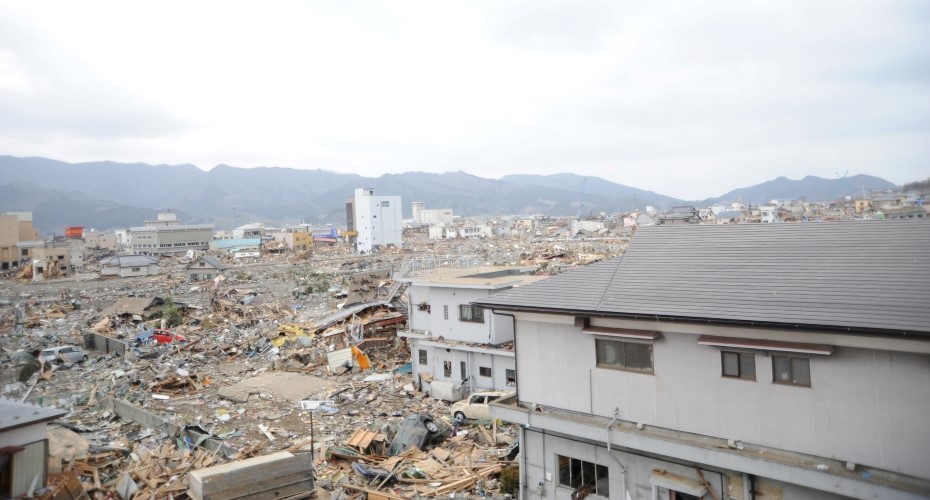
The aftermath of the earthquake in the city of Ofunato, Japan. Credit: US Pacific Fleet, Creative Commons licence
Companies that show ‘collective empathy’ when disaster strikes are more likely to experience growth in the long term.
In a new study in the Journal of Management, researchers investigated how catastrophe reshapes corporate behaviour.
They studied 575 companies directly impacted by the Great East Japan Earthquake of 2011, and found that by 2019 firms with moderate and high exposure to the disaster had 17% higher revenues than firms less exposed to the earthquake.
They asked senior executives how deeply their firms were impacted by the disaster, whether their internal priorities had changed and if the crisis had sparked a stronger sense of social responsibility.
The researchers then paired the responses to company revenues up until 2019.
Using a new tool to measure the extent to which organisations are attuned to suffering and motivated to act on it after a crisis, they discovered a direct link between the emergence of this ‘collective empathy’ and stronger long-term growth.
“Collective empathy helped organisations turn disruption into learning, adaptation and renewal, said Dr Lucrezia Nava from the University of Exeter Business School.
“It shifts attention away from fear and uncertainty and towards purposeful action, encouraging people to share experiences, support one another and work towards a common goal.
“This reduces resistance to new routines and practices and supports organisational learning and resilience, which can over time enhance growth.”
How disaster sparks new learning
Hanamaki Onsen is a hotel and spa that in the immediate aftermath of the earthquake faced severe damage, frightened guests and employees and disrupted communications.
Its management and staff quickly mobilized to keep guests safe, host evacuees, provide food and shelter and coordinate relief efforts for surrounding communities.
Its Executive Director Yutaka Sasaki recalled: “I started to cry. But that was not the end of the matter… with the single-minded determination to help the victims no matter what, the company accepted as many aid workers as possible, disregarding profitability.”
But in the years that followed, Hanamaki Onsen used its role in community recovery to develop tourism programmes focused on learning and disaster prevention that created a new revenue stream for the company.
“While disasters disrupt operations, deplete resources and hinder organisational growth as this case shows it can also catalyse organizational learning,” said Dr Nava.
“By breaking established routines, exposing hidden vulnerabilities, and forcing reflection, disasters may also spur the development of new routines and capabilities that, once recovery is complete, enhance long-term growth.”
The researchers say their findings are relevant to leaders managing disasters, shocks or periods of certainty, and illustrate how empathy can be the basis for collective strength.
“Empathy is often portrayed as incompatible with strength and performance,” added Dr Nava. “Our findings suggest the opposite: collective empathy can help organizations learn, adapt and ultimately emerge stronger after a crisis.”
Long-Term Organizational Growth Following Disasters: The Role of Collective Empathy is published in the Journal of Management (JOM).