‘Multispecies Map’ reveals diverse wildlife on university campus
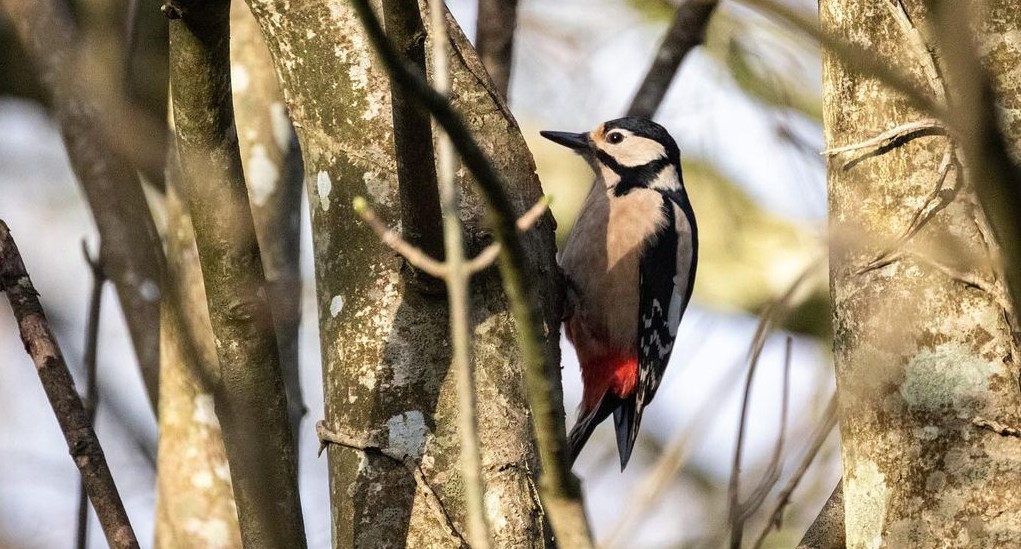
Greater spotted woodpecker. Credit Brad Roach
A new “Multispecies Map” reveals the vast range of wildlife found on the Penryn Campus in Cornwall.
The map shows locations of animals and plants recorded by staff and students on the campus, which is shared by Exeter and Falmouth universities.
From hedgehogs and woodpeckers to snails and a newly discovered species of jumping spider, the map tells a story of how people, plants and animals can successfully share a landscape.
Conceived by University of Exeter researcher Dr Sarah Crowley, the map is released in time for World Environment Day (June 5).
“We created the Multispecies Map to record and learn about the wildlife that co-inhabits our campus, and to share what we find,” Dr Crowley said.
“The map shows sightings and records of plants and animals, but also contains stories about our scientific research, student and volunteer initiatives, and the conservation work of our grounds team.
“We hope to develop the map as a resource that students, staff and our wider community can add to, learn from, and use to help care for the wonderful diversity of life on the Penryn Campus.”
The map was developed in collaboration with academic and professional services staff on the Penryn Campus, with support from external champions and collaborators, and funding from the University of Exeter Sustainability team and the Environment and Sustainability Institute.
In 2023, as Dr Crowley and Abhishek Dixit (then a Biodiversity Project Officer for Falmouth Exeter Plus and now a University of Exeter PhD student) were collecting data for the map, American journalist Ryan Huling visited the campus.
His work examines human-wildlife interactions around the world – and the story of the Multispecies Map features in his new book: The Hidden Nations of Animals.
An illustrated version of the map, created by Oliver Uberti for the book, has been archived by the US Library of Congress as the first ever multispecies map in its collection.
Dixit said: “Nature is often seen in popular culture as something separate from us, where we must go and visit a faraway national park to truly immerse ourselves in ‘wilderness’.
“The Multispecies Map shows that a whole world of plants, animals and insects lives and breathes under our very noses; we walk past complex ecological processes every day without noticing them.
“The hope with this project is to demonstrate how we can engage with nature in our own backyards, understand it, and find ways to coexist with it.”
Explore the interactive Multispecies Map at: https://exeter.ac.uk/multispeciesmap