Exeter and Fudan scholars explore global challenges through dialogue and collaboration
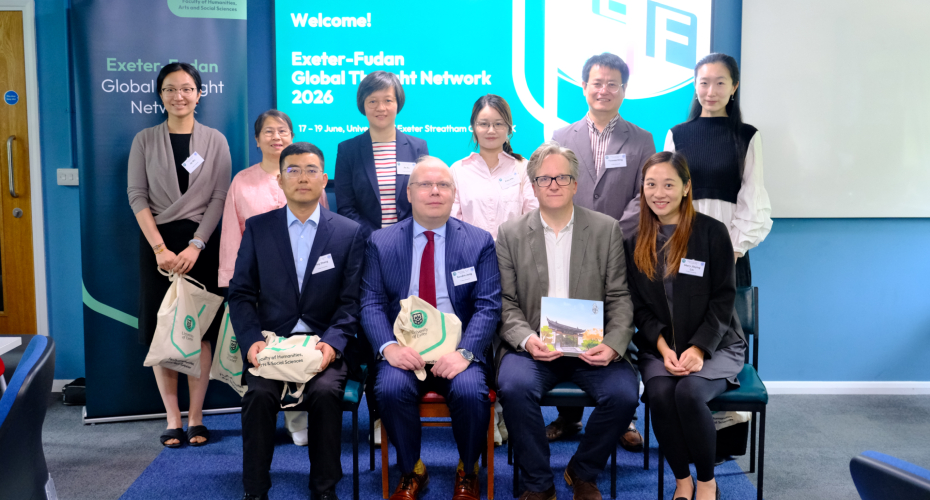
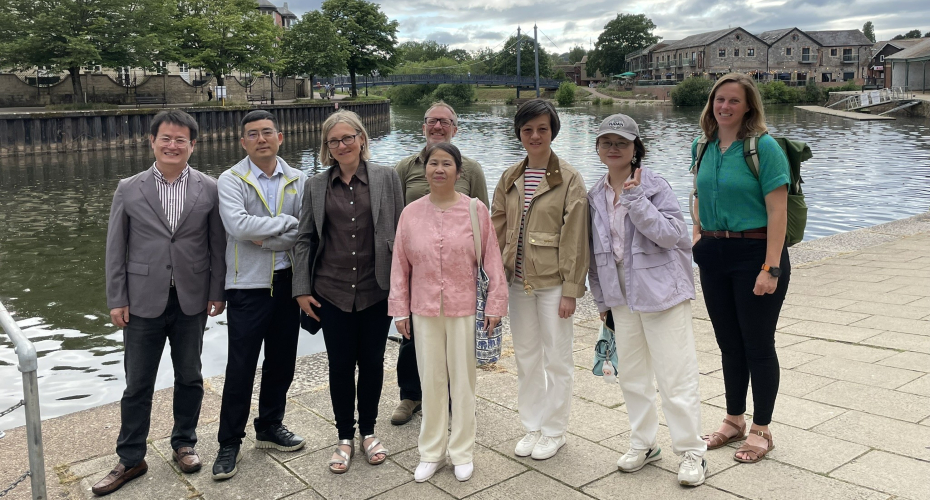
One of the University’s most significant international partnerships in the humanities and social sciences has convened for its annual conference.
The Exeter–Fudan Global Thought Network Conference brought together academics, early career researchers and postgraduate students from both institutions to explore the theme Thinking Across Contexts: Disciplinary Knowledge and Its Limits.
Hosted by the Faculty of Humanities, Arts and Social Sciences (HASS), the three-day event examined how knowledge is shaped by the cultural, historical, political and institutional contexts in which it is produced, and considered the challenges and opportunities that arise when ideas travel across disciplines, societies and traditions of thought.
The conference programme reflected the breadth of expertise across Exeter and Fudan, with sessions spanning environmental governance, political thought, international relations, heritage, history, literature, philosophy, education, cultural studies and social policy. Discussions addressed a range of contemporary issues including climate change, decolonisation, global governance, cultural exchange, social inequality and the future of higher education.
Opening the conference, Professor Will Higbee, Associate Pro-Vice-Chancellor for Business Engagement and Innovation in HASS, highlighted the importance of international dialogue in addressing the challenges facing societies today.
He said: “We live in a period marked by profound global challenges: geopolitical uncertainty, climate change, rapid technological transformation, social inequality and the growing complexity of international relations. These challenges demand not only scientific and technological innovation, but also cultural understanding, historical perspective, ethical reflection and meaningful dialogue. This is where the humanities and social sciences make an indispensable contribution.”
The Exeter–Fudan Global Thought Network was established in 2020 to create opportunities for sustained intellectual exchange between scholars at the two universities. Since then, it has evolved from a series of online conversations into a thriving interdisciplinary community supporting seminars, workshops, academic exchanges, collaborative research development and student engagement.
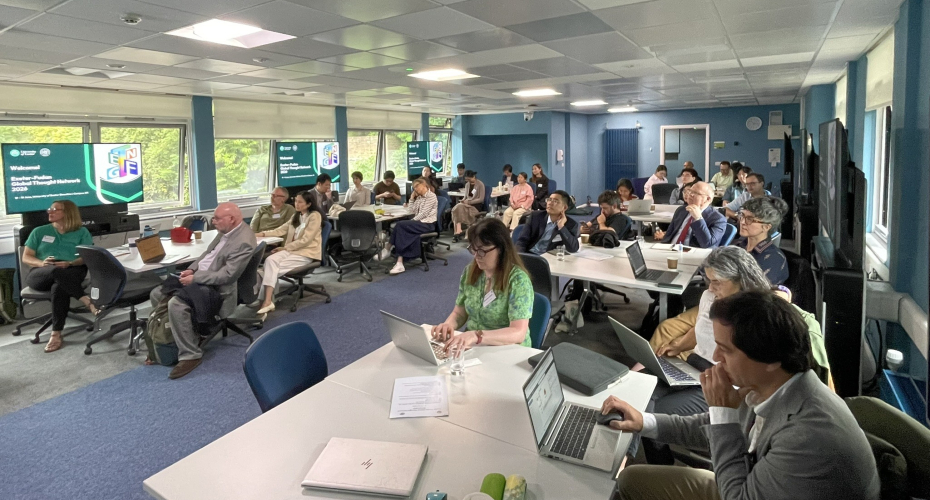
The 2026 conference reflected that continuing growth, combining academic presentations with dedicated discussions on future collaboration, research funding opportunities, joint educational initiatives and staff and student mobility.
Professor Sandro Jung, Distinguished Professor in the Department of English Language and Literature at Fudan University and a long-standing champion of the Network, reflected on the strength of the partnership that has emerged over recent years.
“In the Exeter-Fudan Global Thought Network, what I see is a great sense of community and real eagerness to learn from each other and to have dialogue,” he said. “This has transformed the Global Thought Network from more than a network, but into a community.”
Professor Jung also highlighted how the conference theme encouraged participants to engage with different intellectual traditions and perspectives.
“Decolonisation and independent discourse systems are different ways of saying something similar,” he said, reflecting on the various perspectives and traditions which come to bear in the Network’s conversations and scholarly exchanges.
Alongside formal presentations, delegates participated in collaborative workshops focused on identifying future areas for joint research and educational activity. Discussions explored opportunities across global and area studies, governance and political thought, heritage and world literature and student mobility and joint programmes.
The conference forms part of a broader strategic partnership between Exeter and Fudan that encompasses research collaboration, academic exchange and educational initiatives.