
Innovative Mayan maize farmers used animals as biochemical protein concentrators to solve dietary issue
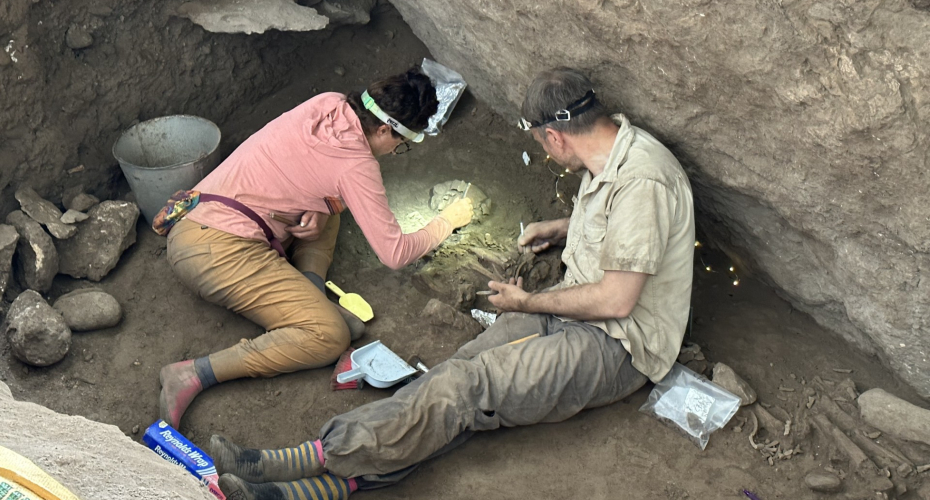
Dr Mark Robinson, right, undertaking an excavation during the project
Mayan farmers used livestock as ‘biological protein concentrators’ to ensure their communities had access to vital amino acids, new research from Central America has found.
A team of archaeologists working in southern Belize conducted cutting-edge isotope analysis to trace how lysine moved from maize through turkeys and into ancient human diets, spanning more than 5,000 years of evolution.
The findings, published in AAAS Science Advances, explain the nutritional conundrum of how the Maya were able to obtain sufficient amino acids for bone and muscle development from their maize-based diet.
It also reveals that maize cultivation and animal management were probably complementary parts of a greater adaptive food system as early as 6,100 years ago.
The work was conducted by archaeologists from the University of New Mexico (UNM), supported by Dr Mark Robinson, an expert in how humans interacted with the landscape in Central America, at the University of Exeter.
“What we found is that these early communities weren’t simply adopting agriculture for calories,” said Nadia Neff, a doctoral candidate in archaeology at UNM. “They were actively engineering their food systems to solve different nutritional problems. It’s just not possible for people to eat enough maize directly to result in such high carbon stable isotope ratios in their lysine.”
Maize was a major dietary staple for the Maya and provided an important source of their carbohydrates, as well as fodder for their livestock. But it is low in lysine and would require an adult to consume 40lbs per day to ingest sufficient quantities. And this is why the research team were curious to find high levels of lysine in human bone collagen recovered from the dig site.
By collaborating across multiple disciplines, including biochemistry, ecology, nutrition science, and observations of modern Maya farming practices, Neff and her team analysed the isotopic signatures in individual amino acids from turkey bone collagen and modern plants, as well as human bones.
The results led the team to conclude that instead of only eating maize directly, early farmers were also eating animals that ate or were fed maize, thereby “concentrating” maize-derived lysine as it moved up the food web.
“Because these animals can eat far more food relative to their body size than humans, they can obtain all the lysine they need from maize alone,” added co-author Dr Robinson, who helped to fund the research. “When people eat those animals, they are essentially accessing concentrated maize-derived lysine converted into high-quality animal protein.
“We know that maize was so important to ancient Mesoamerican communities that it even became central to many of their religious beliefs. It underpinned not just their diet, but their society. And what this research reveals is just how innovative the Maya were in their management of it.”
The research was conducted as part of the Research into the Origins and Organization of Tropical Societies (ROOTS), which works with local communities and NGOs to carefully excavate rock shelter sites dating back 10,000 years. The analysis was conducted at UNM’s Human Ecology and Radiocarbon Lab at the Center for Stable Isotopes.
The findings are published in Nutritional Adaptations to Early Maize Cultivation: Earliest Isotopic Evidence of Maize-Based Animal Provisioning in the Neotropics, in the AAAS Science Advances Journal.