
University of Exeter recognised for commitment to boosting social mobility
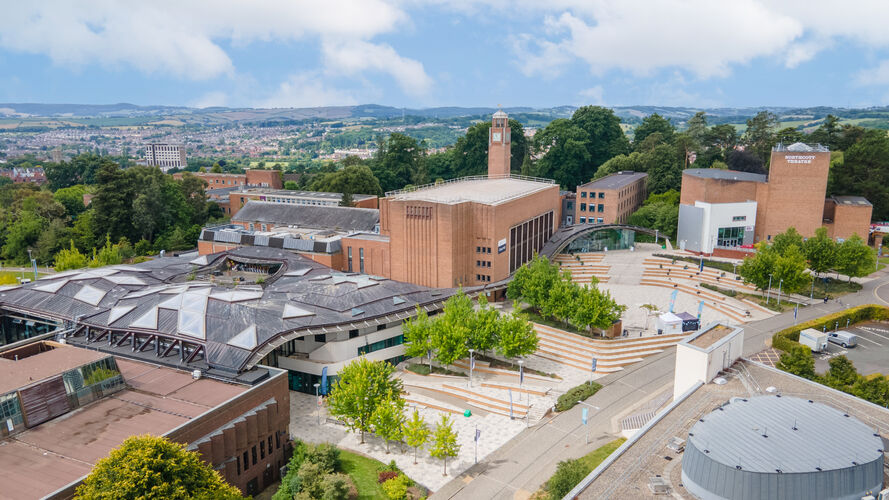
Exeter has been named as “highly commended” winning a Gold Award in the “University of the Year” category at the UK Social Mobility Awards.
Staff and students at the University of Exeter have been recognised for their commitment to boosting social mobility in the South West and beyond.
Exeter has been shortlisted in the “University of the Year” category at the UK Social Mobility Awards.
The University’s work to tackle barriers to disadvantage and open-up opportunities includes engaging with policy debates at the highest level; community-based programmes for pupils and innovations such as launching AI outreach and development for educators.
University of Exeter outreach in the South West supported over 24,000 students from 100 schools during 2025. This included working with 2,500 participants in fair access and progression schemes and providing information, advice and guidance, subject-specific educational opportunities and tutoring both in schools and on campus.
Professor Lisa Roberts, President and Vice Chancellor of the University of Exeter, said: “At the University of Exeter we have a deep commitment to boosting social mobility – for those in our region and around the country. We are very proud of our work to promote access to higher education and the opportunities we provide for young people, and we are delighted those efforts have been recognised once again by the UK Social Mobility Awards.”
Nicola Sinclair, University of Exeter Associate Director of Access, Participation and Outreach, said: “We are working to embed equity into every aspect of the student and staff experience so those from all backgrounds can thrive so we are delighted these efforts have been recognised once again by the UK Social Mobility Awards.
“The University of Exeter’s leadership of the South West Social Mobility Commission, our regional civic agreements, and active role in shaping regional skills strategies are contributing to opportunities within our region. Efforts to support social mobility and promote equal opportunities span widening participation, inclusive teaching and learning, research and targeted support for underrepresented students, alongside a robust framework for staff inclusion and progression.”
The University’s largest fair access scheme, Exeter Scholars, supports more than 1,000 young people as they prepare to move on to higher education, employment or training. Evaluation shows participants achieve much higher rates in applying to university and winning places.
Community Exe, an innovative programme involving community champions, and sports, cultural, tech and leadership organisations provides educational opportunities for boys from low socio-economic backgrounds. Schemes are also in place providing tailored support for young people in care, those outside mainstream education and mature students returning to learning.
The University’s social mobility work extends nationally including schemes supporting thousands of young people from under-resourced backgrounds with educational partners such as the Sutton Trust, IntoUniversity, Reasling Opportunities, SEREN and The Elephant Group.
Evaluation shows significant benefits for participants such as knowledge and skills development, increased confidence and self-efficacy, and improved educational outcomes. Initiatives like these have also contributed to a diverse student community at Exeter, with the number of entrants in receipt of free school meals increasing by 65% over the last three years and 13,180 under-represented students joining the university over the same period.
The University works hard to create an inclusive student community. Success for All is a university-wide initiative designed to eliminate disparities in student outcomes, embedding inclusive practices across teaching, assessment, and student support. Exeter Cares meanwhile provides support for a community of around 1,500 Exeter students who face complex personal challenges due to being in care, seeking asylum or having caring responsibilities.
The South West Social Mobility Commission produces evidence-based recommendations to improve educational and employment outcomes across the region including roll out of an Equity Score Card for schools. The Centre for Social Mobility leads research into the underlying causes of disadvantage and provides insights to help policymakers implement improvements at a national scale.