
Scientists develop ‘floating scarecrow’ to protect threatened seabirds
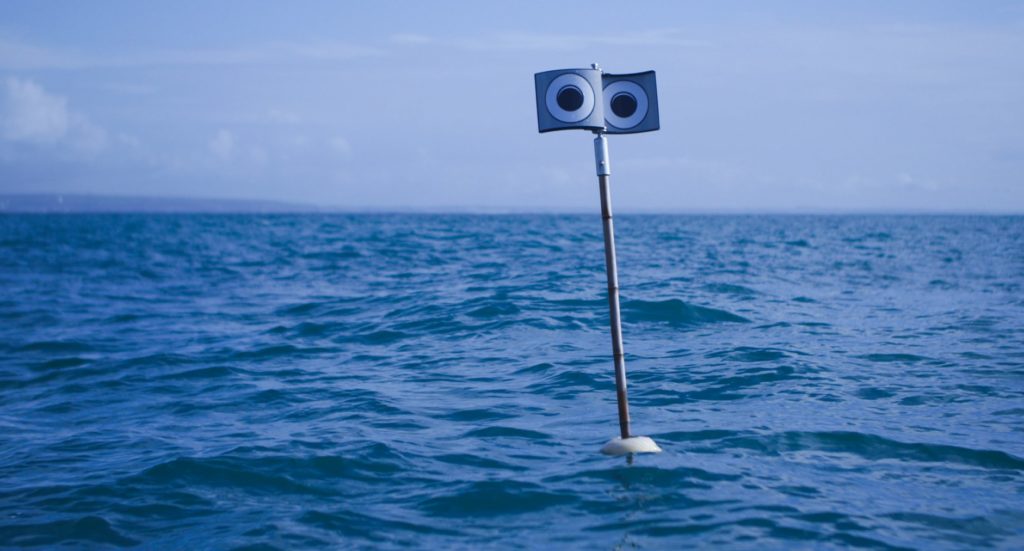
New research has shown that a “floating scarecrow” developed by UK-based scientists and a repurposed bird-scaring kite can help save threatened seabirds from getting caught in fishing nets.
Every year an estimated 95,000 diving seabirds such as guillemots and razorbills are incidentally caught and drown in gillnets around the coast of Europe [1]. The issue, known as “bycatch”, is a global problem that affects a range of seabird species.
Now research with Cornish fishermen has shown how the simple deterrents, when deployed strategically, can reduce bycatch by around two thirds.
The scientists from Devon-based Fishtek Marine, a global leader in marine conservation, jointly developed with the RSPB a floating scarecrow known as a Looming Eye Buoy (LEB).
It was trialled it off the coast of Cornwall, alongside an alternative deterrent technique using a commercially available kite in the shape of a bird of prey, known as the “scarybird” kite.
The LEB buoy has a spinning head that uses an animated eye effect to scare birds away from diving into the nets.
Data from the trials was analysed by scientists from the University of Exeter.
The results of their study, published in the journal Conservation Letters, demonstrate that both devices decreased the risk of guillemots and razorbills being caught in nets by around two thirds. The chances of birds being caught were reduced by 59% using LEBs and by 71% using kites.
The data was collected as part of a two-year trial led by Fishtek Marine, with 10 Cornish fishermen, who had cameras fitted to their boats to collect data on the mitigation effect of the devices on seabird bycatch levels.
The partnership with fishermen has been critical in helping to improve designs and gaining valuable insights into how the devices can be used most effectively.
The research highlights that in Cornwall most seabirds were caught during the winter months. This will help ensure that future deployments of these seabird bycatch reduction devices can be targeted to specific seasons.
Tom Horton, lead author from the University of Exeter, said: “This study provides some of the strongest evidence to date that simple, practical deterrents can substantially reduce seabird bycatch in gillnet fisheries. By also identifying when and where bycatch risk is highest, we now have a clear opportunity to target mitigation measures where they can deliver the greatest conservation benefit for vulnerable seabird populations and encourage sustainable fishing practices.”
Tom Hooper, senior fisheries scientist at Fishtek Marine, said: “These trials have been very encouraging and show that floating deterrents can make a real difference in protecting seabirds from getting caught in fishing gear. One of the most significant results of this study was showing how seabird bycatch was concentrated in key locations at specific times of the year. This means that deterrent efforts can be directed and efficient.
“This technology means that fishing can continue while reducing the effects on seabirds However, any technology used at sea must be simple and robust, so working with fishermen means that we learned a great deal about how the devices were used and as a result we can refine and improve so that it fits their operational needs.”
The buoy is the result of an eight-year collaboration between scientists at Fishtek Marine and nature conservation charity the RSPB. The latest study was funded by the Defra Fishing Industry Science Partnership (FISP) programme and Schmidt Marine Technology Partners.
The RSPB has a track record of developing technology and implementing it to stop seabirds dying in fishing operations. As host of the BirdLife International Marine Programme, the charity has been instrumental in the deployment of “bird-scaring lines” around the world. This has reduced seabird bycatch by 98% in Namibian longliners, and 95% in South African trawlers. These global learnings are now being used to help save UK seabirds.
Yann Rouxel, Bycatch Programme Manager at the RSPB, said: “After over a decade of research into gillnet bycatch and its solutions, it’s great to see this work moving towards real-world implementation. We’ve already developed technology which can reduce the number of seabirds killed in trawl and longline fisheries by over 90%, but gillnets have proved a real challenge to develop mitigation methods for and pose a significant threat to seabirds in the UK. The performance of the LEB and kite, as evidenced in this study, is a major milestone in the effort to reduce seabird bycatch without impeding gillnet fishers while at sea.”
Pete Kibel, co-founder and director of Fishtek Marine, added: “We will continue to work with our colleagues in the fishing industry, the RSPB and the team at the University of Exeter to further improve the efficiency of these devices.”
Micky Bacon, a fisherman from Mousehole, Cornwall, who took part in the trials, said: “I got involved with the seabird bycatch trial because the sea is my workplace and I think it’s important that we’re involved in projects that can potentially affect how we work and can help improve the environment. It is also a good opportunity to publicise to people outside the industry that fishermen don’t just want to go and catch fish, we also want to be part and parcel of improving the environment.”