Butterflies use optical illusions to dodge predators
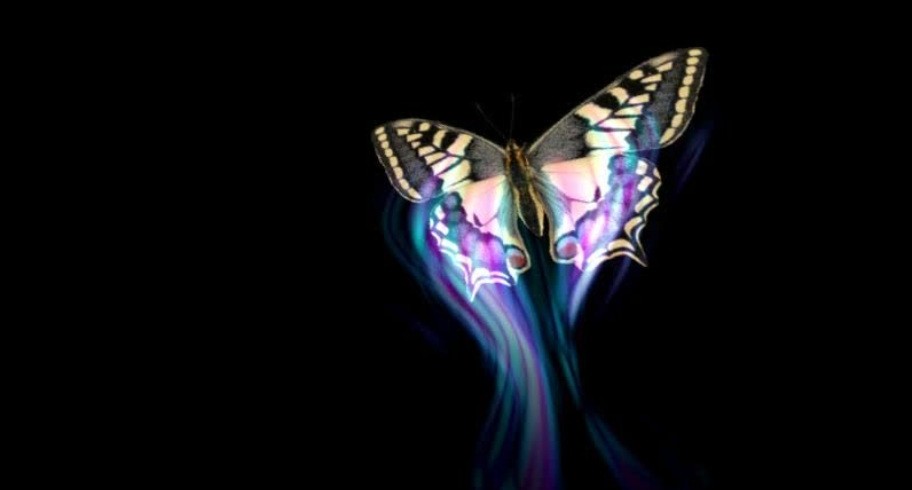
A bird attacking a butterfly will often find its beak snapping at thin air. According to new research, that split-second miss isn’t just bad luck. It’s caused by a visual illusion from the butterfly’s wings.
The new study – published in the journal Nature, by the University of Exeter and the University of Essex – provides the first evidence that a butterfly’s flight and wing pattern work together to create powerful visual illusions that scramble a predator’s sense of speed and direction, making them misdirect attacks.
It helps solve a long-standing puzzle; butterflies have striking patterns that make them stand out, yet remarkably few predators specialise in catching them mid-flight. Moths, by contrast, are hunted by a wide range of visually guided aerial predators.
“The stripes and spots on many butterflies’ wings interfere with the way visual systems try to guess the direction and speed of moving things, boosting false motion cues while hiding the butterfly’s true heading,” said Dr George Hancock, from the University of Exeter’s Centre for Ecology and Conservation on the Penryn Campus in Cornwall.
“The illusions interfere with the predator’s most basic visual targeting system and disrupt the final ‘ballistic attack’ in the tens of milliseconds when it commits to grabbing its prey, with no time to change course. As a result, birds and other predators will often simply miss.”
Barber-pole effect
The underlying mechanism works much like the “barber-pole illusion” – the red-and-white striped pole outside barber shops, where the stripes appear to travel upward even though the pole is only spinning in place.
“Butterfly wings deform as they fly – clapping together on the upstroke and peeling apart on the downstroke – so their stripes shift angle and point in different directions as they flap,” said Dr Jolyon Troscianko, also from the University of Exeter.
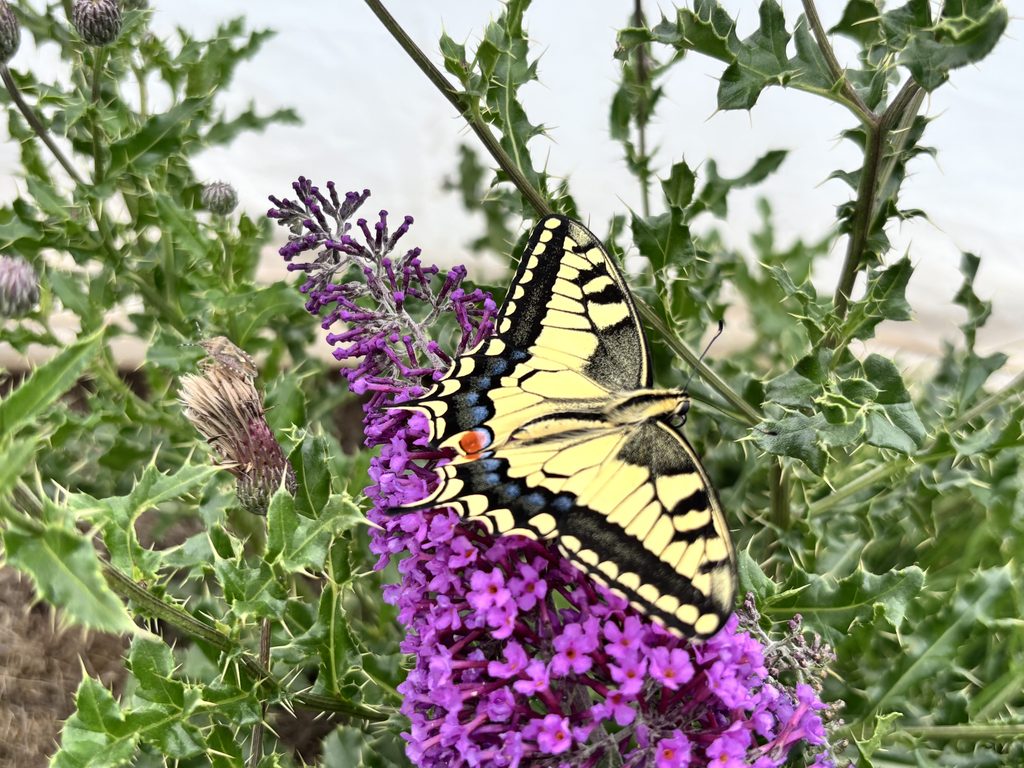
“Combined with their unpredictable flight paths, this patterning creates misleading motion illusions just like the barber-pole, causing a predator to miss entirely, or to strike a less vulnerable part of the wing, such as the hindwing or tail.
“The first slow-motion video of a butterfly I put through our bird-vision computer model was glowing with downwards motion even though the butterfly was moving up.
“First I checked this wasn’t a coding error, that I’d swapped up and down somehow, but then it dawned on me that this would be a perfect way to confuse attacking predators.”
Testing the theory
The team combined multiple lines of evidence. They used a high-speed camera to film real butterflies taking off at over 1,000 frames per second to capture how their patterns behave in flight, as seen through the eyes of a bird.
They then looked at the patterns of around 400 European butterflies and found that motion illusion patterns are widespread. To test how patterns affected real attacks, 100 volunteers acted as “predators”, trying to catch virtual butterflies on a touchscreen.
Finally, they used a computer simulation to “evolve” over 50,000 wing patterns from random starting points, selecting for patterns that created the most motion confusion.
Patterns converged on designs strikingly similar to those found in nature, suggesting that this illusion is a major force shaping butterfly wing evolution.
“It might seem strange that a butterfly would evolve to be so visible, especially as very few European species are toxic or unpalatable,” Dr Hancock said. “But our study reveals the wide variety of different patterns butterflies can use to create illusions that confuse predators.”
Butterflies and moths are also well known for using camouflage while resting, but movement breaks camouflage. This study shows how, once airborne, highly visible butterflies evolved their colours for a completely different line of defence to solve that problem.
Beyond butterflies
“The dazzling stripes on zebras and snakes have long been suspected of confusing predators’ motion perception, but firm evidence has been hard to come by,” said Dr Troscianko.
“Our study gives us a genuinely new way to analyse motion vision, and we think motion confusion is likely to be far more widespread in nature than previously realised, from the flapping wings of birds to the flicking tails of lizards and fish. It opens up an exciting new research avenue.”
The study was funded by the Biotechnology and Biological Sciences Research Council. The paper is entitled: “Butterfly wing patterns in flight create powerful illusory motion cues.”