South-West Social Mobility Commission event highlights regional barriers to opportunity
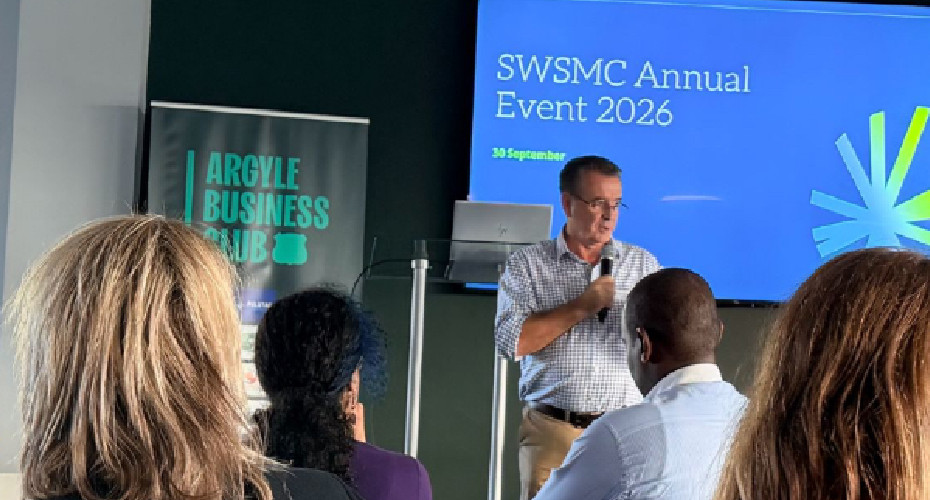
The conference was organised by the South-West Social Mobility Commission to help find new ideas to “change the view of opportunity” in the region
Young people spoke powerfully about their experiences of barriers to opportunity in the South West at an event which brought together key leaders from the region. They discussed struggles with writing CVs and understanding their skills; self-selecting out of apprenticeship opportunities; employers not being able to accommodate disabilities; and the vital role of one-to-one youth work in helping them to navigate systems, point them to opportunities, and work with them to overcome anxiety and build confidence and skills.
The conference was organised by the South-West Social Mobility Commission to help find new ideas to “change the view of opportunity” in the region so the next generation can succeed at school, training and work.
Young people who have worked with the charities Young Devon and Cornwall Neighbourhoods for Change (CN4C) took part in the event and explained the impact of struggles to access secure housing and the lack of genuine entry-level work and apprenticeships on their lives.
The Commission’s annual event was held at Plymouth Argyle Football Club and sponsored by AECOM.
Karl Tucker, Commission Chair said: “We are concerned about the barriers to opportunity for young people. In the South West this includes the cost of and the reliability of public transport, difficulties finding work experience and apprenticeships, and funding challenges associated with living in rural and coastal areas. Funding given to tackle challenges in these areas often only fund short-term initiatives.”
“It was important and valuable to bring together those working to make life better for communities in the region. This involves changing how we look at opportunity: through the eyes of young people themselves, from outside the school gates, and from the perspective of the region.”
The South-West Social Mobility Commission is a trailblazing regional initiative aiming to catalyse action to improve opportunity for children and young people from under-resourced backgrounds across Cornwall, Devon and Somerset. The Commission recognises that place has a profound impact on your life chances and is pioneering an approach to improving social mobility at a regional level. It brings together a dedicated and passionate group of civic leaders representing a range of sectors from across the region who give their time voluntarily to support this agenda.
Those at the event discussed how to implement three “calls to action” concerning affordable transport, technical education and devolved funding, issues which were raised during a series of community conversations held across the South West by the Commission this summer.
Those who took part in the conversations called for free bus transport for 16 to 25 year olds, and bus timetables which match college timetables and work start and end times.
They also wanted to rebalance the curriculum so it includes more vocational opportunities, work experience and opportunities for apprenticeships; and a top-up fund for rural and coastal areas.
Previous research by the Commission suggests young people in the South-West peninsula are being shut out of opportunities because of limited and expensive public transport. Commissioners have heard from young people who have struggled to get to college, job interviews, work and apprenticeships because of inadequate, costly or non-existent transport options.
Dr Anne-Marie Sim, co-founder and lead for the South-West Social Mobility Commission, said: “Building a line of sight to local job opportunities is vital everywhere, but nowhere more so than in the South-West peninsula, where local career options can be more hidden and more difficult to access.
“We welcome the government’s recent proposal for clearer technical and vocational pathways, supported by more experiences of the workplace and enrichment, and with parity of esteem for non-academic routes. We ask what this proposal looks like in a rural and coastal context, with areas that are geographically disconnected and sparsely populated.
“The government’s announcement of more devolved funding is also welcome – but we need to ensure that rural and coastal areas don’t lose out, and that regional-level funding doesn’t simply replicate existing funding issues.”