
One of the world’s biggest community science events coming to Exeter for first time
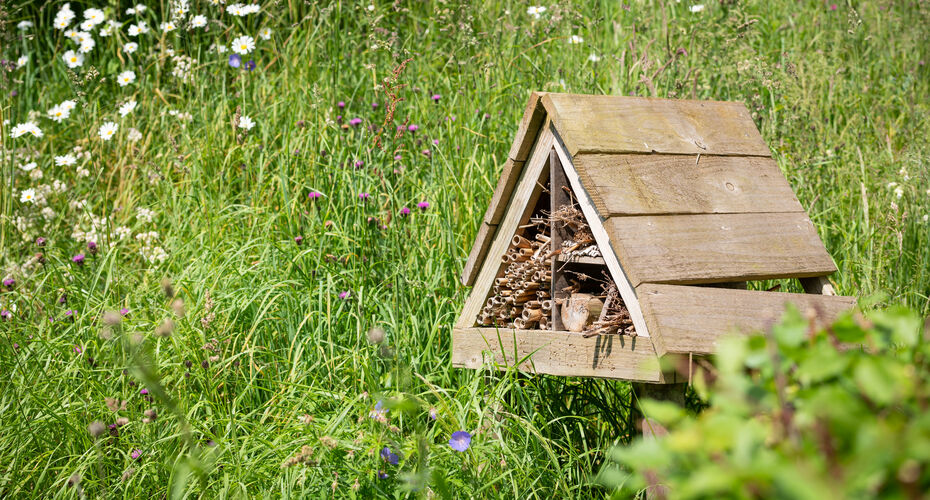
Photo by Theo Moye 05/06/24 Sustainability measures at the University of Exeter. A bug hotel near The Forum.
For the first time Exeter is being entered into City Nature Challenge, one of the world’s biggest community science events, in a project led by the University of Exeter.
Across the weekend of April 24 to 27, people in the city are asked to record wildlife using iNaturalist – a free recording app which allows the user to take a geolocated photo or sound recording. Participants will join others in cities across the world in this truly global collaboration run by the Community Science teams at the California Academy of Sciences and the Natural History Museum of Los Angeles County.
Professor David Roy of the University of Exeter is Head of the Biological Records Centre at the UK Centre for Ecology & Hydrology. He said: “By contributing these observations of wildlife, people are not only adding to the rich datasets that span centuries but also making valuable contributions to how we track the current state of nature in the UK. Researchers at the University of Exeter and across the world use these data to understand how species respond to climate change, invasive species and other factors that affect wildlife. This research helps to develop ways to protect and restore nature, including in urban greenspaces such as university campuses.”
Over the weekend there are several City Nature Challenge 2026 events happening at the University of Exeter’s Streatham Campus and across the city, from bird and bat walks to moth trapping and pond dipping. Events are free but people are asked to sign up via Eventbrite, so organisers are aware of numbers.
Grahame Madge is an Exeter resident, iNaturalist ambassador and wildlife enthusiast. He said: “I have been watching wildlife in Exeter for many years, and the city is a great place for nature with many diverse species and habitats. We will be recording alongside 700 cities from around the world, including Paris, Madrid and San Francisco, and it will be great to see Exeter rubbing shoulders with the best in the world for nature and urban wildlife.”
The identification period for photos and recordings on iNaturalist, which is available on Android and IOS devices, is between 28 April and 10 May 2026 and cities are then globally ranked. The app provides clear guidance for beginners, including how to upload observations and make valuable contributions to biodiversity datasets. Good quality observations can then be used by the UK National Biodiversity Network.
As well as the events across the weekend, people are also being invited to come along on Wednesday 29 April and help identify local wildlife from camera trap footage on Streatham Campus, from shy deer to curious foxes and elusive badgers. This event is taking place in the Forum on Streatham between 10am and 2pm with no need to book.