Exeter part of renewed Met Office Academic Partnership
The University of Exeter is part of the renewed lineup of the Met Office Academic Partnership (MOAP).
MOAP brings together leading UK universities and the Met Office in a network of research excellence to advance weather and climate science, technology and skill.
Exeter is one of seven long-standing partners in the renewed partnership, alongside Birmingham, Bristol, Edinburgh, Leeds, Oxford and Reading.
They will be joined by a new member, the University of East Anglia.
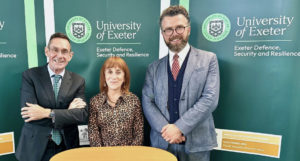
Professor Jennifer Catto said: “I’m very excited to be a MOAP joint chair and to be able to help shape and strengthen the strategic partnership between the University of Exeter and the Met Office, and I’m grateful to the previous joint chairs for their leadership.”
Professor Nathan Mayne said: “Our partnership with the Met Office, and wider MOAP, allows us to enhance our impact on how we predict and understand Earth’s changing weather and climate, and help people make better decisions.
“MOAP has been hugely successful, but I think we can do still more through this unique forum and look forward to supporting that.”
Professor Lisa Roberts, President and Vice-Chancellor of the University of Exeter, said: “Our long-standing partnership with the Met Office continues to produce world-leading climate and environmental science, making the city of Exeter a global hub for climate science and solutions.
“The Met Office Academic Partnership is a cornerstone of this collaboration, and we look forward to deepening this relationship while working closely with partners across MOAP.
“Together, we will advance weather and climate prediction, strengthen the use of data and AI, and support better-informed decision-making for government, industry and communities.”
The Met Office said the refreshed partnership “marks the beginning of an ambitious new phase of scientific collaboration”, adding: “The strengthened framework will enable new innovation pathways and greater agility in responding to emerging scientific challenges.
“Together with our academic partners, we look forward to shaping the next generation of environmental science.”