Study investigates mystery of Arabian Sea humpback whales
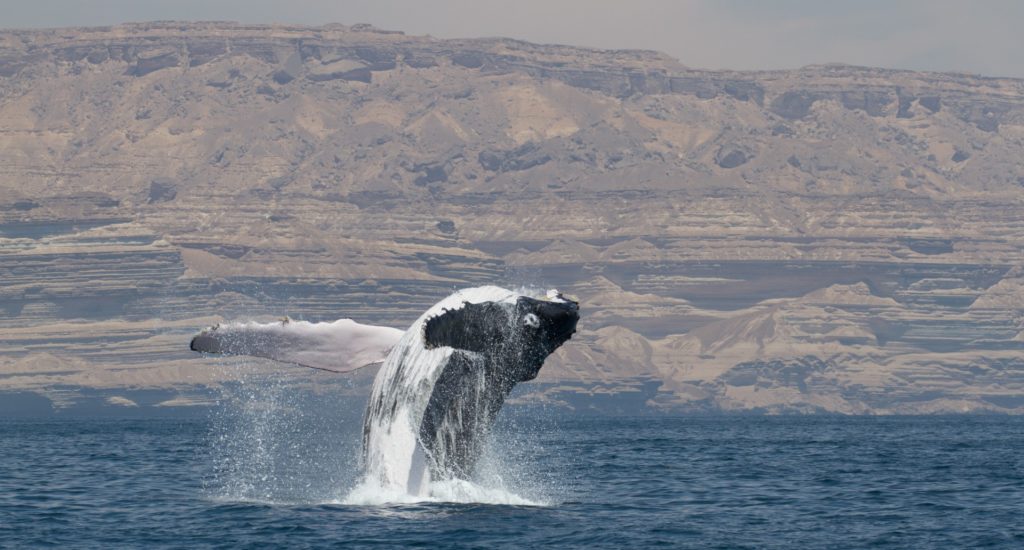
Credit Environment Society of Oman
A new study explores the mysterious behaviour of the Arabian Sea’s humpback whales – the only humpbacks not thought to make long-distances migrations.
Using satellite tags, researchers confirmed that the whales (an endangered population of just over 80 individuals) mostly stay in a limited area off the coast of Oman.
However, the study also found the first evidence of a long-distance trip by an Arabian Sea humpback – a female that swam more than 7,000km to India and back.
The whales face threats from shipping and fishing – including potentially new threats from military activities from the regional conflict at the northern edge of their range. The team hope their study will boost regional conservation efforts.
Dr Andrew Willson, founding director of Future Seas, whose doctoral research at the University of Exeter focused on this population, said: “Arabian Sea humpback whales are a biological anomaly.
“Unlike all other known humpback populations, long-distance migrations between polar feeding grounds and tropical breeding areas do not appear frequent. Instead, they remain in the same region year-round.
“This fundamentally challenges our classic understanding of humpback ecology and shows that, at some point in their history, they successfully adapted to a radical shift in their environment and foraging strategy.”
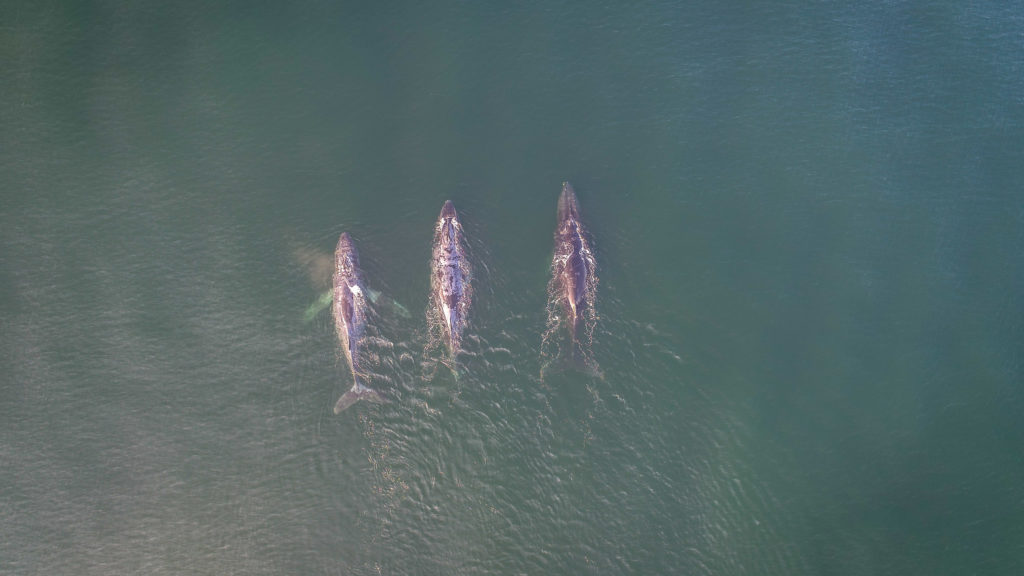
Dr Willson added: “What is equally fascinating is their ‘biological clock’. Although this population originated from the Southern Hemisphere, their breeding season has shifted entirely out of phase with their ancestors, syncing instead with the Northern Hemisphere.”
While humpback populations elsewhere have made dramatic recoveries since the whaling era, Arabian Sea humpbacks show no signs of increase.
“They are essentially being left behind,” Dr Willson said.
“We don’t yet know why, but these critical differences highlight why it is so urgent to unlock the mysteries of their ecology.
“To protect them, we must first understand the quality of the environment they depend on and the unique pressures they face.”
Uncertain times
“The Arabian Sea provides unique conditions allowing a once-migratory species to completely change its ecology. It’s a testament to how extraordinary the region is,” said co-author Suaad Al Harthi, executive director of the Environment Society of Oman, the local research partner in the project.
“We hope their adaptability will help the Arabian Sea humpback whales in uncertain times when their domain is influenced by accelerated climate change.”
The study used 14 satellite tags to monitor whales.
The researchers believe the female that swam to India was likely migrating for food and/or reproduction – the key factors that motivate humpbacks to travel.
However, the study’s finding that Arabian Sea humpbacks mostly stay near Oman’s coast highlights the importance of conservation there.
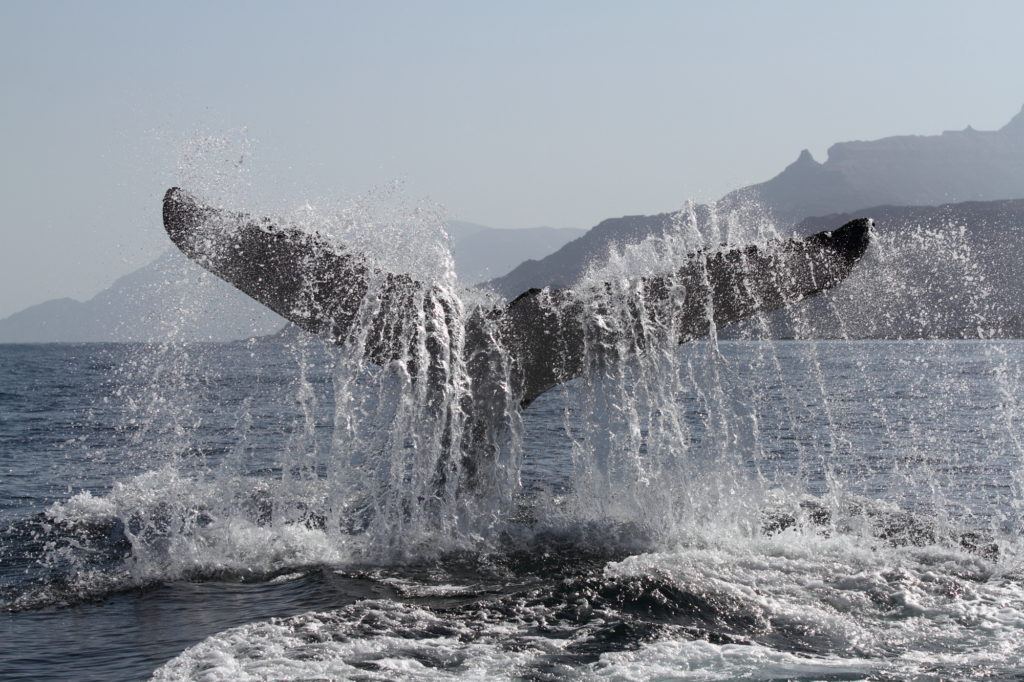
The government of Oman is using the evidence to address threats from fisheries and shipping, and several states in the region recently signed up to a conservation management plan.
Aida Al Jabri, a proponent of this plan and a collaborator in this study from the Oman Environment Authority, highlighted the need for regional cooperation – something reflected in the collaborative nature of the research.
“The extensive collaboration that went into this project has taken on a life of its own,” she said.
“It gained the support of the international scientific community and inspired teams in Oman and across the Arabian Sea to work together on the urgent conservation initiatives needed to protect this unique and endangered population of whales.”
Dr Willson, who is part of a team helping to develop regional conservation measures, concluded: “Ultimately, we hope our research helps protect this small, endangered, isolated population. This study is highly relevant for conservation because it clearly identifies critical habitats and shows areas of overlap with human activities – specifically shipping and fisheries.”
The paper, published in the journal Frontiers in Marine Science, is entitled: “No place like home: assessing the multidimensional habitat use of endangered Arabian Sea humpback whales (Megaptera novaeangliae, Borowski 1781) with satellite telemetry.”