
Exeter researchers awarded £125,000 to lead national robotic hernia study
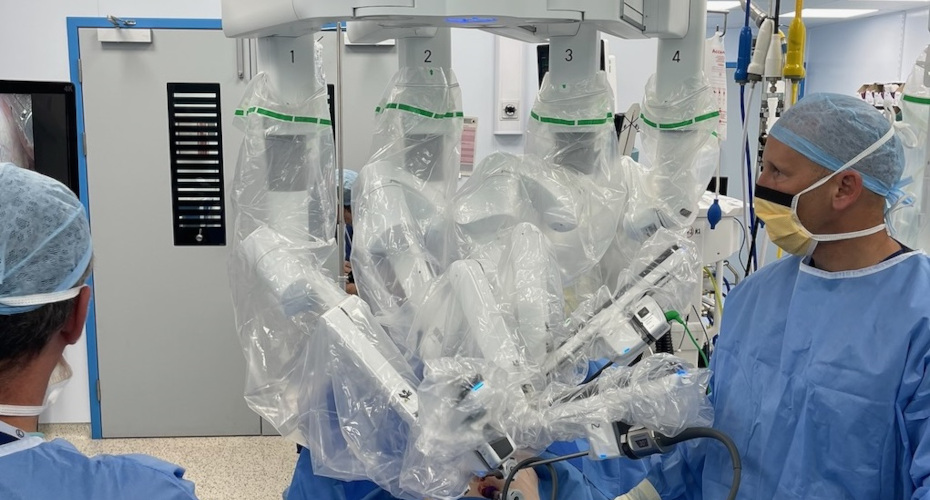
Experts from the University of Exeter and the Royal Devon University Healthcare NHS Foundation Trust have been awarded £125,000 to lead national research into robotic hernia surgery.
The ROAR study (Robotic versus Open Abdominal Hernia Repair) is comparing two surgical approaches to find out which provides the greatest benefit for patients. It will also build crucial evidence to help shape future NHS care, guiding the adoption of innovative treatments and new technology.
Professor John Findlay of the University of Exeter is Study Lead and Associate Director of Research and Development at Royal Devon. He said: “This is an exciting opportunity to compare robotic and open surgery for complex abdominal hernias across the UK. We believe robotic surgery may help patients recover sooner, improve their quality of life and abdominal wall function, and be less painful. That’s why this study is so important: by following patients closely in the days and weeks after surgery, rather than just months or years later, we have a real opportunity to uncover these early benefits and potentially make this technology more widely available.”
Hernias occur when an internal part of the body pushes through a weakness in the muscle or surrounding tissue wall. One of the most common types develops at the front of the abdominal wall and is known as a ventral hernia.
Around 25,000 people in the UK have ventral hernia repair surgery each year, which usually involves open surgery to repair the abdominal wall and make it stronger. This type of repair is the strongest and least likely to fail, but it can cause more problems early on, including pain and a longer time to get back to normal activities.
Traditionally, treatment involves open surgery to repair and strengthen the abdominal wall. With advances in technology and innovation, robotic surgery now offers a less invasive option, potentially leading to better outcomes such as faster recovery, improved mobility, and reduced pain.
Professor David Sanders, Clinical Director of Surgery at the Royal Devon, said: “We are very grateful for the funding awarded by the Intuitive European Research Board. it gives us the opportunity to move this vital research forward, to understand more clearly what helps patients recover well.”
The ROAR study is a collaboration between the University of Exeter and the Royal Devon with support from the National Institute of Health and Care Research (NIHR) Exeter Biomedical Research Centre (Exeter BRC).
Funded by the Intuitive European Research Board, it will recruit 132 patients across five sites in the UK over two years, including North Devon District Hospital and the Royal Devon and Exeter Hospital (Wonford).
The Royal Devon has a global reputation for excellence through the work of the Academic Department of Abdominal Wall Surgery based at North Devon District Hospital. The department is one of the highest volume specialist hernia centres in the UK, receiving referrals from across England and Wales. With one of the NHS’s most established robotic surgery programmes, the department has gained international recognition for its expertise in complex hernia and abdominal wall surgery.