
New antibiotic mechanism triggers hope for new treatments in fight against resistance
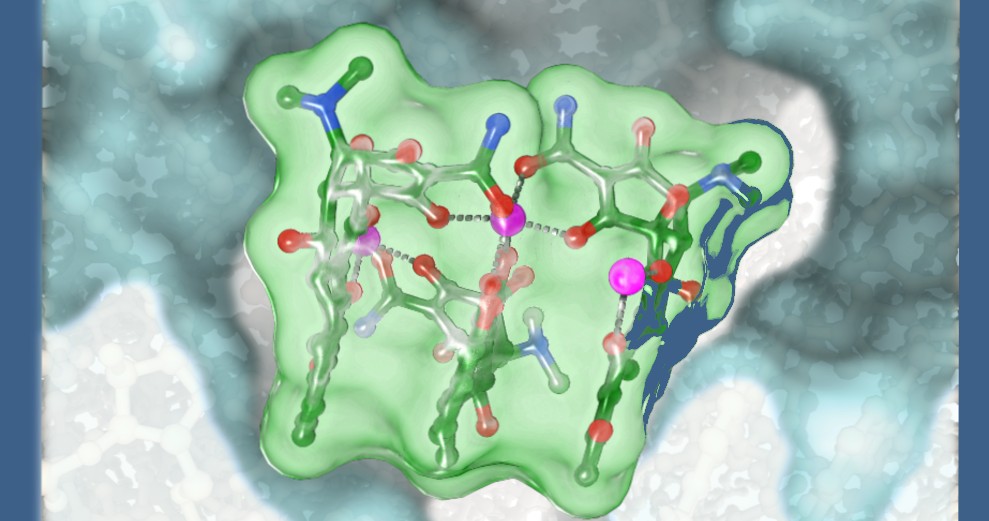
Triple-stacked doxycycline molecules blocking ribosome exit tunnel. By by Dr William Stuart, University of Exeter
Scientists have discovered two new mechanisms for how a well-established antibiotic works, paving the way for potential development of new antibiotic treatment.
A team based at the University of Exeter studied the bacteria Coxiella burnetii to investigate why it is so sensitive to doxycycline. One of the most commonly prescribed antibiotics, doxycycline is effective even at low concentrations.
Cells build their proteins in a machine called the ribosome. Newly built proteins leave this via an exit channel. The team discovered that in C. burnetii, antibiotic molecules stack upon each other to block the ribosome exit channel, revealing a new mechanism for how doxycycline disarms the bacteria. They hope this finding could pave the way for a new generation of antibiotic derived from doxycycline.
Professor Nicholas Harmer, at the University of Exeter’s Living Systems Institute, who led the research, said: “In this study we used electron microscopy, and recent advances allow us to observe molecular structures in greater detail than ever before. We were surprised to yield a number of important findings, including an entirely new mechanism for how doxycycline works against Coxiella. We now need to investigate whether we can expand this to other forms of bacteria which are resistant to antibiotics, which could open up a really exciting avenue for new treatments.”
The search for new antibiotics is an international research priority, against a crisis of antibiotics increasingly failing to work as bacteria evolve resistance, meaning previously treatable infections can be deadly. Published in Nature Communications and funded by the UKRI Biotechnology and Biological Sciences Research Council and the Defence Science and Technology Laboratory, the study primarily examined Coxiella burnetii. This bacterium is prevalent in animals and can be inhaled by humans, causing severe flu-like symptoms which can lead to death. People who work with farm animals are particularly high risk.
Electron microscopy allowed the team to observe ribosomes, which decode genetic instructions carried by mRNA molecules, and translate them into the workhorses of the cell, proteins. The researchers observed the previously known mechanism for doxycycline working – that it targets the bacterial ribosome by blocking tRNA binding at the decoding centre.
However, the researchers were surprised to find a second mechanism in effect – they observed a stack of three doxycycline molecules, which completely block the new protein exiting the ribosome, halting protein production. This prevents the translation of mRNA molecules, meaning the bacteria cannot grow and reproduce. A second additional mechanism was observed in the more commonly studied bacterium E. coli. There, a single doxycycline molecule can radically reconfigure the ribosome into an inactive state, never seen before.
Lead author Dr William Stuart, of the University of Exeter’s Living Systems Institute, said: “This result really took us by surprise – we had no idea we would find such a beautiful mechanism that explains why the antibiotic is so effective in treating C. burnetii infections. Excitingly, we suspect this could apply to other bacteria, potentially yielding new treatments against diseases which are currently difficult to treat. Our observation of the reconfigured inactive ribosome offers another potential route to an extremely potent future antibiotic. Our next step is to investigate whether we can harness these mechanisms to create a new way for antibiotics to fight infection, which we urgently need globally.”
The paper is titled ‘Cryo-EM reveals multiple mechanisms of ribosome inhibition by doxycycline’ and is published in Nature Communications.