
Outdoor Play Research Centre launches at Exeter with landmark study into children’s play
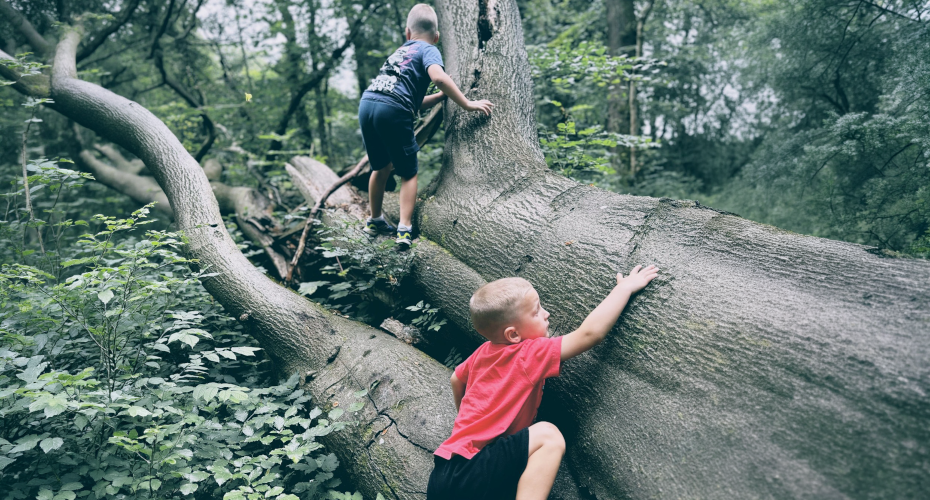
The new Outdoor Play Research Centre has launched at the University of Exeter with a landmark study into children’s play which found children start outdoor play later than ever.
Researchers found children are now nearly 11 when they start playing outdoors without supervision for the first time. That’s over a year older than their parents’ generation, with parents reporting they played outdoors at age nine.
This “generational play gap” has been revealed as the new Outdoor Play Research Centre launches at Exeter. The Centre is funded by a philanthropic gift and will be led by Professor Helen Dodd, one of the nation’s foremost experts in child psychology and play.
Professor Helen Dodd, Director of the Outdoor Play Research Centre, said: “The generational play gap revealed in our new research provides more evidence that children across the country are missing out on opportunities for independent outdoor play. Many of us have fond childhood memories of playing out until the street lights came on, enjoying our first taste of freedom. Yet today’s children are missing out on those same experiences.
“Importantly, we know that independent outdoor play is linked to better health and wellbeing, including lower anxiety, more positive emotions and more physical activity; some of the key childhood health challenges that we currently face. The Outdoor Play Research Centre is being founded on the principle that we must do better for our children. We want to see a step change for children’s independent outdoor play. We will conduct the scientific research needed to drive this change and work in partnership with a wide range of organisations to deliver it.”
Nearly 2,000 UK parents and caregivers of children aged 5–11 participated in the latest British Children’s Play Survey. The results, to be published in a paper called ‘Children’s Play and Independent Mobility in 2025’, found children are now allowed independent outdoor play at an average of 10.8 years of age, compared to 9.7 years for their parents.
This delay is significant, as independent outdoor play is linked to improved mental health and wellbeing – highlighting the need for policymakers to treat play as a public health priority.
Experts at the Outdoor Play Research Centre have cited lack of accessible and high quality spaces for play, along with increased screen time, risks posed by busy roads, and changes in social norms as potential reasons for the delay.
Research recently published by members of the Research Centre has shown clear links between outdoor, adventurous play and children’s mental health and wellbeing. For example, they found more outdoor play is linked to fewer symptoms of anxiety and depression, and more happiness in 5-11 year olds, highlighting the powerful benefits outdoor play has on children’s mental health.
The report also highlights broader patterns in children’s play behaviour:
- Over half (56 per cent) of parents/carers who were surveyed admitted they allow their children to engage in independent play later than they were allowed to
- For children aged 5–11, less than half of their play happens outdoors
- Street play for children is now less than 25 minutes a week on average – the lowest of the report metrics for an historically important space for informal, independent, outdoor play
- There are notable regional disparities – across most of Britain, children’s outdoor and adventurous play declines steadily with age. In London, however, this trend reverses in later primary school, with play levels rising again from around age nine.
Based at the University of Exeter, the innovative new centre will apply rigorous scientific methods to the study of outdoor play. They will examine why children growing up in Britain are playing independently outdoors less than ever before and will focus on designing and evaluating scalable solutions that benefit children.
The Outdoor Play Research Centre will bring together leading experts in the field and aims to deliver meaningful and lasting change for children by championing the importance of play, and working in close partnership with key national organisations and charities. The Centre team are committed to ensuring they provide robust evidence that informs policy and practice.
Sir Sajid Javid, Chair of the University of Exeter fundraising campaign, and former UK Health Secretary said: “This philanthropic endeavour will help us understand how we can give children the best possible start in life. Time spent playing outdoors has a profound influence on mental health and wellbeing and the Centre’s work has the potential to improve the lives of children and adults for generations to come.”
A pre print version of the paper is available here.