New illustrated collection of short stories offers novel perspective on climate change
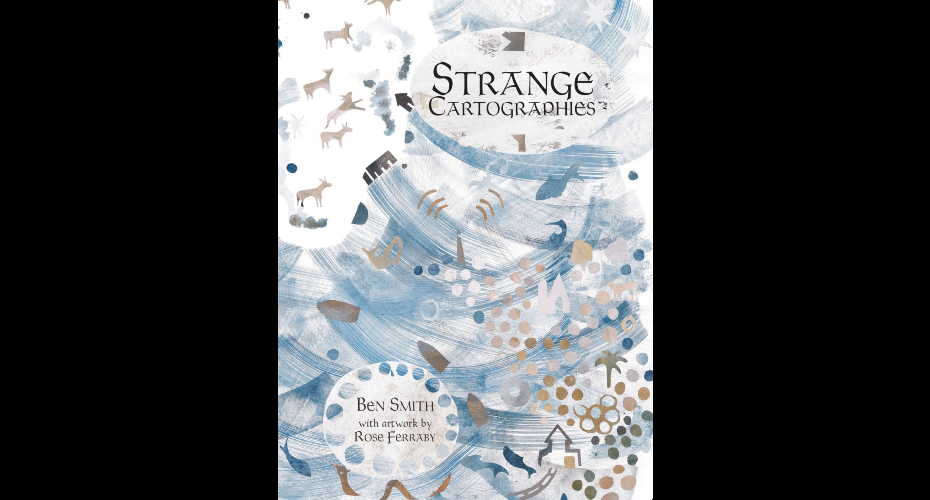
A new book developed in partnership between a University of Exeter author and a renowned illustrator and alumna will be publicly launched and celebrated this month.
Strange Cartographies is a collection of short stories inspired by fantastical maps and travel myths but with a distinctively contemporary twist.
From disappearing islands to nuclear bunkers repurposed as data storage vaults, the book, written by novelist and poet Dr Ben Smith, reflects years of research conducted alongside world-renowned climate scientists at Exeter.
And it features striking illustrations by artist and archaeologist Dr Rose Ferraby, who has a PhD in cultural geography from the University, and is an Honorary Fellow.
The partnership between the two and how the book combines past, present and future concerns will be among the topics of conversation when it is publicly launched at Bookbag in Exeter, this week.
“The book is partly a reflection of historical attitudes to changing climates,” said Dr Smith, a Senior Lecturer in the Department of English and Creative Writing. “I am fascinated by weird old maps, with their sea creatures, phantom islands and continents that do not exist. And I brought that together with current thinking around how our climate is becoming much weirder and the impact it’s having on our landscape.”
Among the book’s inspirations, said Dr Smith, were travellers’ tales from the early modern period and a 16th-century map produced by Willem Barentsz, a Dutch navigator and cartographer, which depicted an Arctic free of ice in the summer.
“What struck me about Barentsz’s map was that we are now entering a phase where the Arctic is going to be free of ice,” said Dr Smith. “So, this completely inaccurate map has become relevant for the first time. These ‘strange cartographies’ are taking shape.”
The pair began working together during the pandemic, and passed ideas, stories and images back and forth over the course of several years.
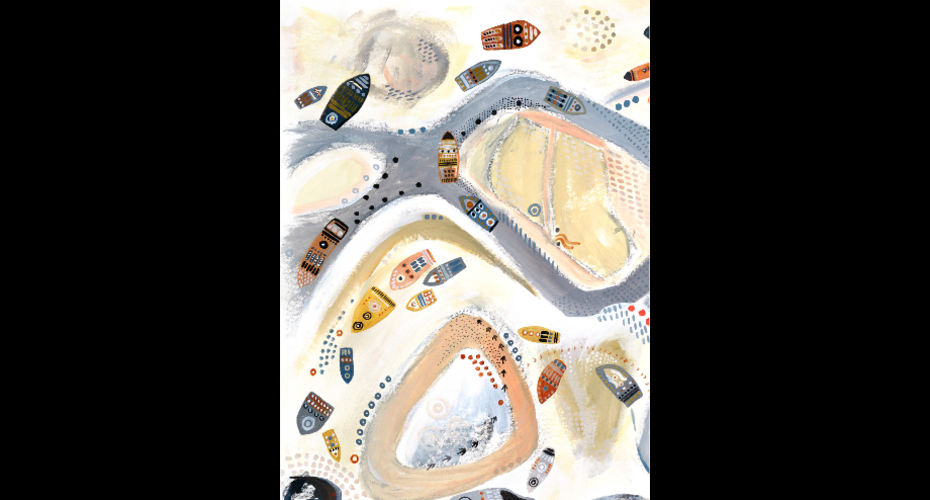
Dr Ferraby, who won the Michael Marks Award for Illustration for her work on Melanie Challenger’s The Tender Map and has exhibited at the British Museum, is known for her work that explores the relationship between people and landscape through time. Based in North Yorkshire, she uses her transdisciplinary research in archaeology, geology, ecology and nature recovery to work across art, writing and broadcasting.
She said: “This is a book that flows between past and future landscapes. The cartographic artworks draw on elements of existing maps from different contexts to explore the places, processes and practices of climate change that Ben and I were interested in. This was an exciting opportunity to address the challenge of how we imagine and face future change through the interplay of text and image – an opportunity to be curious, and hopeful.”
Dr Smith’s debut novel Doggerland was a Guardian Book of the Year, featured on BBC Radio 4’s Open Book, and won the ASLE-UKI Book Prize. He has run numerous projects bringing the arts and sciences together, working with organisations including Plymouth Marine Lab, UK Future Earth and the Met Office. He was also a contributing author on the first Global Tipping Points Report.
“I’m hoping the book will give readers a different perspective on climate change, one that isn’t a disaster narrative or dystopia,” adds Dr Smith. “A lot of the things we think of as unprecedented are actually things that people have been dealing with for hundreds of years. Climate change is not only occurring now – it has a long history – and many crises that are occurring today are similar to those that have happened before.
“We should be paying attention to and learning from those histories, which is why the humanities have such an important role to play. If you don’t understand history or the role that narrative plays in responding to crisis, it doesn’t matter how many facts you have.”
The book will be publicly launched at Bookbag on 11 November, where Dr Smith will be in conversation with renowned poet and Exeter colleague Professor John Clarke.
More information on Strange Cartographies can be found on the Guillemot Press website.