
Digital publication showcases art’s value to complex engineering projects
The work of Brazilian artist Guimeujovem was displayed at this year's Exeter Climate Forum
The importance of culture and creativity in helping the public to relate to often technical climate adaptation projects has been captured in an online publication developed by the University of Exeter.
The digital magazine explores how artists in Devon responded to the pioneering Lower Otter Restoration Project in Budleigh Salterton, which radically transformed the estuary and surrounding floodplain over the course of a decade.
Through music, photography, illustration, and needlework, local creatives documented the engineering work, its impact on the landscape, and the wildlife now flourishing in this new intertidal habitat.
This creativity, along with other outputs from the Arts and Humanities Council-funded Lower Otter Restoration Project in Translation (LARP), led by Exeter’s Department of Languages, Cultures and Visual Studies, has now been brought together in the online publication.
“When you assess the quality and the diversity of the creative work produced through LORP, it’s clear to see the value that Humanities can bring to projects that might be considered STEM,” says Dr Natália Pinazza, project lead. “It shows that culture is not an afterthought but a powerful way to connect local communities with often highly technical developments. The Humanities can both communicate change and preserve their legacy.”

The £27m Lower Otter Valley Restoration Project was launched in 2014 to improve the area’s resilience to climate change.
It has resulted in significant alterations to the landscape around the estuary of the Otter River, including the return of 55 hectares of farmland to intertidal habitat, the removal of embankments and the creation of 6km of creeks to connect the floodplain to the estuary. Raised walkways and nature observation stations have been installed, two hectares of woodland and grassland planted, and the town’s cricket club relocated off the floodplain.
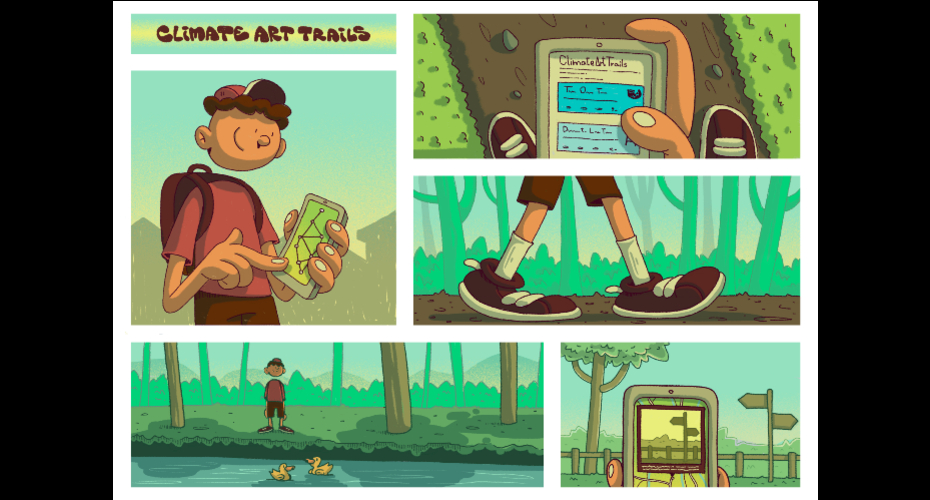
The magazine provides an overview of the different elements of the LORP in Translation project, which ran between 2024-25. This includes the different forms of art publicly exhibited; a short film; and a prototype of an interactive arts-and-nature trail app developed with the Environment Agency, which combines art with education about wildlife and the environment. It also explores how the project benefited the teaching curriculum.
Guimeujovem, a prominent illustrator and street artist who took part in the project and provided the artwork for the prototype app, said the project was “a great way to engage people with environmental topics through a more accessible and immersive visual narrative”.
He said: “The combination of art and technology can encourage people to see familiar landscapes from a new perspective and to reflect on the importance of climate adaptation. Projects such as ‘LORP in Translation’ raise the profile of, and support, local artists and their perspectives, linking creative expression to the places and communities they represent. They also demonstrate how art can contribute to the debate on climate change and inspire new ways of understanding and responding to environmental challenges.”
Dr Pinazza says the lessons learned will be relevant to many UK sectors, including agriculture, forestry and fishing, construction, and mining and critical minerals. And it could also be applied to similar climate adaptation work in other countries.
“Even though the LORP in Budleigh Salterton is the case study, understanding local culture and creative industries as central to these projects can be applied to any climate adaptation project worldwide,” she added.