
National pilot demonstrates the transformative power of teaching for creativity in the classroom
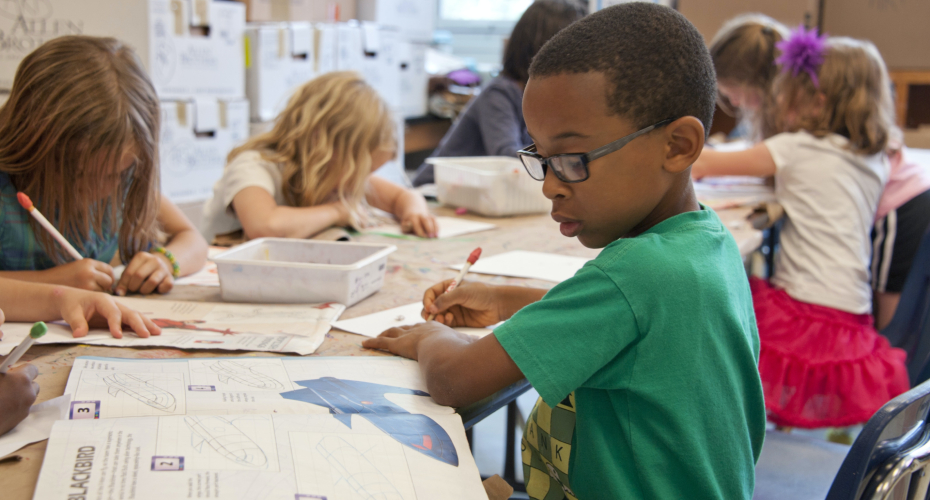
The Creativity Collaboratives programme champions the idea that creativity should not be an optional extra in schools
A three-year national pilot has shown that embedding teaching for creativity in classrooms can transform teaching practice, improve student engagement, and help rekindle teachers’ passion in their profession.
The Creativity Collaboratives programme champions the idea that creativity should not be an optional extra in schools and should be nurtured across all subjects and education settings – not just within the Arts.
The Commission called for a national network of schools to work together to create the conditions needed to encourage creativity across the curriculum in classroom lessons.
Eight regional networks – known as Creativity Collaboratives – were formed, involving more than 100 schools across England. They included the Penryn Partnership, which was supported by the University of Exeter to co-develop creative teaching strategies and evaluate their impact.
Over three years, teachers and school leaders implemented these strategies and undertook continuous professional development (CPD) designed to embed teaching for creativity.
Teaching for creativity is an approach that focuses on developing pupils’ ability to think imaginatively, make connections, take risks, and generate original ideas across all subjects.
The programme has now been independently evaluated by a research team from Durham University, using surveys, reflective portfolios, interviews, case studies and workshops.
More than 4,400 primary pupils, 1,300 secondary pupils, 500 teachers and 100 senior leaders took part in the evaluation.
The Creativity Collaboratives pilot programme emerged from the recommendations of the Durham Commission on Creativity and Education, led by Durham University in partnership with Arts Council England.
The overarching evaluation report show that the Creativity Collaboratives pilot was highly successful in supporting teachers to develop new skills and confidence in teaching for creativity, leading to measurable benefits for both staff and students.
Key outcomes include:
- Improved enjoyment and engagement in learning: Teachers and senior leaders reported that students enjoyed school more, were more engaged in learning, and showed greater enthusiasm, motivation, and confidence.
- Teacher growth and confidence: Teachers developed new skills, reflected more deeply on their practice, and reported feeling ‘re-energised’ by creative approaches to teaching and learning.
- New ways of teaching: The programme enabled teachers to trial approaches to teaching for creativity, embed reflective practice or Action Research and to deepen understanding of impact.
- Stronger communities of practice: Teachers and leaders valued the opportunity to collaborate across schools, sharing insights and challenges. Many described this as a rare and vital professional development opportunity.
- Positive student development: Pupils developed confidence, resilience, collaboration skills and a willingness to take creative risks. They also reported a stronger sense of the relevance of their learning to their future lives.
- Leadership and alignment: The role of headteachers and senior leaders was found to be critical in embedding creativity across whole-school practice, ensuring that teaching for creativity aligned with school values and priorities.
- Partnership working: Collaborations with universities, creative practitioners and cultural organisations broadened teachers’ perspectives and provided pupils with meaningful, real-world learning experiences.
Nicholas Serota, Chair, Arts Council England, said: “I have seen how Creativity Collaboratives have ignited children’s enthusiasm for learning, increased teachers’ confidence in the value of teaching for creativity, and supported schools to embed creativity across all subjects.
“At its heart, this work gives children and young people the skills they need to navigate an increasingly complex world.
“It is a clear success story of the Durham Commission in action, and I look forward to seeing how participating schools continue to develop and expand this impact in the next phase.”
The evaluation report recommends that the Creativity Collaboratives model should be retained with minimal change if rolled out nationally.
It recommends that future programmes should build on the pilot’s success by creating communities of practice focussed around teaching for creativity for teachers and leaders.
The Creativity Collaboratives pilot programme was funded by Arts Council England and the Freelands Foundation.