Repair services offer new opportunities for fashion brands
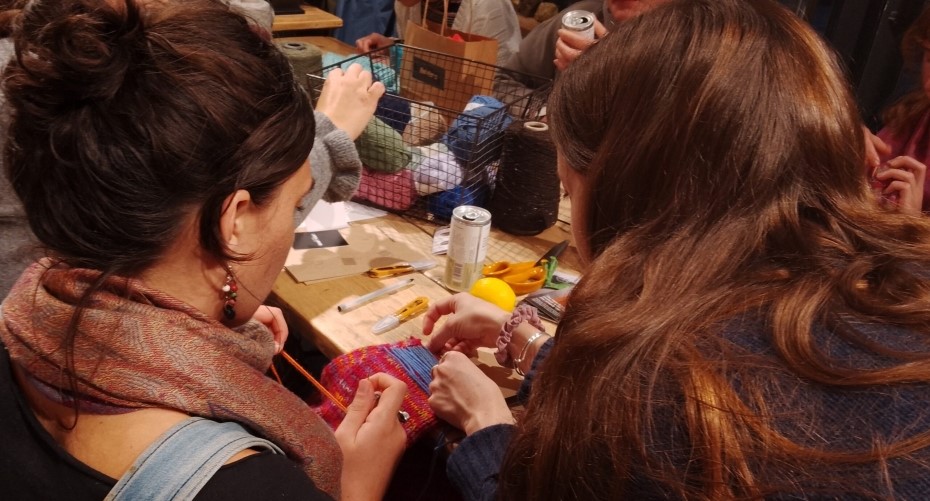
Repair is crucial to the future of the fashion industry, according to a new study that maps how brands are integrating repair into their business models.
Authors of Mapping the Repair Landscape in Fashion report say that brands offering repair services can gain commercially as consumer expectations shift towards durability, fairness and longevity.
Repair services create new value streams, including maintenance subscriptions, diagnostics, trade-in, refurbishment resale and enhanced durability brand positioning, and brands with repair capability benefit from diversified revenue and improved customer retention, according to the study.
The researchers, from The University of Exeter and Manchester Metropolitan University in partnership with UK fashion brand Finisterre, identify six repair models being explored across the fashion sector and list their advantages and risks.
These include brand-led in-house repair services – best for premium brands prioritising service quality and control; and independent third-party repairs, which work better for mass-market brands as they extend product life with minimal brand investment.
Leading brands combine repair with diagnostics, maintenance, trade-ins, warranties and recommerce, say the researchers, adding that repair is most profitable as a ‘lifecycle platform’ rather than a standalone service.
They identify better data circulation – including product histories and diagnostics – as essential to reducing the costs of repair services.
But while widely discussed as part of circular economy strategies, understanding of how repair can work commercially is still emerging and not yet well understood, the researchers say.
An entrenched ‘make-sell-waste’ linear business model and skills shortages in areas such as sewing, leatherwork and craft limiting scale and quality are among the obstacles identified.
“Repair is something we actively champion and explore as part of how we design for longevity and care for our products over time. This research reflects both the opportunity and the practical challenges, highlighting the need for continued, industry-wide implementation,” said Amy Brock-Morgan, Head of Lived & Loved Repairs at Finisterre.
“What we are seeing is a shift from repair as a niche sustainability practice toward something with broader strategic potential. However, realising that potential will require new business models, new capabilities, and a much stronger evidence base than currently exists,” added Dr Ruth Cherrington from the University of Exeter.
Mapping the Repair Landscape in Fashion is being launched alongside the Network Plus 2026 Showcase and coincides with the conclusion of the Future Fibres Network Plus, a UK Research and Innovation UKRI funded initiative exploring pathways toward more sustainable fashion and textiles.
The Network Plus 2026 Showcase marks the culmination of a two-year national research programme, bringing together industry, academia, and policymakers to share findings and launch a roadmap for advancing circularity in fashion and textiles.
The report concludes that repair remains underdeveloped not because of lack of interest, but because of unresolved practical and strategic barriers.
It calls for greater collaboration between industry, researchers, and policymakers to build the evidence base and test new models in practice.
The Mapping the Repair Landscape in Fashion report is available here.
This research was funded by UK Research and Innovation (UKRI) through its Circular Fashion and Textile Programme, supported by the Natural Environment Research Council (NERC), Innovate UK, and the Arts and Humanities Research Council (AHRC). The researchers are members of Future Fibres and Back to Baselines in Circular Fashion and Textiles, part of the wider Network Plus in Circular Fashion and Textiles.