World must seize shrinking window to save nature as wildlife decline continues, warns major WWF report
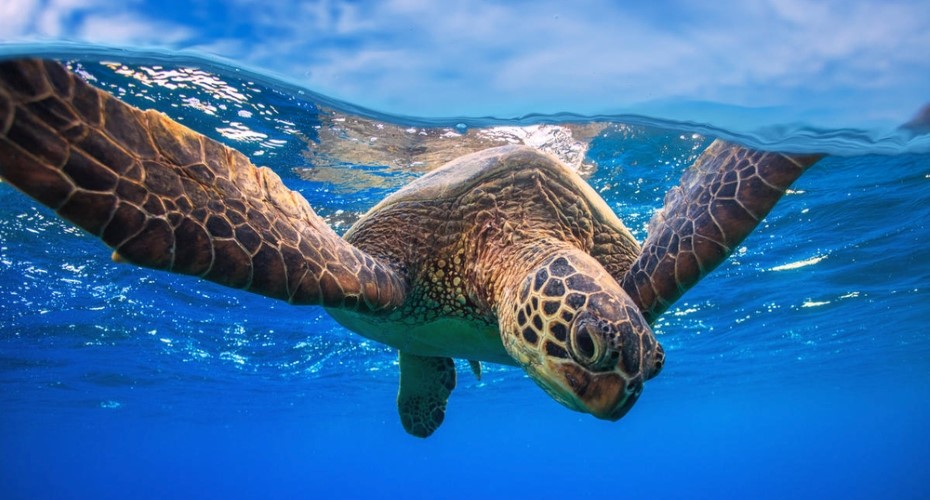
Green turtle swimming near water surface. Credit: Shutterstock/William Bradberry/WWF
The world must seize a shrinking window to reverse the steep decline of wildlife and nature by triggering positive tipping points in food and finance, following the path of the one already underway in energy, according to a major new report from WWF featuring contributions from University of Exeter’s academic experts.
Using more wildlife population data than ever before to provide the most detailed picture yet, the Living Planet Report 2026 shows that monitored vertebrate wildlife populations have declined by an average of 73% since 1970, highlighting the devastating impacts that habitat loss, overexploitation and climate change are having on species around the world.
The decline was most pronounced in Latin America at -95% and in freshwater populations at -85%, showing the impact of deforestation and the diverting, drying and pollution of rivers. The figures are drawn from the Living Planet Index, compiled by the Zoological Society of London (ZSL), the most comprehensive measure of wildlife populations, and reinforce other indicators on nature loss.
Nature loss is not only an environmental challenge but an economic and societal one, with half of global GDP dependent on nature in some way. Earlier this year, the UK Government published the summary of a national security assessment on global biodiversity loss and ecosystem collapse which found that every critical ecosystem is on a pathway to collapse, threatening UK national security and prosperity. This was underscored by the extreme heat that affected the UK and Europe over the summer, causing wildfires and shrivelling crops. This year’s UK harvest is estimated to be the worst on record.
Tanya Steele, chief executive at WWF-UK, said: “Nature loss is not just a crisis for wildlife. It’s already sending us the bill through growing risks to our food security, water supplies, economy and resilience to climate shocks. The extreme weather we’ve seen this summer is a stark reminder of what’s at stake.
“We stand at a fork in the road: either we continue paying the rising price of nature loss, or we invest in nature’s recovery and a future where people and wildlife can thrive together.
“The window to secure that future is closing fast, but successful conservation efforts from tuna to tigers show that we can succeed. Governments, businesses and communities must pull together to drive the transformations we need to see in food, energy and finance to bring our world back to life.”
The WWF report also finds that nature can recover faster than we think. Subtitled ‘The Science of Hope’, it highlights examples of wildlife and ecosystems already recovering, from Atlantic bluefin tuna returning to UK waters, to recovering tiger populations in parts of Asia. Working alongside local communities to drive conservation has also helped lead to recoveries in green sea turtle and southern African elephant populations.
But these successes remain fragile and the challenge is no longer identifying solutions but delivering them at the speed and scale needed. While conservation is working, it cannot succeed alone. Global recovery depends on ending the activities that drive the destruction of nature.
The University of Exeter’s Dr Steve Smith and Dr Tom Powell were leading authors on the report’s chapters about positive tipping points, which is when a system crosses a threshold into a healthier state, and the change begins to reinforce itself through feedback loops.
A positive tipping point can already be seen underway in the energy system, where the falling price of solar, wind and battery power is driving sweeping changes away from fossil fuels and towards renewable energy and electrification around the world, including in China and India. Having passed the tipping point, the transition to renewable energy looks unstoppable, but the report argues that the exponential growth of solar power was not inevitable – it was brought about by deliberate policy and investment and can and must continue to be encouraged to move faster.
The next set of positive tipping points that must be triggered to halt the loss of nature and wildlife are in how food is produced. Many of the items on UK supermarket shelves are helping to drive climate change and nature loss overseas, for example through soybeans grown in formerly wild areas of Brazil and Argentina used to feed British chickens – the numbers of which have tripled over the last 50 years.
Dr Steve Smith, a Research Fellow in the University of Exeter’s Green Futures Solutions team said: “For years the Living Planet Index has recorded nature’s decline, but this report also shows how quickly recovery can happen. Tigers, green turtles, and bluefin tuna have gone from being the unwanted poster children of overhunting and overfishing to being among the greatest recovery stories of our time, within a single generation, because governments, businesses and the public all pulled in the same direction at once. The same positive tipping points can transform our energy, food and finance systems. Just as solar power went from niche to dominant in a generation, nature’s decline is not inevitable. It’s the sum of our choices, and these choices can tip.”
At a moment when climate change is undermining farming and food security in the UK and beyond through extreme and unpredictable weather, the case for switching to nature-positive production and more sustainable diets that require less land at home and overseas is becoming ever-stronger, but the pace of change lags years behind the energy system. The report points to national food strategies and the overhaul of agricultural subsidies as the main policy interventions that can help accelerate the way food is produced into a more nature-friendly state.
While the finance system is still in the early stages of building toward a tipping point, the sector needs to work rapidly towards shifting finance away from unsustainable investments that drive nature loss, valuing nature and climate as material risks and creating regulatory certainty.
WWF is calling on leaders to make nature recovery a priority by scaling proven solutions that work through five key actions:
- Expanding clean, affordable energy
- Supporting nature-friendly farming
- Requiring credible climate and nature transition plans from major businesses
- Ensuring products on UK supermarket shelves are not linked to deforestation and habitat loss
- Directing investments towards activities that restore nature rather than drive its decline
The Living Planet Index includes 35,803 population trends of 5,790 vertebrate species from 1970-2022. The steepest declines in monitored wildlife populations were recorded in Latin America and the Caribbean (-95%), followed by Africa (-80%) and Asia–Pacific (-49%). The strongest decline is in freshwater ecosystems (-85%), followed by terrestrial (-69%) and then marine (-59%).
Habitat loss and degradation, driven by the expansion of agriculture to produce food, is the most frequently reported driver of biodiversity loss, followed by overexploitation, climate change, pollution, invasive species and disease.
Dr Louise McRae at ZSL’s Institute of Zoology, who leads the research behind the Living Planet Index, said: “This year’s Living Planet Index shows the need for rapid action to address the continued decline in biodiversity. However, behind every global statistic is evidence of wildlife populations rebounding and habitats recovering, driven by people working together to reverse biodiversity loss.
“As the extreme weather of recent months reminds us, our wellbeing is intrinsically linked to the health of the planet. Access to affordable food, economic security and resilience to climate-related risks here in the UK all depend on thriving wildlife at home and across the globe, and on functioning ecosystems that can adapt to change. Through immediate and coordinated action across all sectors of society, nature can recover.”
The Living Planet Report 2026 is available here.