
Researchers to conduct first comprehensive archaeological study of extreme medieval sports
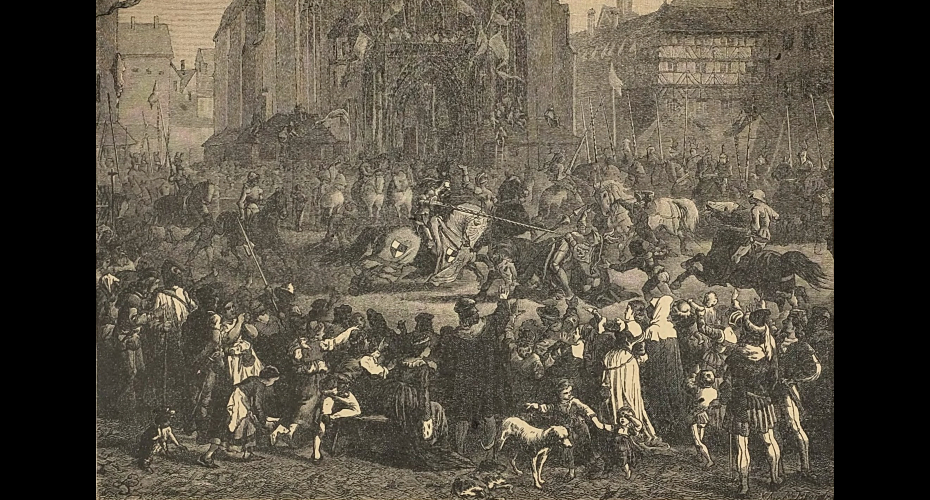
Tournament in Nuremberg around 1400. Picture by Emil Nietzsch Sohn, Public domain, via Wikimedia Commons
The medieval tournament – the iconic chivalric spectacle of jousting and mock battles – is to be the focus of a first-ever comprehensive archaeological study.
The 30-month project at the University of Exeter will break new ground in exploring some of the locations and landscapes that staged these ‘extreme sports’ of the Middle Ages.
Currently, most of what is known about the medieval tournament is based upon documentary sources. But this new study, funded by the Leverhulme Trust, will map tournament sites across England and Wales and conduct new fieldwork to better understand why particular locations were chosen.
It will also consider the material culture of the tournament, as well as its relationship with chivalric ritual and elite society.
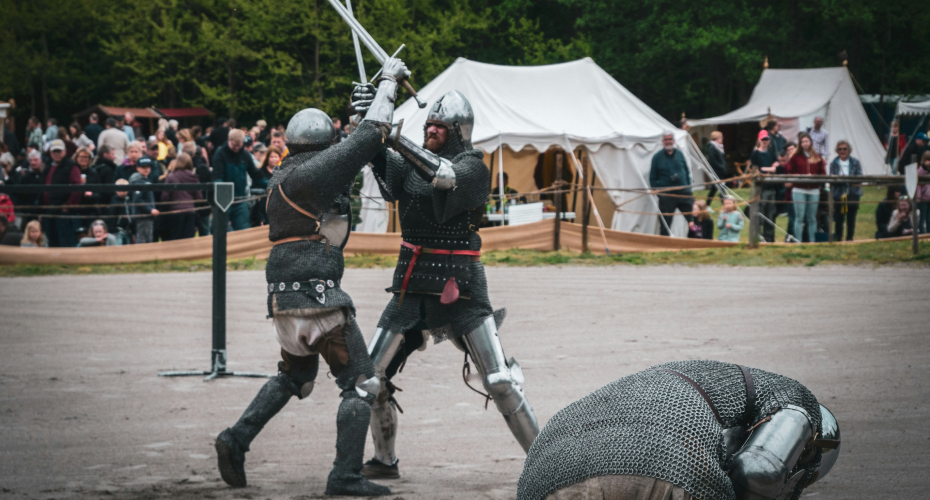
“The medieval tournament was a form of chivalrous mock battle popular among Europe’s elite and a mass spectator event,” says Professor Oliver Creighton, project lead in Exeter’s Department of Archaeology and History. “And it retains a deep fascination for contemporary audiences, represented and re-invented on film, television and in popular heritage events at castles and palaces.
“But our understanding of it is based almost exclusively on documentary analysis by historians, with the archaeology of its staging and impact greatly underexplored. This project therefore seeks to create an archaeological framework within which we can better understand these fascinating but enigmatic events.”
Professor Creighton, who has previously conducted world-renowned research on warhorses, will work with a team of researchers to collate historical, literary and archaeological records to map tournament locations, catalogue relevant archaeological finds, and analyse medieval artistic representations.
The locations will be mapped to medieval road networks, settlements and landscapes to see if any patterns emerge. From this, the team will select several sites of varying nature for archaeological analysis over the course of the second year of the project.
Tournaments were popular between the 11th and 16th centuries AD and evolved over that time into ever more elaborate and exclusive forms, particularly during the later Middle Ages and Tudor periods.
“Tournaments lay at the very heart of the culture of chivalry,” adds Professor Creighton. “And this role as a social nexus through which chivalric ideas spread is as important to its popularity as the combat and competition they offered.
“Through this research, we hope to better understand these “chivalric playgrounds”, why they were chosen, how they were shaped, and what footprints their combatants, spectators and vendors left behind.”
The Medieval Tournament: Exploring the Landscape of Chivalry has been funded by a grant of more than £200,000 from the Leverhulme Trust.