
You’ve Got a Friend in Me: Adventures with Tech in Toy Story 5
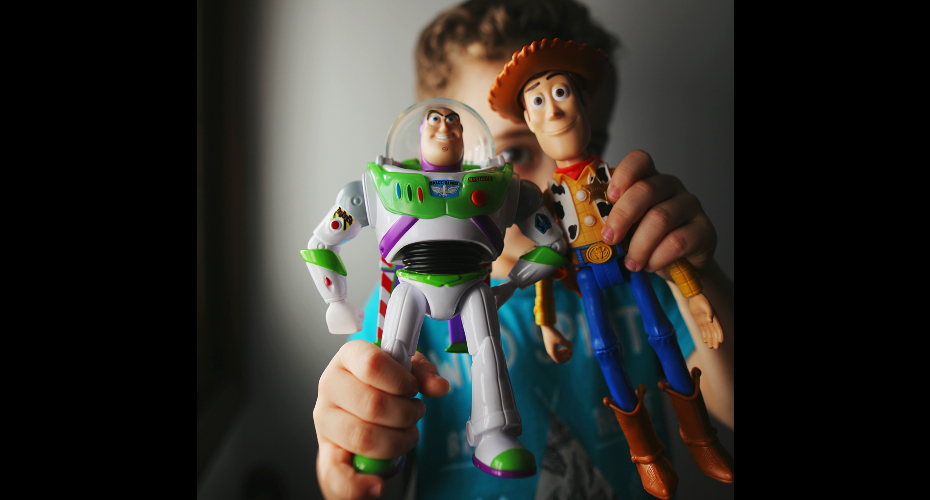
Photo by Silvana Carlos on Unsplash
Ahead of Toy Story 5 hitting UK cinemas this week, Dr Zlatina Nikolova, of the Department of Communications, Drama and Film, explores the evolving themes of the beloved Pixar series.
The first Toy Story was made by Pixar and released by Disney in 1995, making history as the first feature-length computer-animated film. Twenty-one years later, the fifth instalment is about to premiere in the UK (on June 19), featuring the same set of beloved characters and voices with a few new additions.
Toy Story 5 shifts its focus to children’s preoccupation with digital devices and technology’s disruption of traditional ideas of childhood and child’s play. The toys’ new owner, Bonnie, is given a tablet in a frog-shaped case, shifting her attention from her old toys to its shiny touchscreen.
The introduction of the tablet Lilypad (Greta Lee) as a new rival for Bonnie’s attention is a narrative structure reminiscent of the very first film, when Buzz Lightyear (Tim Allen) arrives as a birthday present for Andy and a symbol of shifting trends in toys in the mid-1990s. However, in this instance, rather than introducing Bonnie to new forms of play, Lilypad signals the end of the child’s interactions as the toys understand it. As they struggle to compete with Lilypad, the toys find themselves relegated to an analogue era as objects with a single purpose. Speaking to a desperate Jessie (Joan Cusack) in the film’s trailer, Woody (Tom Hanks) says, ‘Toys are for play but tech… is for everything’.
The expansion of the cast of toy characters is a staple of the Toy Story films. Each instalment transports the initial group of characters, including Woody (Tom Hanks) and Buzz Lightyear, into new environments and exposes them to new threats. Their adventures are complicated by the characters’ dual existence as toy objects and fully formed identities that come to life when no one is looking.
Past films have explored different forms of child’s play in the juxtaposition between Andy, the toys’ original owner, and Sid Phillips, who cannibalises and mistreats his toys in the original Toy Story (1995); the practice of collecting toys in Toy Story 2 (1999); and toys as donations to Sunnyside Daycare in Toy Story 3. Toy Story 4 alters this narrative pattern when the characters are not only removed from their familiar home of the child’s room and a new character is created in Forky, but a familiar one leaves when Woody chooses to stay in the wild alongside Bo Peep.
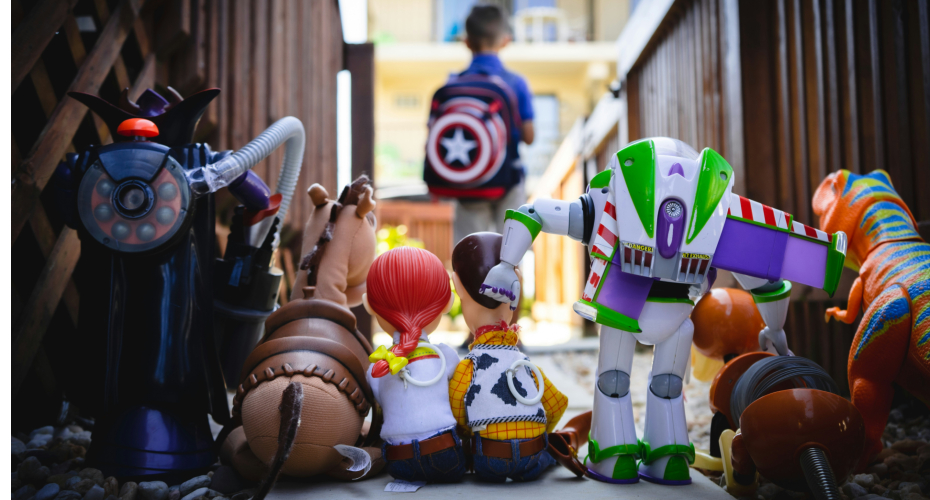
The Toy Story films’ ability to identify prescient or relatable issues is at the heart of their relevance and a core element of Pixar’s early success.
Currently indoctrinated in Walt Disney Studios’ microcosm, Pixar was originally a software company. They struck a deal with Disney as a result of the heritage animation studio’s strive to add computer animation to their ever-expanding arsenal of creative tools.
The first Toy Story was produced by Pixar but was funded and released by Walt Disney Studios. Keeping the two companies separate was important at the time as Disney could not collaborate directly with a non-unionised company. Subsequently, Disney acquired Pixar (in 2006) after the smaller company had created several successful titles. Nevertheless, Pixar still maintains its own creative identity within Disney’s frameworks.
Unlike the original Disney studio, whose most recognisable works are fairy tale adaptations produced in opulent hand-drawn 2D animation, Pixar’s catalogue exemplifies the company’s ever-improving computer-generated animation techniques. Its films emphasise adventure, friendship, eccentricity and identity, and humour by selecting unusual characters, often from original fantasy worlds or unexpected communities. Having fetched more than 20 Academy Awards, their films are both commercially and critically successful, frequently generating sequels (including The Incredibles, Finding Nemo, Cars, Monsters Inc., and the Toy Story films).
Although Toy Story 5 has yet to be released, early reviews indicate that it offers another meaningful story about childhood, its challenges, and the objects that clutter it. The significance of the toys and their devotion to their child owners throughout the years has always been a core theme for the films. However, they are particularly impactful in this new film when not only do the toys need to navigate another challenge in their relationship to Bonnie, but they also need to face the deeper existential problem of their single purpose as objects and the multi-purpose functionality of Lilypad’s digital identity.
Dr Zlatina Nikolova is a Lecturer in Film, with a particular research interest in the technologies of moving image production and viewership.