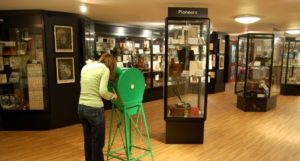
Living history app showcases Italian village that left its stamp across Europe
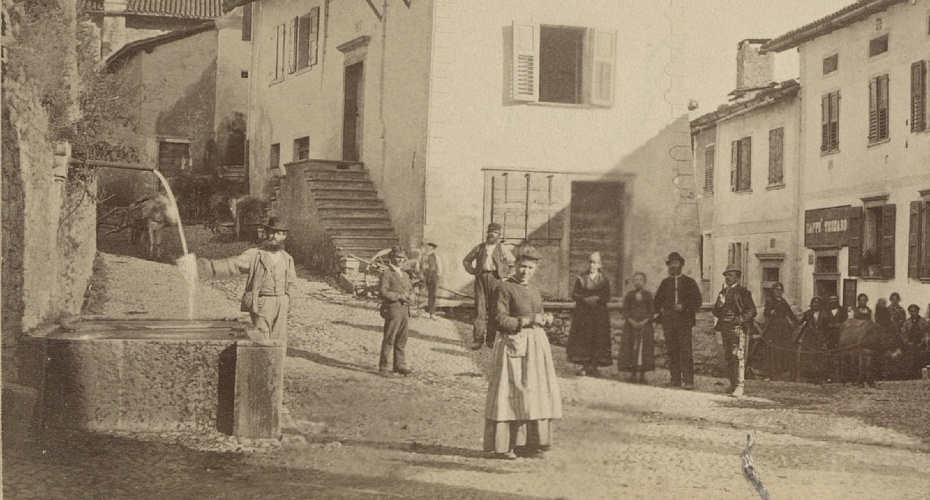
Piazza Vaon (now Garibaldi) 1882. Credit Archivio Storico SAT, Trento
An Italian village that was at the centre of Europe’s itinerant print trade has been brought to life through an award-winning living history smartphone app.
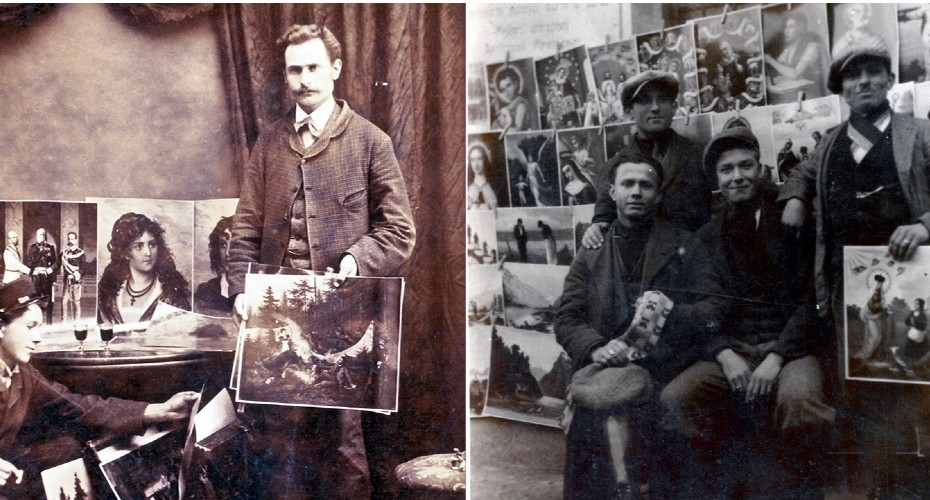
Pieve Tesino in Italy’s Trentino region was shaped for two centuries by an epic saga that saw its men, driven by economic necessity and commercial opportunity, become travelling merchants and salesmen around the continent, selling printed images and opening printing presses and shops.
Now its story has been told in Hidden Pieve Tesino, a new app in the University of Exeter’s HistoryCity series, a research-rich series of interactive apps designed to bring to life figures from the past and create trails that stitch their stories to the physical world.
It’s the first time the series has focused on a location as small as Pieve Tesino, which joins the portfolio of HistoryCity apps for major destinations, including Florence, Copenhagen, Venice and Hamburg.
For Hidden Pieve Tesino, the Exeter team worked with Trentino historian Alessandro Paris to critically fictionalise the trail’s guide character, Adamo, who returns home in 1881 after many years in Paris. Titled ‘The return of the merchant’, the trail draws on rich archival sources and oral accounts, as well as historic photographs and prints.
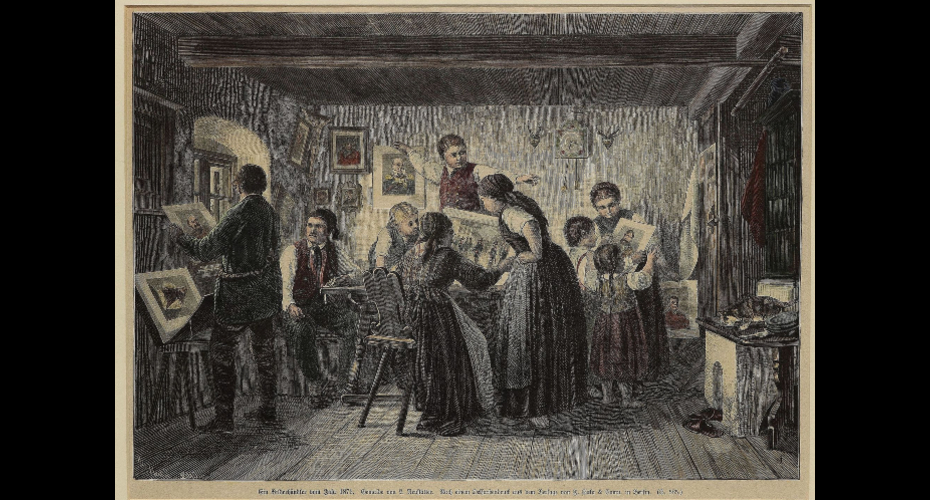
Dr David Rosenthal, HistoryCity trail director, said: “Like most men from Tesino, then part of the Austro-Hungarian empire, Adamo has travelled the roads of Europe for much of his life, selling things like devotional prints, portraits, hunting scenes and genre pieces. He embodies the life stories of Tesino print dealers, who played a crucial role in the dissemination of prints in Europe between the seventeenth and early twentieth century.”
With Adamo, you explore the village on a georeferenced map from the 1860s, pieced together by app builder Calvium Ltd of Bristol. Adamo takes the user to Piazza Maggiore, the Hotel Tesino, the parish church of Santa Maria Assunta, the hill of San Sebastiano, and finally Villa Daziaro, built by two print merchants who made their fortune in Russia.
“Bringing to life the historical saga that shaped Pieve Tesino was made possible through a partnership with local experts and institutions, such as the Museo Per Via, which tells the story through its collection of prints,” says Professor Fabrizio Nevola, lead for HistoryCity in the Department of Languages, Cultures and Visual Studies. “It’s the first time HistoryCity has tackled a project that’s not about a city – so along with the National Trust HistoryScapes app it’s an evolution of what we do.”
The app was created in collaboration with the Italian-German Historical Institute, Bruno Kessler Foundation in Trento. It was funded by NEXT GENERATION EU, the Italian Republic—Ministry of Culture, the Municipality of Pieve Tesino, and the Italian National Recovery and Resilience Plan project ‘Pieve Tesino Borgo d’Europa’. The project’s on-site collaborators were Museo Per Via: Tesino Museum of Prints and Travelling Sellers; the Alcide De Gasperi Trentino Foundation; and the Daziaro-Gaudenzi Foundation.
HistoryCity has been running for more than a decade and has pioneered research-driven, accessible situated living history using smartphones, while championing a ‘museum without walls’ approach to cultural capital. The apps are free and link sites off the typical tourist itinerary to the lives of diverse historical figures. The project won the Virtual and Augmented Reality category at 2025’s Heritage in Motion Awards. A sister app, HistoryScapes, in partnership with National Trust, has been running since 2025.
For more information, please visit the website. The team has also commissioned a short film of the project, which will play in the Museo Per Via.