Diaries offer rare glimpse into six decades of Palestinian society
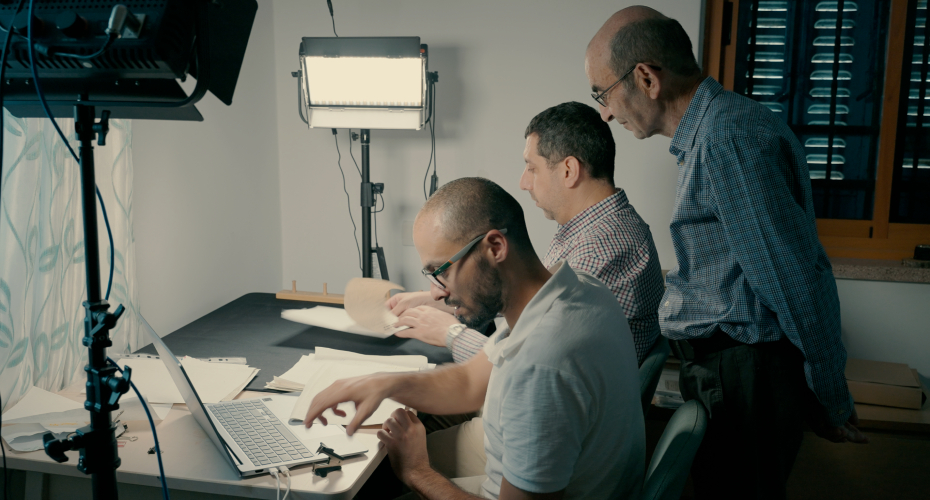
Yazeed Abu Khdeir and Mahmoud Muna working on the digitisation in Palestine, August 2025. Photograph reproduced courtesy of Hannah Harper.
A remarkable archive chronicling more than six decades of life in Palestine has been saved from the risk of destruction and preserved at the Universities of Edinburgh and Exeter for study, teaching and research.
The archive, comprising thousands of pages from diaries, personal documents and digital records, has been donated by award-winning Palestinian author and human rights lawyer Raja Shehadeh.
Diary extracts include accounts of meetings with notable figures including former Palestinian president Yasser Arafat, King Hussein of Jordan and US President Jimmy Carter. Records of Shehadeh’s role as legal counsellor to the Palestinian delegation engaging in peace talks following the 1991 Madrid Peace Conference, and entries documenting the Israeli military incursion into Ramallah in 2002, are also among the collection.
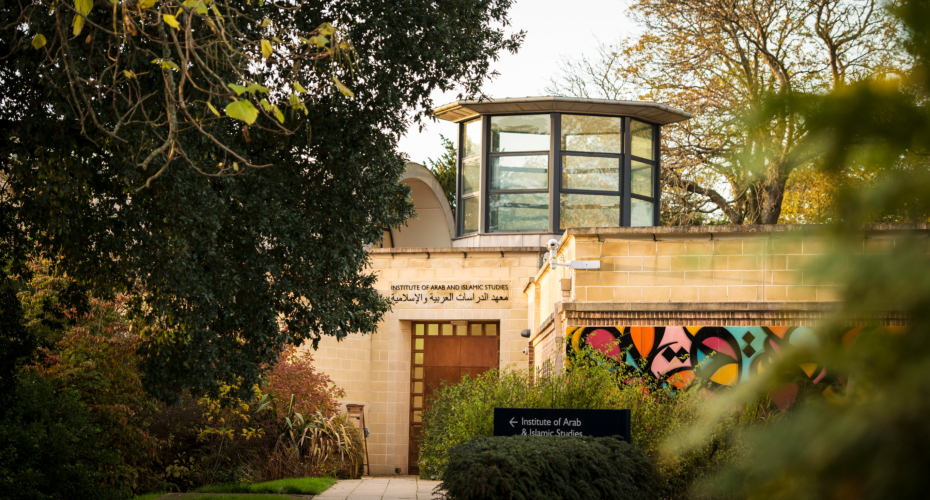
Shehadeh’s physical archive has been preserved by the University of Edinburgh’s Centre for Research Collections and digital copies have been stored at the Digital Archive of the Middle East (DAME), based at the Institute for Arab and Islamic Studies (IAIS) at the University of Exeter.
Shehadeh’s diaries begin in 1967 when he was aged 15, and offer unique insight into Palestinian society.
Through an estimated five million words, Shehadeh has captured daily life in the diaries spanning 60 years.
Alongside the diaries, the archive includes original copies of military orders issued following the Israeli occupation of the West Bank in 1967, and legal and diplomatic papers that belonged to Shehadeh’s father, the prominent international lawyer Aziz Shehadeh, that span the 1930s to the 1980s.
For many years, the archive was stored at a property in Ramallah. Following the targeting of buildings which has destroyed libraries, museums and other cultural institutions during Israeli military operations in Gaza, and the spread of violence to the West Bank, Shehadeh wanted to ensure his archive was safeguarded from loss.
Raja said: “I am happy and relieved that my and my father’s archives are now safe and will be published in the interests of truth and justice. I have long been aware of Israel’s destruction of Palestinian archives in Beirut, Jerusalem and elsewhere, and of the importance of preserving Palestine’s cultural heritage. I consider Edinburgh my second home, and I am profoundly grateful to the universities of Edinburgh and Exeter, where these papers are now safely deposited.”
Under the direction of UK-based writer and journalist Matthew Teller, a team was assembled comprising the Alwaleed Centre for the Study of Islam in the Contemporary World and Centre for Research Collections at the University of Edinburgh, IAIS, and Palestinian project partner the Educational Bookshop in Jerusalem.
The extensive process of conserving the collection has required a coordinated international effort. Over two years, members of the project team in Palestine worked discreetly to assess and preserve the collection, and secure archival materials in safe locations. Work included digitising paper items and safely transporting the entirety of the paper archive to the UK.
The archive will operate under the University policy of an open and transparent archive available to all researchers, scholars and members of the public. Around 4,000 pages from the archive have now been made publicly available.
Mr Teller said: “The Universities of Edinburgh and Exeter, along with mutual friends at the Educational Bookshop in Jerusalem and anonymous private donors who offered vital support, are to be thanked and congratulated for responding with such speed and resourcefulness to the complex demands of digitisation and preservation over the last two years.
“Cultural heritage matters, but it is not more important than people, and the death and trauma caused by Israel in Palestine since we began this task is appalling. It is an honour for me, in this context of heartbreaking loss and bereavement, to be able to stand alongside Raja as he preserves his literary legacy for the benefit of the Palestinian people, survivors of genocide, and the world.”
At an event delivered by Edinburgh’s Alwaleed Centre on Thursday 3 September, Shehadeh read extracts from his diaries and discussed the work that has taken place to preserve, digitise and transport the archive safely to Scotland.
Dr Kholoud Al-Ajarma, Deputy Director of the University of Edinburgh’s Alwaleed Centre, said: “’Raja Shehadeh’s archive is a testament to Palestinian history, memory and intellectual life, and we recognise the great responsibility academia has in safeguarding this body of knowledge. By preserving and making the archive accessible to students, researchers and the wider public, we seek to support a richer and more inclusive understanding of Palestine, while advancing our commitment to decolonising knowledge and ensuring that marginalised voices, histories and lived experiences are represented within the global academic record.”
Due to the vast number of materials in the archives, the project team now hopes to secure further funding to enable the entire collection to be catalogued and eventually made free and accessible to the public worldwide. While the archive will be preserved and managed in the UK, intellectual property and copyright remains with Raja Shehadeh and his heirs and it will continue to form an important part of Palestinian cultural heritage.
Dr James Downs, archivist of the University of Exeter’s Middle East collections and project manager of DAME, said: “The Digital Archive of the Middle East is dedicated to preserving rare documents and other archival materials, including those under threat of loss or destruction. It has been a privilege to have had a role in supporting the digitisation of Raja Shehadeh’s diaries and other writings, and we aim to continue our involvement with Edinburgh University through collaborating in a larger project that will bring new readers to Raja’s work as well as ensuring the preservation of his papers and cultural legacy for generations to come.”
Mahmoud Muna, bookseller and co-owner of the Educational Bookshop in Jerusalem, added: “Preserving and digitising Raja Shehadeh’s archive has been one of the most complicated and rewarding projects we have ever undertaken as the Educational Bookshop. Working discreetly in multiple secret locations with local and international teams in order to execute this vitally important project to the highest standards is a story in itself. We hope that the threats facing Palestinian literary and cultural heritage will end, and that future similar preservation efforts can be carried out locally, so that Palestinian cultural heritage can be made accessible to all where it naturally belongs: in Palestine itself.”
The selection of digitised items from Raja Shehadeh’s archive are now available online on the DAME website.